
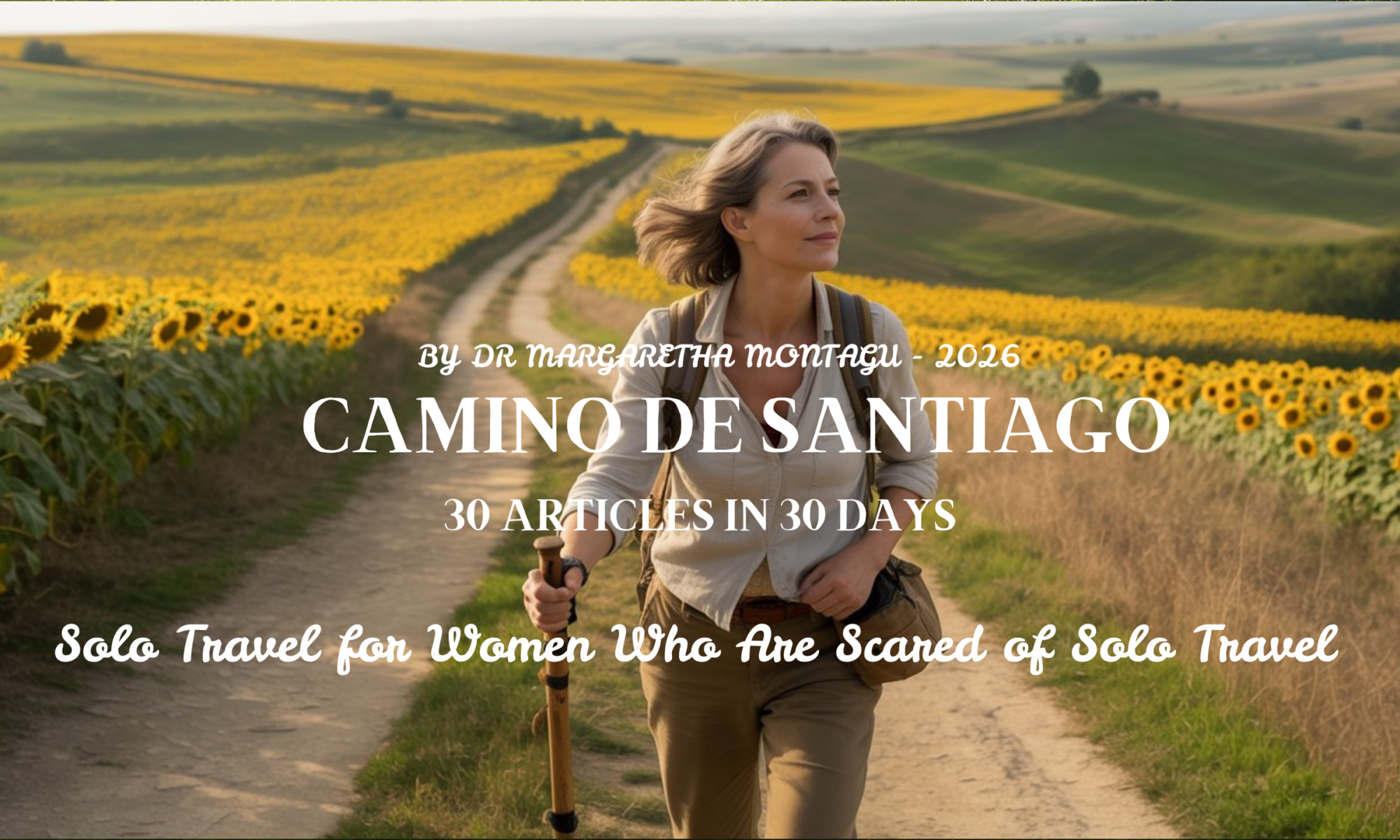
Practical, honest, and occasionally hilarious — a guide to taking the trip you’ve been putting off because no one will come with you
The Short Version (For the Busy and Slightly Sceptical)
You have wanted to go somewhere wonderful for longer than you care to admit. You have a list somewhere — possibly on your phone, possibly on a Post-it that has survived three house moves — of places you intended to visit ‘when someone could come with you.’ That someone has not materialised. Or they cancelled. Again. This article is about why you should stop waiting, why solo travel for women is dramatically safer and more straightforward than the collective anxiety of the internet suggests, and why the Camino de Santiago might just be the perfect first adventure to take entirely, gloriously, unapologetically alone.
5 Key Takeaways
- Solo travel is not brave. It is just travel. The ‘bravery’ narrative is well-meaning but it is also slightly patronising, and it stops women from going.
- The Camino de Santiago is one of the most well-marked, well-populated, and well-supported walking routes in the world — it is not remote, it is not dangerous, and you will not be alone on it even when you are alone.
- The practical fears (getting lost, eating alone, something going wrong) are nearly all solvable in about forty-five minutes of sensible preparation.
- The emotional fears (loneliness, boredom, feeling conspicuous) are largely pre-trip inventions that dissolve rapidly on day one when a stranger shares their wine with you and asks where you are from.
- Women who take their first solo trip almost universally describe it as one of the best decisions of their lives. The regret rate for going is effectively zero. The regret rate for not going is considerable.
The Woman Who Nearly Didn’t Go
Claire Hennessy had wanted to walk a section of the Camino de Santiago for four years. She knew this because she had googled it four years ago, bookmarked seventeen articles, saved a walking guidebook to her Amazon wishlist, and not purchased it. She had mentioned it to her husband, who had said ‘sounds brilliant, love’ with the tone of a man who would not, under any circumstances, spend five days walking in France. She had raised it with her closest friend Sarah, who had said ‘absolutely, let’s do it this autumn’ and then, come September, had a work deadline, a kitchen renovation, and what turned out to be a very manageable case of conjunctivitis that she somehow elevated to the level of a medical exemption.
It was now four years later. Claire was fifty-one. She was a secondary school deputy head who organised trips for two hundred and sixty teenagers without breaking a sweat, managed a department of twelve people, and had recently navigated a fairly complex planning application for a loft conversion. She was not, by any reasonable measure, a woman who struggled with logistics. And yet. Solo travel. The words sat in her chest like a small stone.
She was not afraid of France. She was not afraid of walking. She was afraid of — and here she had to be honest with herself at eleven o’clock on a Tuesday night while her husband slept and she was on her laptop looking at Camino blogs again — she was afraid of what it would look like. A woman on her own. At a restaurant. At a table. Eating. A woman checking into somewhere alone. A woman who, when asked ‘is it just you?’, had to say yes.
She was afraid that ‘just her’ was not enough.
She booked the flights at 11:47pm. Not because she had resolved her fears. Not because she had read one more article that finally convinced her. She booked them because she suddenly, viscerally, could not stand the idea of it being five years instead of four. She closed the laptop. She lay in the dark. And somewhere on a road in southern France, a set of arrows waited patiently, as they had waited for a thousand years, for exactly this kind of woman.
What happened when Claire finally arrived on the Camino is a story for later in this article. But here is the thing about the stone in her chest:
It was gone by the end of day one. And she has never quite been able to explain that to anyone who hasn’t walked it themselves.
Why We Are Still Having This Conversation
The uncomfortable truth about solo female travel is that the fear of it is disproportionate to the actual risk — and the gap between perception and reality has not significantly closed despite decades of women travelling alone perfectly successfully. This is partly because bad news travels faster and louder than good news, partly because women are still socialised to believe that public space is not entirely theirs to occupy unaccompanied, and partly because the question ‘but is it safe?’ is applied to women in a way it is simply not applied to men.
Nobody asks a man who announces he is going on a solo walking holiday whether he has told someone his itinerary. Nobody suggests he research whether the locals are ‘friendly to solo male travellers.’ Nobody implies, however gently, that the whole thing would be easier if he just waited until someone could come with him.
Women get all of that, and then internalize it, and then it becomes their own voice.
The Camino de Santiago is, in this context, a genuinely useful starting point for the solo-travel-hesitant woman, because it offers something rare: the experience of walking alone without actually being isolated. The route is populated. The waymarks are obsessively consistent. The pilgrimage culture is inherently communal — strangers share meals, share distances, share the peculiar intimacy that comes from having all decided to do the same mildly eccentric thing. There is infrastructure everywhere. There are other women walking alone everywhere. The Camino does not ask you to be brave. It just asks you to start.
Solo travel is not about being fearless. It is about discovering that you were more than capable all along — and that the main thing standing between you and a magnificent trip was the assumption that you needed a companion to justify taking one.
5 Mistakes to Avoid
1. Waiting until you feel ready. There is no ready. Ready is a story you tell yourself to postpone the decision indefinitely. The women who go are not the women who felt ready. They are the women who went anyway, marginally terrified, and discovered that ready materialises on arrival rather than departure. Book first. Feel ready second.
2. Over-researching the dangers and under-researching the practicalities. If you spend three weeks reading ‘is the Camino safe for solo women’ and twelve minutes researching what to pack, you will arrive frightened and wearing the wrong shoes. The research that actually helps is practical: what to bring, how the credencial works, what the stage lengths are, where to eat in each village. Safety research beyond basic common sense is largely an anxiety loop dressed up as preparation.
3. Treating ‘eating alone’ as a problem to be managed rather than an experience to be enjoyed. This is the fear that stops more women than any other, and it is the one that collapses fastest on arrival. Eating alone on the Camino is not a sad spectacle. It is a table with a view, a glass of local wine, a notebook, and absolutely nobody asking you to decide where to go or splitting the bill incorrectly. It is, frankly, wonderful. Give it twenty minutes.
4. Packing for every possible disaster. The solo traveller’s overpacking instinct is understandable and entirely counterproductive. You are walking. Everything you bring, you carry. A first aid kit the size of a small suitcase is not reassuring after kilometre fourteen. Pack light, bring quality layers, trust that pharmacies and small villages exist between point A and point B.
5. Keeping the trip secret until you’re sure it’s going to happen. Women frequently mention not telling people about a solo trip until it is booked, confirmed, and practically departing — as though the plan requires defending before it deserves to be spoken aloud. Tell people early. Tell people confidently. The act of saying ‘I am walking a section of the Camino de Santiago alone in September’ out loud makes it real, makes it yours, and makes cancelling it feel appropriately ridiculous.
Further Reading
Wild by Cheryl Strayed
The book that gave a generation of women permission to take the trip they had been postponing for reasons that didn’t quite hold up under scrutiny. Strayed walks over 1,000 miles of the Pacific Crest Trail alone, grieving, and magnificently ill-prepared. It is not a how-to guide. It is something better: a demonstration that the journey itself is the preparation, and that a woman walking alone through difficult terrain — internal and external — is one of the most natural things in the world. Read it before you go. It will stop the dithering.
The Art of Slow Travel by Bhavana Gesota
Where Strayed is emotional catharsis, Gesota is practical wisdom. This book makes the case for travel at a pace that allows you to actually be somewhere rather than simply pass through it — and it has particular relevance for the solo traveller, because slow travel is where the real encounters happen. When you are not rushing to the next thing, you are available for the unexpected conversation, the unplanned detour, the meal that turns into a two-hour discussion with a stranger about what they have left behind. The Camino, as a walking pilgrimage, is slow travel by definition. This book will help you understand why that is a feature rather than a limitation.
Embracing Change — in 10 Minutes a Day by Margaretha Montagu
And then there is this. If the honest impediment to your solo trip is not logistics but something quieter — a reluctance to step outside a version of yourself you have been inhabiting for some time, an uncertainty about what you might find if you go somewhere without your usual context — then this is the book to read before you pack. Margaret Montagu’s
Embracing Change — in 10 Minutes a Day offers something the practical travel guides cannot: a gentle, intelligent framework for the internal work that makes the external adventure possible. Solo travel is change. Walking the Camino is change. Ten minutes a day is a reasonable place to start.
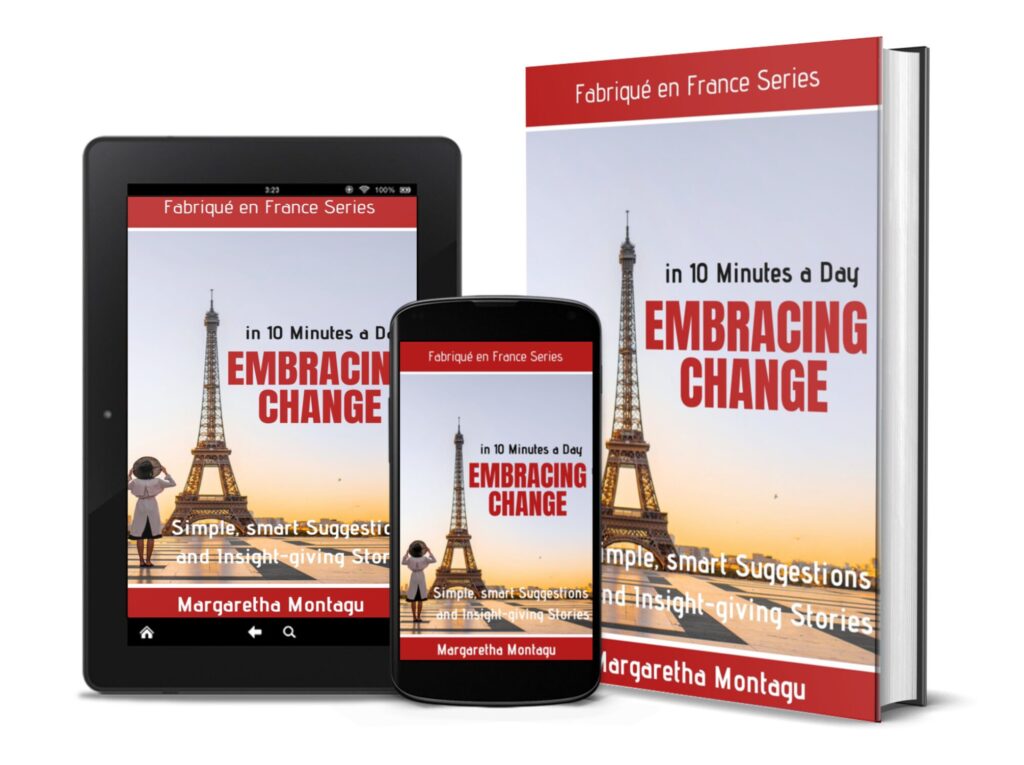
If you are currently facing a major life transition or any other dramatic change in your circumstances, and you have no idea how you are going to cope, the good news is that the strategy presented in this book can help you, step by step, to improve your ability to handle the stress caused by change, even if you feel entirely powerless at the moment.
5 FAQs
Is the Camino de Santiago actually safe for women travelling alone?
Yes. It is one of the most well-travelled pilgrimage routes in the world, with a significant and growing proportion of solo female pilgrims. The route is well-marked, well-monitored, and the pilgrim community is notably inclusive and mutually supportive. Standard travel common sense applies — tell someone your itinerary, keep valuables secure, trust your instincts — but the Camino is not a remote wilderness experience. You are rarely more than a few kilometres from a village, a café, or another pilgrim.
What if I get lonely?
This is the most common pre-trip worry and the fastest-dissolving one on arrival. The Camino has a social culture built into it. You walk at your own pace, but you are walking the same road as hundreds of other people, many of whom are also walking alone, and the shared experience creates an unusually immediate sense of connection. Most solo walkers report that the challenge is not loneliness but the opposite: learning to balance the community of the route with the solitude they came for. You will likely have more meaningful conversations in five days on the Camino than in five months of ordinary life.
I’ve never done anything like this before. Is it too ambitious as a first solo trip?
A structured five-day guided retreat on the Camino is arguably the ideal first solo trip precisely because it gives you the experience of travelling alone without removing all the scaffolding at once. You have a route, you have a guide, you have a small group of fellow walkers to share meals and evenings with, and you have the Camino’s own infrastructure of waymarks, albergues, and villages. It is solo travel with a safety net — and a beautiful one.
What do I do about eating alone in restaurants?
You eat. You order something good. You look out of the window, or you read your book, or you write in your journal, or you strike up a conversation with the person at the next table who is also, statistically speaking, quite likely to be on the Camino and entirely open to company. The first solo restaurant meal is the hardest. The second is much easier. By the third, you will be wondering why you ever needed anyone with you to justify enjoying a meal.
How do I explain to people why I’m going alone?
You don’t have to. ‘I wanted to’ is a complete sentence. If you feel the need for a fuller explanation, ‘I’ve wanted to walk a section of the Camino for years and I decided to stop waiting for other people’s schedules to align with mine’ is both accurate and, frankly, unanswerable. The women who have done it will nod. The ones who haven’t will file it away for later.
The white-and-red Arrows Are Waiting
Claire Hennessy ate her first solo dinner on the terrace of a small restaurant in a village she would have been unable to pronounce two weeks earlier. She had a glass of Armagnac. She had a notebook. She had, somewhat to her own surprise, absolutely nothing to apologise for.
The stone was gone. She has tried to explain this to people since — the particular freedom of being entirely responsible for yourself in a place where no one knows your job title, your family history, or the version of you that has accumulated over fifty-one years of other people’s expectations. She can’t quite do it justice. The Camino has a way of being more eloquent than the people who walk it.
If you have a list somewhere — on your phone, on a Post-it, somewhere in the back of your mind where the good ideas live — of places you have been meaning to go when someone could come with you, consider this: the someone was you all along.
The Camino de Santiago offers small groups of up to four guests a five-day retreat that includes three non-guided Camino walks, generous meals, excellent company, and the particular magic of a road that has been helping people find themselves for over a thousand years. Summer and autumn dates are available. You do not need to bring anyone with you.
Do you dream of escaping your stressful life to raise a herd of goats or grow sunflowers in the south of France? Then you may be ready for an Esprit Meraki retreat. Get access to this “very serious” quiz to help you figure out how urgent your need for a change of scenery is, when you subscribe to my monthly newsletter.
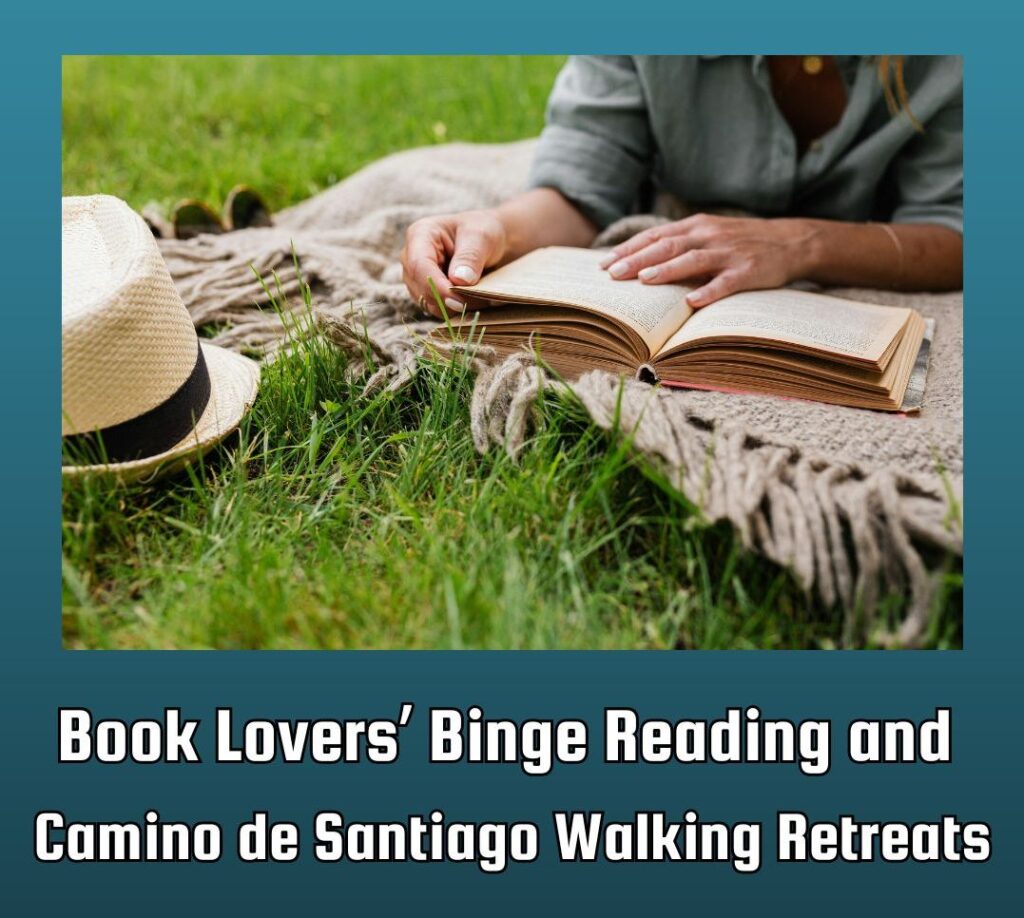
Join us for the Book Lovers Binge Reading Camino de Santiago Walking Retreat in the sun-drenched southwest of France: a journey where the trail and the story unfold together. Walk ancient paths at your own pace, then settle in each evening with a good book. This isn’t a fitness challenge—it’s a gentle rhythm—one step, one chapter, one honest conversation at a time. Rolling hills, quiet villages, golden light. No expectations, no performance, no agenda but your own unfolding.
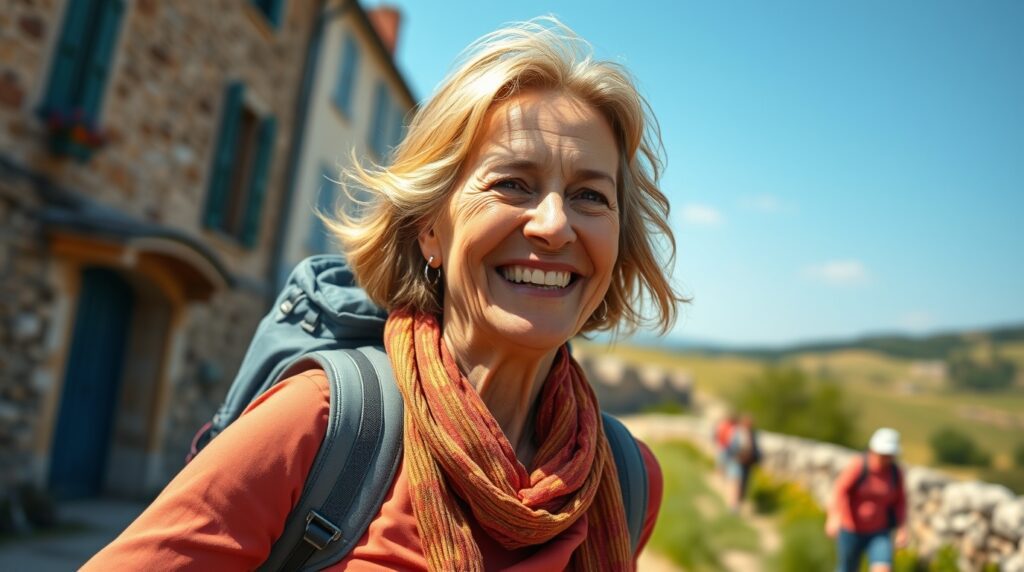
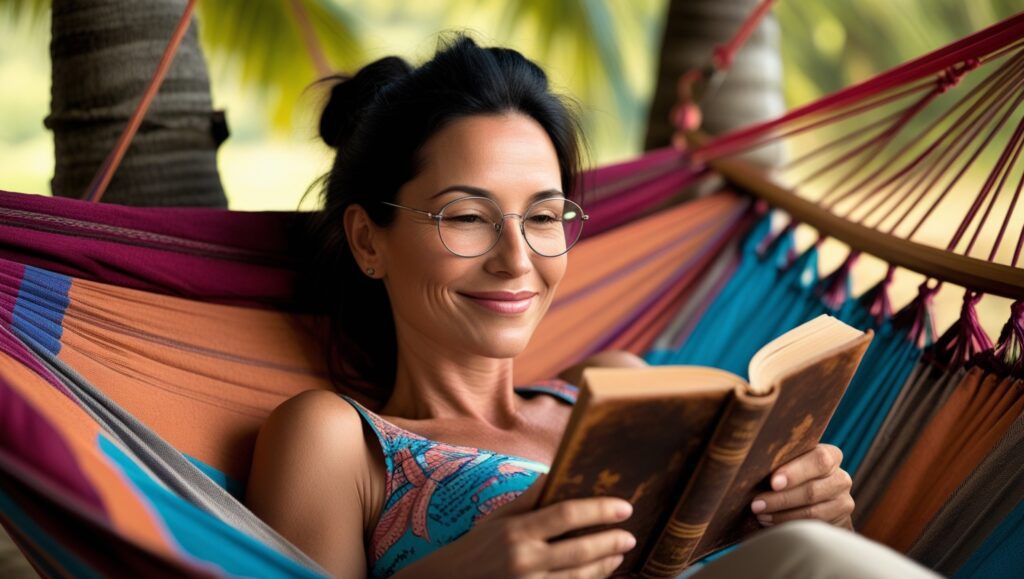
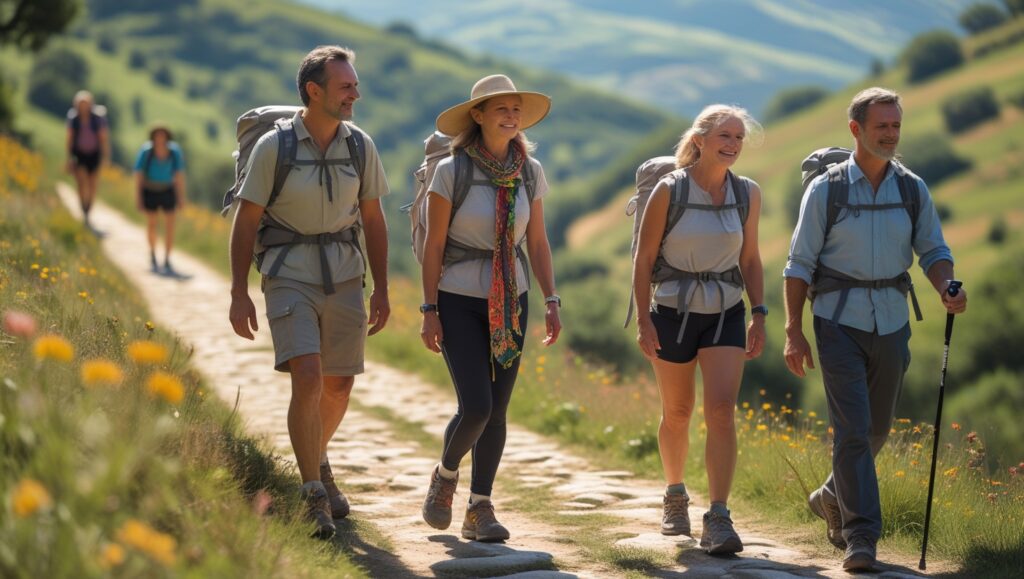
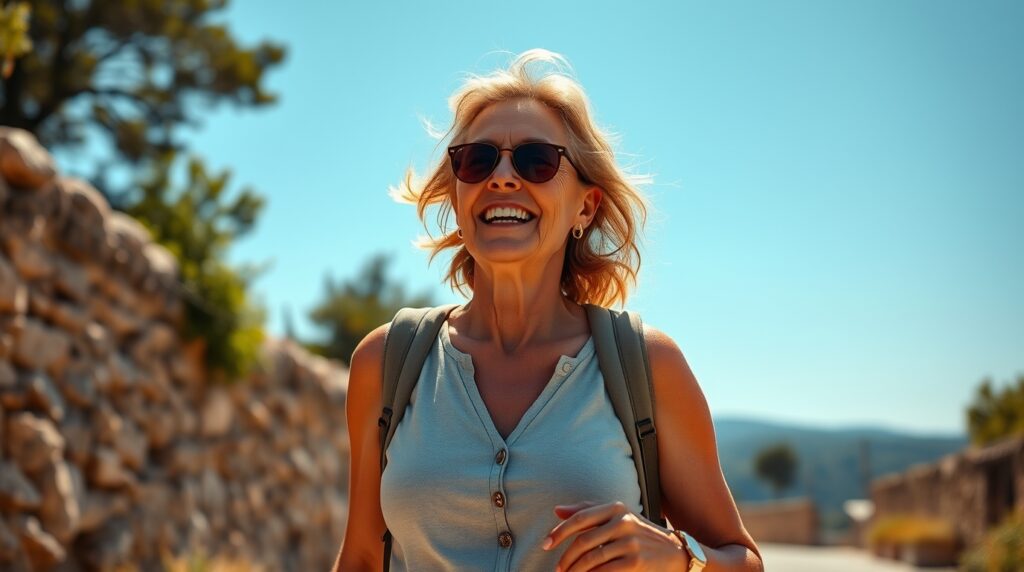
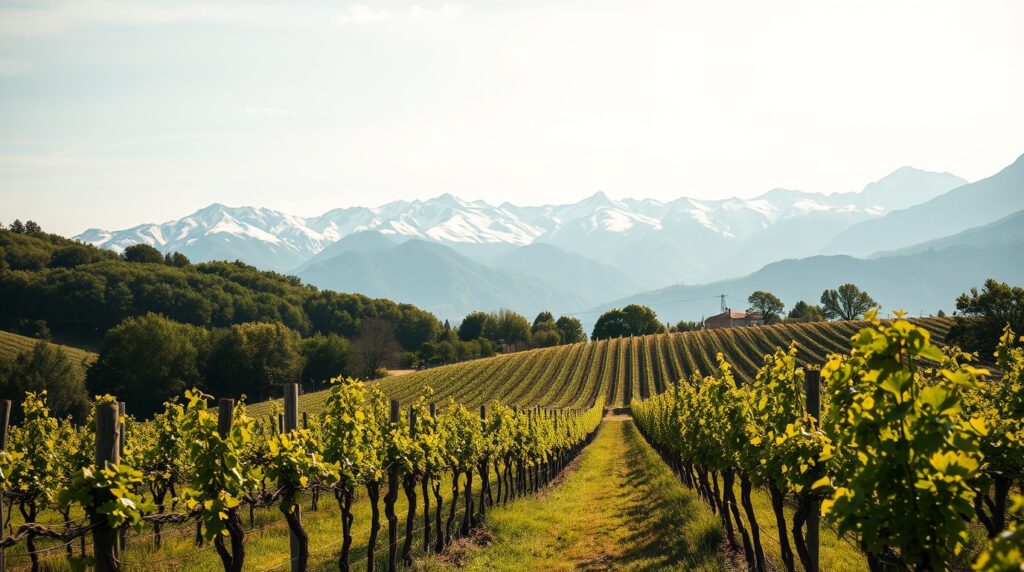
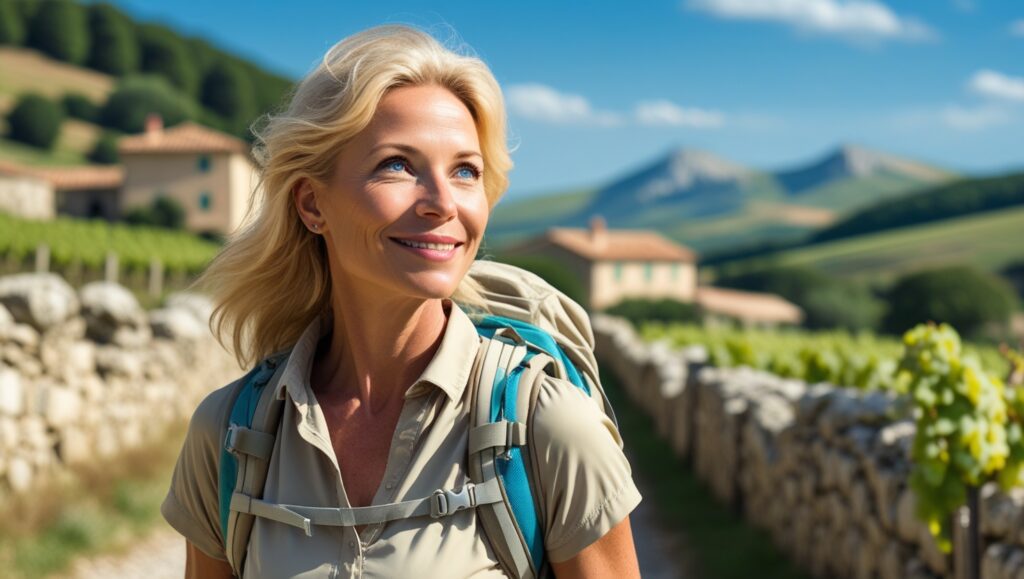
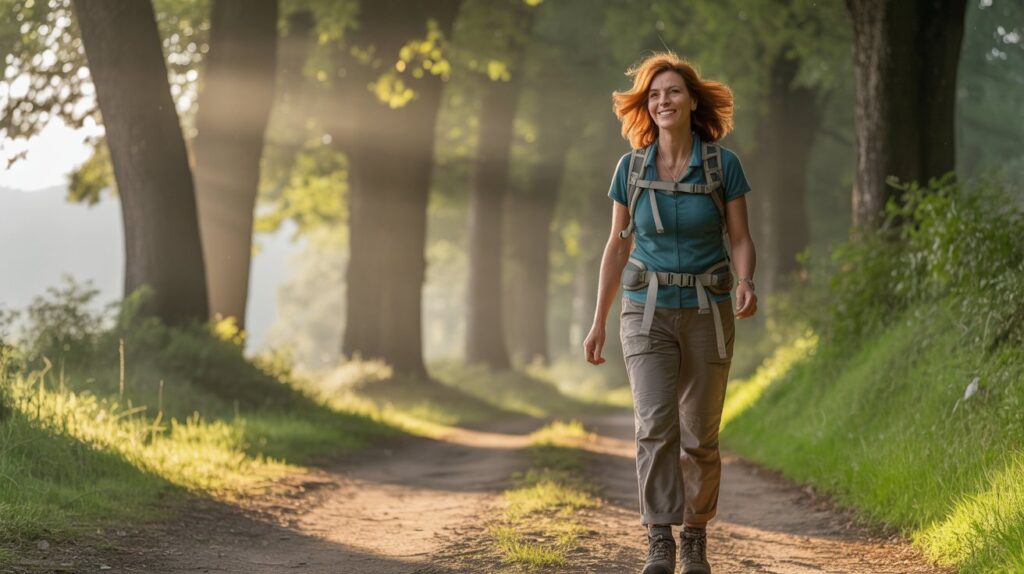
If your soul is craving fresh air, meaningful movement, and a chance to reconnect with nature, join us on a Camino de Santiago Walking Retreat in the southwest of France. This isn’t just a scenic hike – it’s a powerful, natural reboot for your body, mind, and spirit. Imagine quiet paths, rolling hills, cozy evenings, and slow conversations. No fitness requirements. No forced bonding. No pressure to have a breakthrough. Just one foot in front of the other, and a journey that meets you exactly where you are.
Find out more and book your retreat at margarethamontagu.com
© Margaretha Montagu | margarethamontagu.com