Science-backed strategies for introverts who need real connection, not just a crowded room and how meaningful connection, not small talk, is the secret weapon every introvert needs to survive uncertain times
What this is: A warm, honest, evidence-backed exploration of why the people around you matter enormously when life gets complicated, and why this is doubly true for introverts who are quietly carrying more than anyone suspects.
What this isn’t: A chirpy manifesto about extroversion, a listicle on “how to make friends as an adult,” or any advice that involves a mixer, a name tag, and a bowl of crisps that’s somehow supposed to fix your loneliness. We will not be suggesting you smile more, complain less, fake enthusiasm for small talk, or force yourself into rooms that drain you just to prove you’re trying. You’ve tried. You’ve stood at those parties with your drink as a prop, nodded at people whose names you immediately forgot, driven home wondering why you feel emptier than when you left.
Read this if: You’re someone who’s thoughtful, self-aware, and currently navigating a world that feels increasingly uncertain, and you’re wondering whether the isolation creeping in at the edges is helping or hurting you.
5 Key Takeaways
- The quality of your connections, not the quantity, determines how well you weather a storm. Three people who truly see you are worth more than thirty who barely know your name.
- Introverts are not anti-social; they are selectively social. The distinction matters enormously when you’re building the kind of support network that will actually sustain you.
- Isolation during times of global uncertainty is not self-care; it’s slow erosion. The world feels chaotic enough without shrinking your world to the size of your sofa.
- Shared experiences, especially in nature, are one of the fastest ways to create genuine connection. There’s something about walking the same ancient path, literally and figuratively, that dissolves the careful walls we build around ourselves.
- Who you become during a crisis is shaped by who walks alongside you. The right companions don’t just help you survive, they help you become a better version of yourself.
Introduction: The Quiet Crisis Nobody’s Talking About
Are You Trying to Survive the Current World Chaos Alone, When You Don’t Have To?
You’re slowly sipping your morning coffee, scrolling through the news, and somewhere around the third headline, a quiet dread settles into your chest like fog. The world, it seems, is spectacularly good at producing reasons to worry. Climate. Politics. Economics. The vague, persistent sense that the ground beneath everything is slightly less solid than it used to be.
You close the app. You manage your day. You hold it together beautifully, because that’s what capable people do.
And then, somewhere around 11pm, alone with your thoughts, you wonder: How is everyone else coping with this?
If you’re an introvert, that loneliness has a particular flavour. It’s not that you want a crowd. You’ve never wanted a crowd. What you want, what you actually need, is the rare and specific relief of being genuinely understood by the right people. And right now, in a world that feels increasingly fractured, that kind of connection can feel very far away.
This article is about why that connection is not a nice-to-have. It’s about why the people you surround yourself with are, quite literally, part of your survival kit during difficult times. And it’s about how to find them, nurture them, and let them matter to you, even if your entire nervous system is suggesting you’d be fine on your own.
You won’t be. None of us are. But the good news is, you don’t have to be.
The Story of Helena Voss: What Happened When She Finally Let Someone In
Can One Week Change the Way You See Yourself?
Helena Voss had always been the most competent person in any room she walked into.
She’d learned early that competence was currency, and she’d spent forty-three years investing wisely. Senior editor at a respected publishing house. A flat in Edinburgh she’d renovated herself, mostly. A reputation for being unflappable, incisive, and reliably, almost annoyingly, competent.
Then came the year everything fell apart, politely but thoroughly.
Her marriage ended, not with a dramatic argument, but with a quiet conversation over dinner in which her husband explained, with the measured calm she’d always admired in him, that he had been deeply lonely for most of their marriage. The words landed in her chest like stones dropped into still water. She hadn’t known. She thought they were both just busy. She thought that was what grown-up love looked like.
The redundancy came three months later. Publishing, reorganised. Her role, dissolved.
And then, in May, her mother was diagnosed with early-stage dementia.
Helena did what Helena always did. She managed. She made lists. She researched care facilities at 2am. She returned calls promptly and answered “I’m fine” with such conviction that people stopped asking. She was fluent in ‘being fine.’ She’d been perfecting it her whole life.
What she didn’t do, couldn’t do, was tell anyone the truth. That she was frightened. That the silence in her flat had begun to feel less like peace and more like evidence. That she would sometimes stand in the shower until the water went cold because it was the only place she could cry without feeling watched.
She heard about the retreat almost by accident, a mention in a bookshop newsletter. Five days in southwest France. Walking the Camino de Santiago. Books. Small group. A physician who understood what it meant to be at a turning point.
Helena’s first instinct was immediate and characteristic: No. Absolutely not. I don’t do group things.
Her second instinct, quieter, more persistent: You are disappearing. Something has to change.
She booked it on a Tuesday evening, had a minor panic on Wednesday, and arrived at the farmhouse in the Lot Valley on a bright September morning, suitcase in hand, armour fully intact.
The first thing she noticed was the smell. Thyme, mint, old roses and something earthy she couldn’t name, warm in the late-summer air. The second thing she noticed was that the other three women arriving that morning all looked, beneath their composed exteriors, exactly as wrung out as she felt.
She recognised it immediately, the careful way they held themselves, the polite deflection in their introductions. We are all very fine, their posture announced. We are all completely managing.
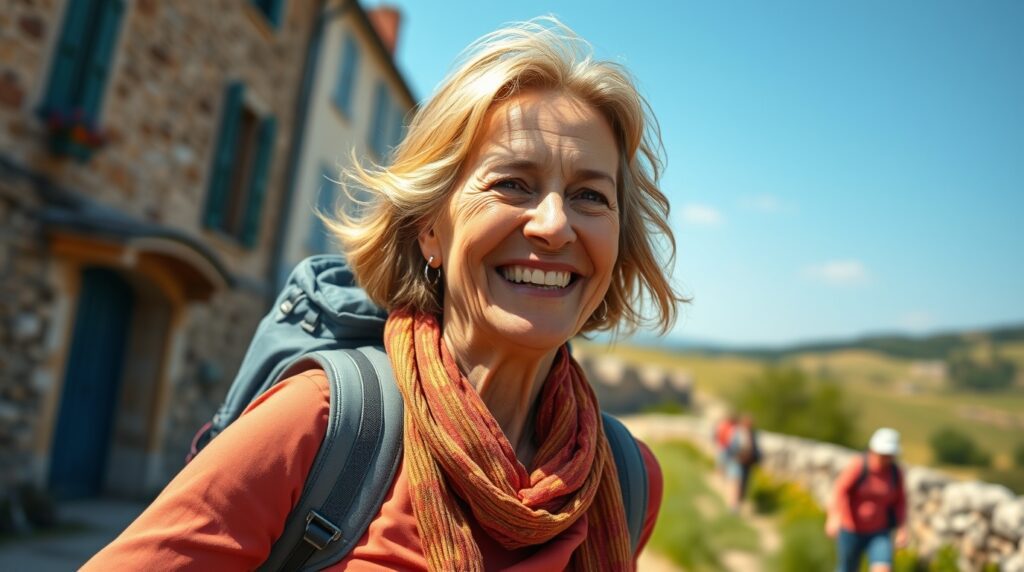
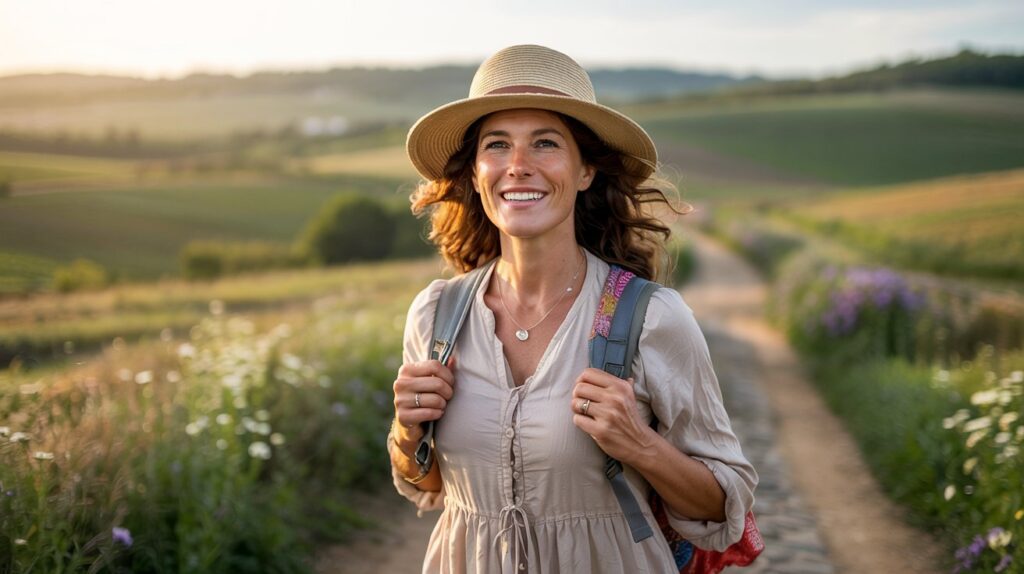
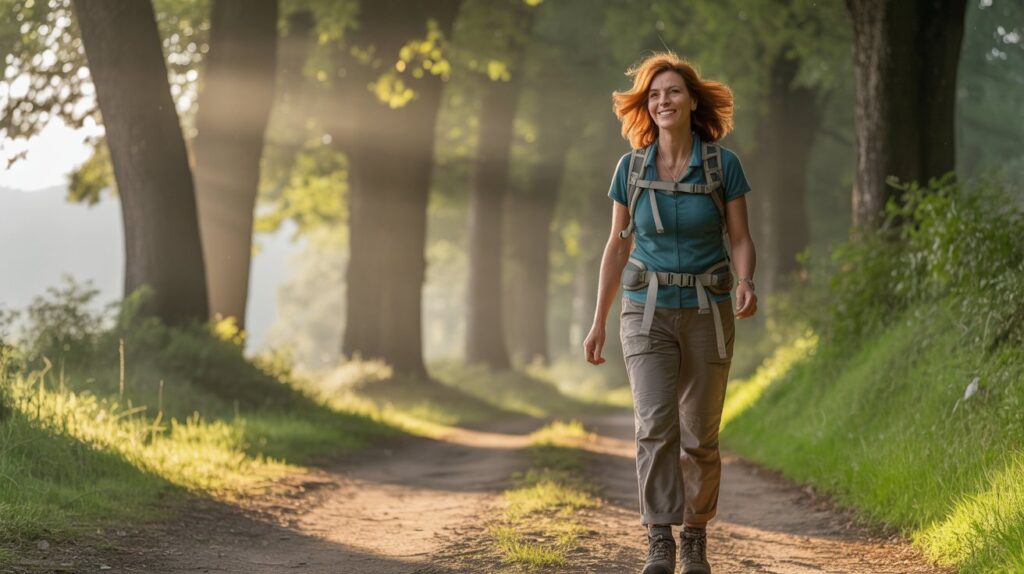
The walking started gently, which she hadn’t expected. She’d prepared herself for a gruelling march, another test to pass. Instead it was contemplative. The ancient path beneath her feet, the light through oak trees, the sound of her own breathing. And beside her, Cécile, a retired teacher from Lyon who had recently lost her son, who talked about him so matter-of-factly and with such fierce love that Helena found herself, without planning it, talking about her mother.
Really talking. Not the competent summary she gave to colleagues. The actual, untidy, frightened truth of it.
That evening, during supper, the kind of conversation that happened when people have spent a day walking in a beautiful landscape together, Helena noticed something unusual. She wasn’t performing. She wasn’t managing the room. She was just, to her profound surprise, present.
There were books, of course. Rich, nourishing, carefully chosen books that gave language to experiences she’d been carrying wordlessly. There was the Reconnect with Nature journaling course, which she’d rolled her eyes at privately, and then found herself using at dawn on the third morning, sitting on the terrace with a notebook, writing things she hadn’t known she needed to say.
By day four, Helena cried properly for the first time in two years. Not in the shower. In the company of women who didn’t flinch, didn’t fix, didn’t rush her back to fine.
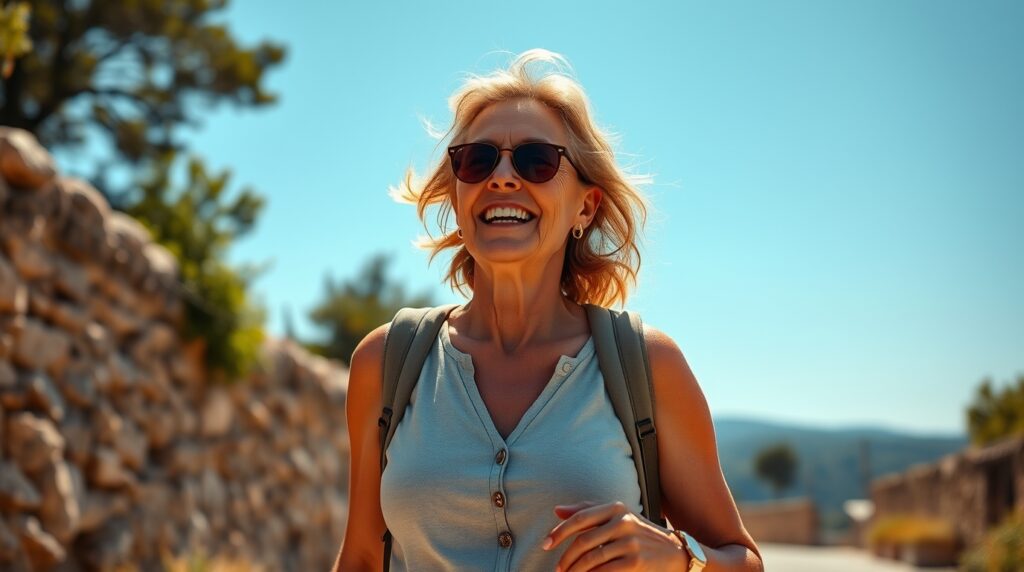
On the last morning, walking the final stretch before the village, she thought about what had changed. Not her circumstances, those were waiting patiently at home. But something inside had shifted. She’d been reminded of something she’d forgotten so thoroughly she’d stopped knowing it was missing: that she was not alone, had never been required to be alone, and that letting herself be witnessed, truly witnessed, by the right people was not weakness.
It was, she thought, stepping into the sunlight, the bravest thing she’d done in years.
Why Your People Are Your Greatest Resource in Difficult Times
What Does Science Tell Us About Human Connection and Resilience?
Helena’s story is not unusual. In twenty years of working with people navigating major life transitions, as a physician with a long-standing interest in stress management, and as a host of transformational retreats for more than fifteen years, I have watched the same pattern repeat itself with remarkable consistency.
The people who recover well from difficult periods, and not just recover, but genuinely thrive afterwards, are almost never the ones who white-knuckle it alone. They are the ones who, somewhere in the process, allow themselves to be genuinely supported.
This is not fluffy thinking. The research on social connection and resilience is robust and rather startling in its clarity. Chronic loneliness is associated with elevated cortisol levels, disrupted sleep, and immune suppression. Social isolation, particularly during periods of high stress, literally changes the way our brains process threat. We become more vigilant, more reactive, more likely to interpret neutral events as dangerous.
Conversely, the presence of even one genuinely supportive relationship has been shown to buffer the physiological impact of stress significantly. One study found that holding a stranger’s hand during an anticipated shock was enough to reduce neural threat responses. A stranger’s hand. Imagine what a trusted friend can do.
For introverts, this research has a particular edge. Because the introvert’s instinct when things get difficult is almost always to retreat. To process alone. To manage internally. And while solitude is genuinely restorative for introverts in a way it isn’t for everyone, there is a crucial difference between chosen solitude and habitual isolation born of fear or exhaustion.
The former restores you. The latter hollows you out.
What introverts need is not more people. They need deeper connection with fewer people in supportive environments.
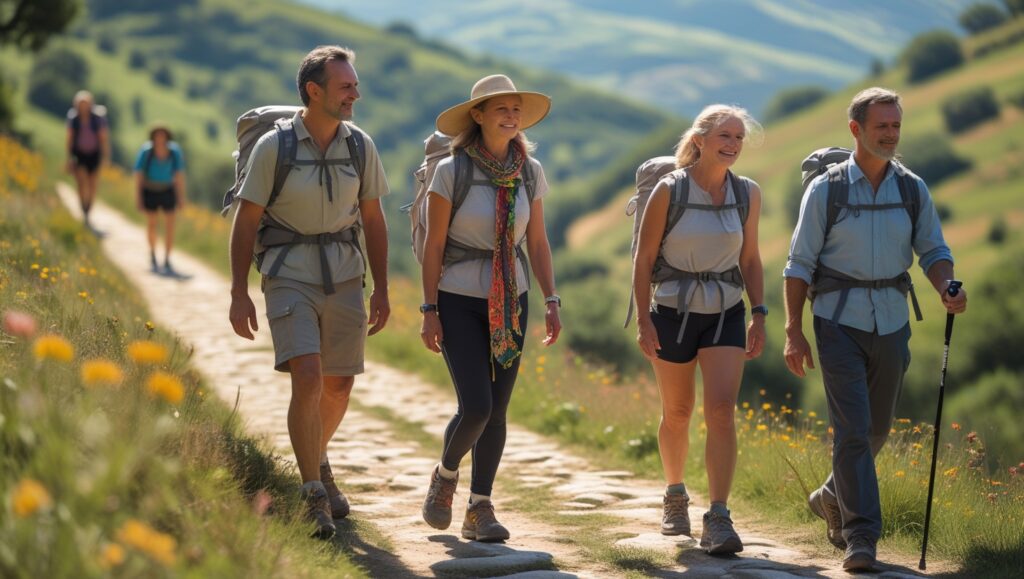
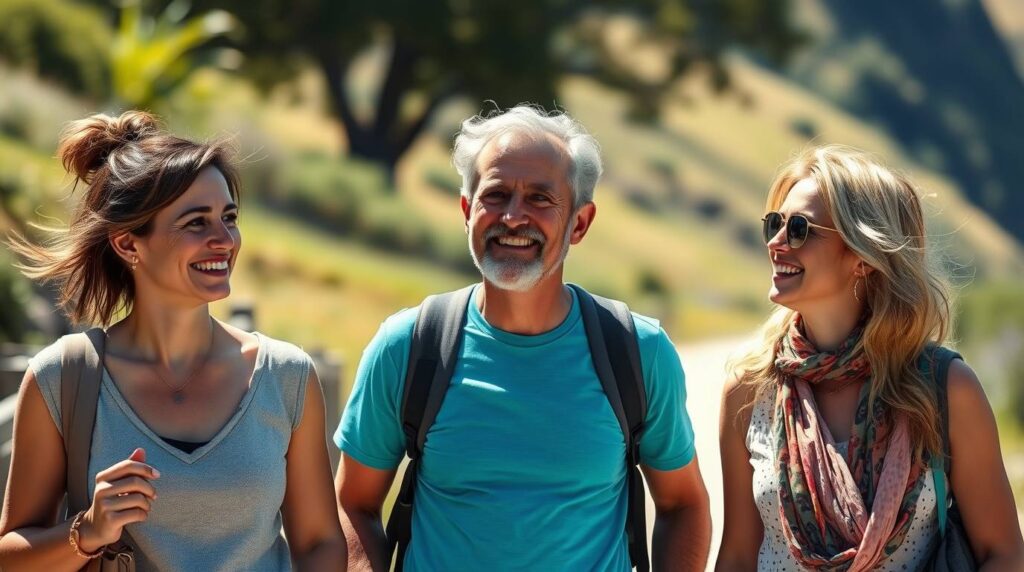
This is partly why nature is such a powerful setting for building those connections. Shared experience in natural environments, particularly walking, reduces the social pressure that makes introverts want to exit every room after twenty minutes. When you’re walking together, side by side, looking at the same horizon, conversation becomes possible at a different level. You’re not performing connection. You’re just having it.
The Camino de Santiago has, for centuries, operated as a kind of social solvent. Something about the shared effort, the beauty, the physical rhythm of walking day after day, dissolves pretence with startling speed. People who would never have spoken their truth over a dinner table will tell you everything on a mountain path.
I’ve witnessed it hundreds of times, and I never stop being moved by it.
The Ripple Effect
What happens to a Community when One Person flourishes?
There is something else worth saying, and it tends to surprise people when they first hear it.
The work you do to emerge from difficult times, the courage it takes to seek genuine connection, to allow yourself to be supported, to step back into life rather than retreating further from it, that work doesn’t stay contained to you.
People are part of systems. Families are systems. Workplaces and communities are systems. When one person within a system shifts, the whole system recalibrates.
Helena, going home to Edinburgh with her quieter centre, her new friendships, her reinvigorated relationship with books and nature, didn’t return to the same world she’d left. She returned to the same circumstances, but she was now a different variable within them. Her mother noticed. Her colleagues noticed. Her sister, who’d been watching her manage from a careful distance for two years, finally felt she could call and ask how Helena actually was.
And when Helena answered honestly, the conversation that followed was the most real they’d had in fifteen years.
This is what genuine transformation does. It gives other people permission to stop pretending too.
When you choose, against every well-trained instinct, to let people in, you become, whether you intend to or not, an invitation. Not a loud one, not a lecture about vulnerability. Just a quiet demonstration that it’s possible, and safe, to be known.
Your community, your family, the people who love you and have been watching you disappear into your competence for years, they’re waiting for that invitation. They might not even know they’re waiting. But they are.
5 Mistakes to Avoid When Building Your Support Network in Difficult Times
What Trips People Up, Even When They Know Better?
Mistake 1: Confusing quantity with quality. Having many acquaintances who know only the surface of you is not the same as having three people who know your whole story. Don’t measure your support network by headcount. Measure it by depth. One honest conversation is worth forty pleasant ones.
Mistake 2: Waiting until you’re in crisis to invest in relationships. The time to build genuine connection is before the flood, not during it. If you’re currently in the middle of a difficult period, start anyway. But resolve, as you emerge, to tend your relationships as regularly as you tend anything else that matters.
Mistake 3: Surrounding yourself with people who confirm your fear rather than expand your vision. There is a particular type of well-meaning company, and many of us have been guilty of seeking it, that keeps us neatly anchored in our worst interpretation of our situation. Isn’t it terrible, yes it is, pass the biscuits. Choose people who uphold your potential even when you can’t see it yourself.
Mistake 4: Expecting digital connection to substitute for embodied presence. Text messages are lovely. Video calls are better than nothing. But there is something about being physically present with another human being, sharing the same air, the same light, the same landscape, that has no digital equivalent. Your nervous system knows the difference, even if you tell yourself it doesn’t.
Mistake 5: Dismissing group experiences because you’re an introvert. Small, thoughtfully facilitated groups of people with shared values are not the same as cocktail parties or networking events. Many introverts have described retreats, particularly in nature, as some of the most genuinely connective experiences of their lives, precisely because the environment removes the elements they find most draining: performance, small talk, and the relentless management of first impressions.
A Short Intention-Setting Exercise: Who Do You Want Beside You?
On a piece of paper, or in your journal, write the answers to these three questions. Don’t overthink them. Write what comes.
- When I am at my most frightened or overwhelmed, who do I instinctively want to call? (If no one comes to mind, that itself is important information, not a verdict on your worth, but a signal about where to direct your energy.)
- What would I need to feel safe enough to let someone see me struggling? (Notice what comes up. Safety? Shared experience? Physical distance from daily life? Nature? This tells you something about the environment in which connection becomes possible for you.)
- Who in my life have I been letting in, and who have I been keeping at arm’s length out of habit, fear, or the belief that needing people is a burden? (Write a name or two. You don’t have to do anything with them yet. Just acknowledge them.)
There are no correct answers. Only honest ones.
Further Reading: Five Books That Will Change How You Think About Connection and Resilience
What Should You Read Next?
1. Lost Connections by Johann Hari Hari’s painstaking investigation into the real causes of anxiety and depression puts disconnection, from people, from meaning, from nature, front and centre. It’s the rare book that manages to be simultaneously unsettling and profoundly hopeful, and it will reframe the way you think about your own social needs. Chosen because it makes the case for genuine human connection more compellingly than almost anything else I’ve read.
2. The Village Effect by Susan Pinker A neuroscientist’s deep dive into why face-to-face contact is literally life-extending, and what happens to us physically and psychologically when we live increasingly mediated lives. Particularly fascinating for introverts who’ve told themselves they’re fine without much in-person connection. Chosen because it delivers the science without being dry, and the implications are genuinely arresting.
3. Quiet by Susan Cain The foundational text on introversion. If you haven’t read it, read it immediately. If you have, read it again with a particular eye on the chapters about solitude versus isolation. Chosen because it’s the book that gave a generation of introverts the language they needed to understand themselves, and that understanding is the precondition for building connections that actually work.
4. The Body Keeps the Score by Bessel van der Kolk Because so much of what disconnects us, from ourselves and from others, lives not in our minds but in our bodies. Van der Kolk’s work on trauma, embodiment, and the healing power of shared physical experience is essential reading for anyone navigating significant stress or life change. Chosen because it explains, among other things, why being in nature and with other people produces physiological changes that thinking and talking alone cannot.
5. Braiding Sweetgrass by Robin Wall Kimmerer An Indigenous botanist’s luminous meditation on reciprocity, gratitude, and the deep intelligence of the natural world. Nothing I’ve read in the past decade has shifted my understanding of connection, to people and to place, more profoundly. Chosen because it reminds us that we are not separate from the world we’re trying to navigate, and that the natural world offers a kind of companionship that heals something very old in us.
P.S. If you’re drawn to making small, sustainable shifts in the middle of your busy life, you might also enjoy my book, Embracing Change, in 10 Minutes a Day. It’s exactly what the title promises: practical, reflective, and designed for people who know they need to change something but can’t carve out three hours a day to do it. Ten minutes. That’s all it asks of you.

If you are currently facing a major life transition or any other dramatic change in your circumstances, and you have no idea how you are going to cope, the good news is that the strategy presented in this book can help you, step by step, to improve your ability to handle the stress caused by change, even if you feel entirely powerless at the moment.
The Reconnect with Nature: A Guided Journaling Course Inspired by Horses
One of the things I’ve seen transform retreat guests who’d nearly given up on themselves is the simple, grounding act of spending time with horses. Not riding them. Just being with them.
My Reconnect with Nature: A Guided Journaling Course Inspired by Horses is an online course that uses equine wisdom and guided journaling prompts to help you find your way back to yourself, gently, in your own time. Horses, as it turns out, are extraordinarily perceptive sounding boards for human emotional states, and being prompted to observe and reflect on them produces insights that more conventional approaches can take months to reach.
This course is included free for all guests at my Camino de Santiago retreats. For everyone else, it’s available online and it is, I’m told, rather startling in the best possible way.
5 FAQs People Are Asking Right Now About Connection and Resilience
What Do People Most Need to Know?
Q: I’m a lifelong introvert and I’ve always recovered better alone. Are you really saying that’s wrong?
Not at all. Solitude is genuinely restorative for introverts, and dismissing that would be as unhelpful as dismissing your need to eat. What I’m suggesting is that there’s a difference between chosen, intentional solitude, which restores you, and avoidant isolation, which depletes you slowly and quietly. The question worth sitting with is: Am I choosing this aloneness, or am I hiding in it?
Q: The world feels so unstable right now. Is it any wonder I’ve retreated?
No. It makes complete sense. When the external environment feels threatening, the instinct to contract is ancient and adaptive. But here’s the catch: prolonged contraction, especially social contraction, makes us more sensitised to threat, not less. The antidote to a world that feels out of control is not further isolation. It’s regulated, safe, genuine connection.
Q: I’ve been hurt by people I trusted. How am I supposed to open myself up again?
Slowly, and in environments that earn it. You don’t open the door all at once. You find contexts, a small group, a shared purpose, a skilled facilitator, where the conditions for trust are more carefully created than in everyday life. And you notice what happens. Not every group will feel right. But that’s information, not evidence that connection is impossible for you.
Q: Can a retreat really make a difference if my problems are still waiting at home?
Yes. Not because the retreat removes your problems, but because it returns you to yourself, and a different version of you handles those same problems very differently. The circumstances are the same. The variable that changes is you. I’ve watched it happen hundreds of times.
Q: I don’t know if I need a retreat or just proper therapy. How do I know which?
They’re not mutually exclusive, and sometimes the answer is both. A good retreat is not therapy, though it can be deeply therapeutic. It’s a context for reflection, nature, community, and reconnection. If you’re carrying something that requires clinical support, please seek that too. But don’t use the existence of deeper work as a reason to postpone all nourishment. You’re allowed to be helped now, not only once you’ve fixed everything.
Conclusion: The Bravest Thing
In twenty years as a physician, I watched the sickest people in my consulting room be sustained, not by the cleverest treatment plan, but by whether there was someone with them or waiting for them at home. And in fifteen years of hosting people through life transitions at my retreats, walking the ancient path of the Camino de Santiago, I have seen the same truth again and again: we are not built to do the hard parts alone.
The world is complicated right now. Perhaps more than at any point in living memory. And if you are someone who feels things deeply, who thinks carefully, who carries the weight of awareness without an obvious place to put it, then the question of who is beside you matters enormously.
Not who fills your social calendar. Not who you perform your finest self for. But who, when you are frightened or lost or quietly undone, you could call at midnight without editing yourself first.
If that list is shorter than it should be, that’s not a failing. It’s a starting point.
“In the middle of difficulty lies opportunity, but you’ll need someone to help you find it.” — Adapted from a principle I return to again and again, with grateful acknowledgement to the hundreds of retreat guests who taught me its truth.
Could Five Days in the French Countryside Be the Turning Point You’ve Been Circling?
If any of this has resonated with you, if you’ve recognised yourself in Helena’s story, or felt the ache of carrying more than you’d like to admit, I want you to know about something.
My 5-Day Booklovers’ Binge Reading and Camino de Santiago Walking Retreat in the southwest of France is designed precisely for people like you: intelligent, thoughtful, stressed, and in need not of fixing, but of space. Space to breathe. To walk. To read books that nourish you. To be in the company of a small group of remarkable people who, like you, came because something needed to shift.
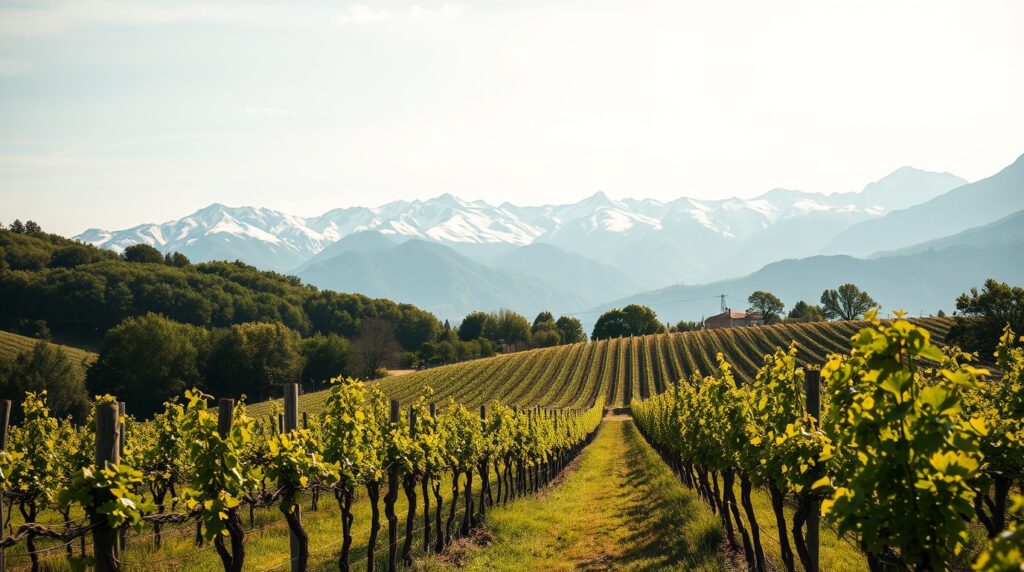
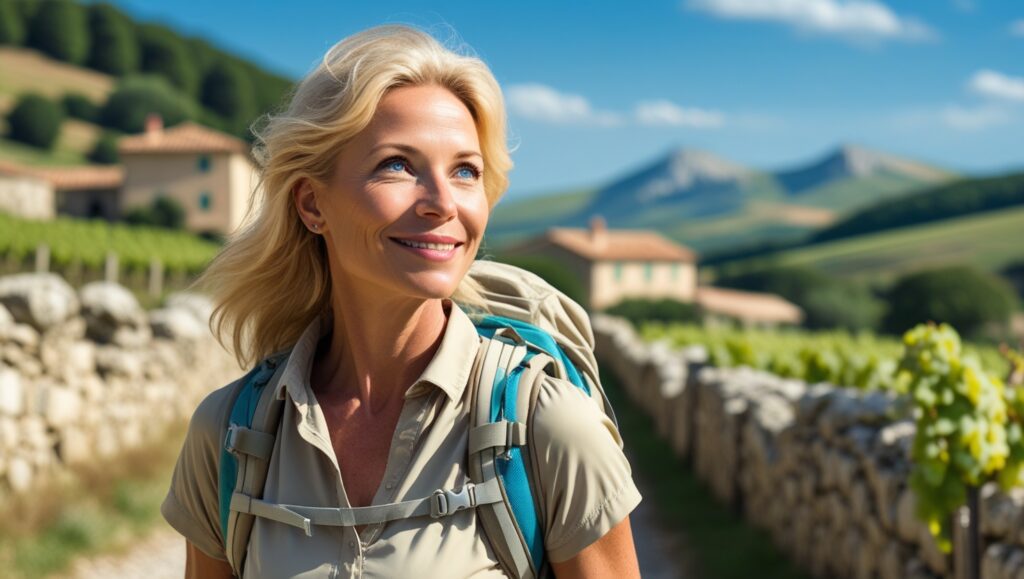
Gascony in southwest France is, quite simply, one of the most beautiful places I know. An ancient path, golden light, the particular silence of landscapes that have held human stories for centuries.
Small groups. Expert facilitation. And the Reconnect with Nature journaling course, included free.
You don’t need to be in crisis to come. You just need to be ready for something different.
If you’re not quite ready to pack a bag for France (yet), subscribe to my newsletter: Practical, warm, never preachy reflections on navigating life’s transitions, with books, science, and the occasional dose of French countryside thrown in. No spam. Just genuine company in your inbox and take the Turning Point Quiz: not sure where you are in your transition, or what you actually need right now? My Turning Point Quiz will help you get clearer, quickly. It takes about five minutes and the results are genuinely useful.
References
- Holt-Lunstad, J., Smith, T. B., Baker, M., Harris, T., & Stephenson, D. (2015). Loneliness and social isolation as risk factors for mortality: A meta-analytic review. Perspectives on Psychological Science, 10(2), 227–237.
- Eisenberger, N. I., Taylor, S. E., Gable, S. L., Hilmert, C. J., & Lieberman, M. D. (2007). Neural pathways link social support to attenuated neuroendocrine stress responses. NeuroImage, 35(4), 1601–1612.
- Coan, J. A., Schaefer, H. S., & Davidson, R. J. (2006). Lending a hand: Social regulation of the neural response to threat. Psychological Science, 17(12), 1032–1039.
- Bratman, G. N., Hamilton, J. P., Hahn, K. S., Daily, G. C., & Gross, J. J. (2015). Nature experience reduces rumination and subgenual prefrontal cortex activation. Proceedings of the National Academy of Sciences, 112(28), 8567–8572.
- Cohen, S., & Wills, T. A. (1985). Stress, social support, and the buffering hypothesis. Psychological Bulletin, 98(2), 310–357.
What would change in your life if you gave yourself permission to be genuinely accompanied through this next chapter? I’d love to know.
Dr Margaretha Montagu, MBChB, MRCGP, NLP Master Practitioner, Medical Hypnotherapist, and Life Transition Coach, has spent more than twenty years helping people find their way through the moments that change everything. She is the author of eight non-fiction books and has hosted transformational retreats on the Camino de Santiago for more than fifteen years.
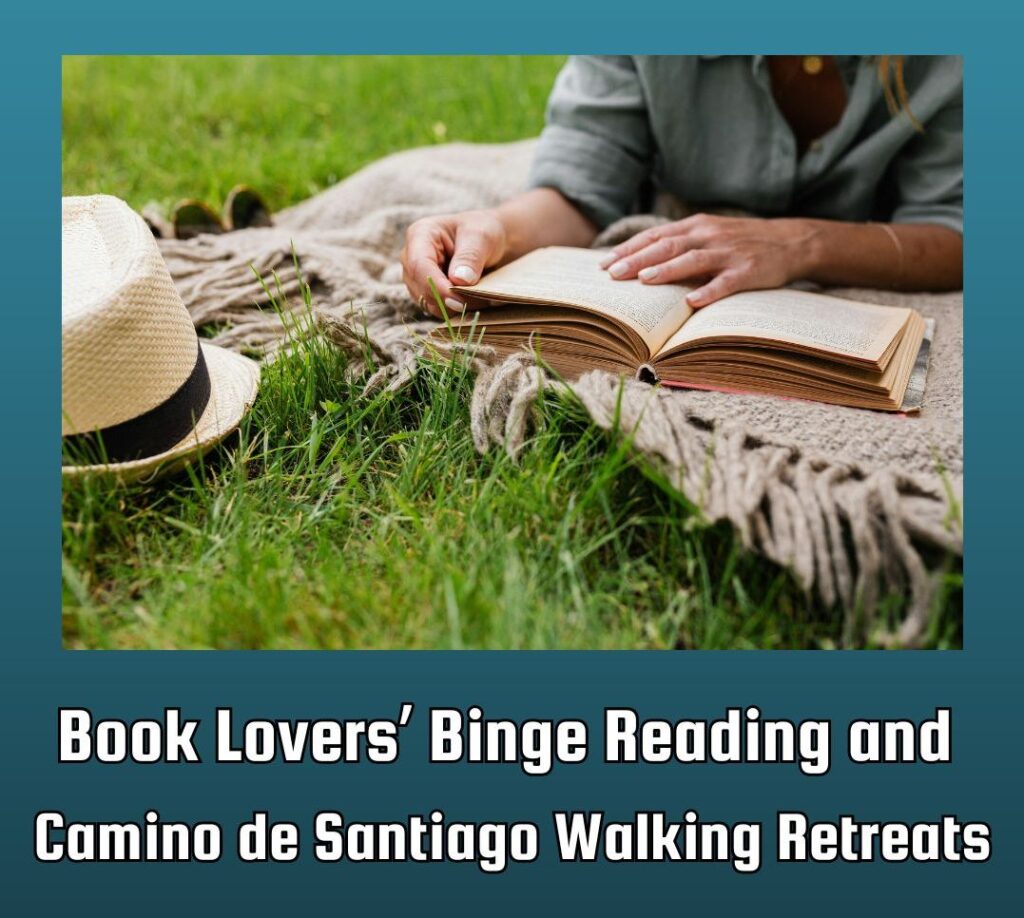
Join us for the Book Lovers Binge Reading Camino de Santiago Walking Retreat in the sun-drenched southwest of France: a journey where the trail and the story unfold together. Walk ancient paths at your own pace, then settle in each evening with a good book. This isn’t a fitness challenge—it’s a gentle rhythm—one step, one chapter, one honest conversation at a time. Rolling hills, quiet villages, golden light. No expectations, no performance, no agenda but your own unfolding.