
How my brain built a new world from fragments of failing vision
I recently read Kim Peek’s story. Bit of a revelation, it was. To me, anyway.
From the moment he was born in Salt Lake City in 1951, doctors urged his parents to place him in an institution. They said he would never walk or speak. But by the age of six, he had memorised the entire Bible. By the time he died, he had committed roughly twelve thousand books to memory. His brain lacked the structure that normally connects its two hemispheres, the corpus callosum, and even today, science cannot fully explain how he did what he did.
What unfolded over the next fifty-eight years quietly dismantled much of what we believe about how the human brain works.
Kim could memorise 12,000 books but couldn’t button his shirt. He could calculate the day of the week for any date in history but couldn’t understand why people shook hands. He could recite entire Shakespeare plays but not switch on a light.
Which of those abilities matters more? Which determines a life’s worth?
The questions themselves reveal how little we truly know.
I’ve thought about Kim Peek often since I read his story, not because our stories are the same, but because they rhyme in a particular way. We are both evidence that the human brain contains mysteries we have not yet mapped. That disability and extraordinary ability can exist in the same person, the same brain, the same life.
Kim’s brain reorganised itself around an absence. Mine has been doing the same thing, more gradually, one operation at a time, one diagnosis after another, over nearly four decades of slowly diminishing light.
The Curtain Descends
I was twenty-five when my eye problems started. A young, ambitious, determined doctor, the world sharp and clear before me. Then came the retinal detachment. Then the keratitis. Then the excruciatingly painful uveitis that felt like someone was driving nails through my skull from the inside out.
Dozens of operations followed, including three corneal transplants. Words like “malignant glaucoma” entered my vocabulary, not as medical terminology to discuss with patients, but as the unwelcome cause of my own deteriorating vision.
I have one artificial eye now. The other looks through what I can only describe as a curtain with holes in it. Imagine trying to see the world through thick lace, except the lace is moving, and the holes keep shifting, and sometimes they disappear altogether.
It eventually became clear that the stress of trying to practice medicine while losing the ability to see was speeding up the disease progression. My body was destroying itself trying to keep up.
I had spent years training to heal people, and now my own body was the patient I couldn’t cure.
What I didn’t know then, what Kim Peek’s parents didn’t know when doctors told them to institutionalise their son, was that the human brain is astonishingly, ruthlessly, unwaveringly stubborn about finding another way.
The Invisible Map
I don’t remember deciding to memorise the layout of my home. Of the hospital where I work. Of the boulangerie where I bought my bread. Of the track I ran every morning. I don’t recall the moment I started building three-dimensional maps in my mind of every building I regularly entered.
These things simply happened.
My brain, confronted with the gradual withdrawal of visual information, quietly began constructing an alternative system. It built a library inside my skull, except instead of books, it stores spatial relationships, distances, textures, sounds, the feel of air currents that tell me I’m approaching a doorway: maps, dozens of maps.
I know my house, my village, my doctor’s office, my friends’ houses, local streets the way Kim Peek knew Shakespeare—every turn, every curb, every place where the pavement buckles just enough to catch an unwary foot. I can navigate my home in complete darkness because darkness and my daily reality aren’t that different anymore.
The counting and map creation are automatic and near instant now. Seventeen steps from the bedroom to the kitchen. Eleven from the front door to the stairs. My brain catalogues these numbers without my conscious participation, the same way your brain knows how to walk without you having to think “left foot, right foot.” I need to navigate a path once, maybe twice, at most three times to know it. As long as nothing changes, I’ll find my way.
I use sound the way other people use sight. The acoustic quality of a room tells me its size. The echo of my footsteps reveals whether I’m approaching a wall or an open space. I’ve become a human sonar system, though significantly less graceful than a dolphin.
And then there are my horses.
A Comedy of Errors (Featuring Horses)
If you want to truly understand the gap between ability and disability, between what I can do and what I struggle with, spend a day watching me care for my horses.
I can sense their moods from the sound of their breathing. I can detect lameness from changes in their gait that I feel through the ground rather than see. I know where each horse is by the distinctive sound of their movement, the particular way each one disturbs the air.
I can also walk directly into a fence post I’ve passed a thousand times because the light was different and the hole in my curtain was in the wrong place.
I’ve put a saddle on backwards. I’ve mistaken a wheelbarrow for a horse (in my defense, it was a very large wheelbarrow and I was having a particularly bad vision day). I once spent five minutes having a lovely conversation with what I thought was my farrier before realising I was talking to a hay bale.
The horses, bless them, have adapted to my limitations. They’ve learned to stand very still when I’m working around them. They’ve learned that when I reach out my hand, I’m not petting them—I’m checking where they are in space. They’ve become my partners in navigation, my guides through a world that keeps shifting under my feet.
Living with them, caring for them, has taught me something profound: competence and incompetence are not opposites. They’re neighbours. They live on the same street.
I am simultaneously capable and helpless, independent and dependent, able and disabled.
Just like Kim Peek could memorise twelve thousand books but needed his father to button his shirt.
Measuring Independence
People ask what “living independently” means for someone with my vision. It’s a fair question with a complicated answer.
I live alone. I care for myself and my horses. I provide for myself financially. I run transformational retreats for people going through major life transitions, which is either supremely ironic or perfectly logical, given that I’ve navigated more life transitions than I care to count. Sometimes several at once.
Lost my career. Lost my vision. Lost the future I thought I was building. Gained new skills. Gained new purpose. Gained a perspective on resilience that you could never learn from textbooks.
But “independent” has brackets, as you can see.
I can navigate my known world with confidence that borders on arrogance. But it is only when I travel, which I do solo mostly because I’m either obstinately brave or utterly foolish (my friends can’t agree which), that I am forced to confront the extent of my disability.
In nearly four decades, I have managed to collect an extensive range of expressive French swear words to cope with these eventualities. And some in a few other languages too.
New environments are foreign languages my brain hasn’t learned yet. I haven’t memorised the steps. I haven’t mapped the spatial relationships. I haven’t catalogued the sounds, smells and textures that would let me move through space with certainty.
So I need assistance. I need someone to tell me where the curb is, where the door is, and whether I’m talking to a person or a potted plant.
The word “nearly” does a lot of heavy lifting in “nearly independent.”
It’s the gap between what I can do in my mapped universe and what I can’t do in unmapped territory. It’s the space where ability and disability become dance partners, constantly switching who leads.
And Then There Is Gratitude
I’m grateful, though. I wake up grateful for every single morning I open my eyes and I can see. Sort of.
Not well. Not clearly. Some mornings barely, if at all. Certainly not the way I used to see, when the world was sharp-edged, three-dimensional and I took every bit of my binocular sight for granted.
But I can “see.”
The gratitude isn’t for the vision I have left. It’s for what my brain has done with that deteriorating vision.
My brain’s flexibility. Its adaptability. Its plasticity. Its absolute refusal to give up. Its uncanny way of finding new solutions to problems.
Every morning, my brain wakes up and gets to work building the world for me from insufficient data. It takes the fragments my eyes can still capture and fills in the rest from memory, from sound, smell, touch, from the proprioceptive sense of where my body is in space.
It does this without requiring any conscious effort. It just does it, the way Kim Peek’s brain memorised books, the way his neural pathways reorganised themselves around the absence of a corpus callosum. Automatically.
Our brains are built to adapt. They’re built to find ways to continue to function when the standard equipment fails.
This is what I’ve learned from living nearly forty years with progressive vision loss: disability doesn’t mean your brain stops working. It means your brain starts working differently.
What Kim Peek Taught Me
Kim, the inspiration for Barry Morrow’s Rain Man, spent the last twenty years of his life travelling, speaking to nearly sixty million people, many of them students with disabilities. He demonstrated that disability and extraordinary ability can exist together.
I think about this when I’m navigating my environment in ways that would seem impossible to someone who doesn’t understand how my brain has remapped my world. I think about it when I’m standing helpless in an unfamiliar airport, needing assistance with tasks that seem absurdly simple to everyone around me.
I am both. Capable and incapable. Independent and dependent. Able and disabled.
Kim Peek died in 2009. Scientists at NASA had studied his brain with the most advanced imaging available, hoping to understand how such cognitive processing could exist without the neural structure most human minds depend on. They found no definitive explanation. He remained an enigma.
Our Portable Libraries
Kim Peek was a living library. He had twelve thousand books in his memory, instantly accessible, perfectly preserved.
I have a different kind of library. Mine is built from spatial relationships and step counts and energy fluctuations and the acoustic properties of rooms. It’s constructed from the memory of how things appeared when I could see them clearly, now translated into other sensory languages.
Every person who lives with disability carries a library like this. We carry the accumulated knowledge of how to navigate a world that wasn’t designed for our particular way of being. We carry the solutions our brains and bodies have invented. We carry the proof that human beings are far more adaptable than our textbooks suggest.
Surviving Contradictions
In Salt Lake City, there was once a library where a man read two pages at the same time with different eyes, absorbing the knowledge of the world while struggling to tie his shoes. Within that contradiction lies a truth we are only beginning to approach.
In my home, there is a woman who can navigate her world with confidence in darkness but needs help in unfamiliar train stations. Who can sense her horses’ moods from breathing patterns but has mistaken a wheelbarrow for a horse. Who lost her medical career but found purpose guiding others through life challenges.
Within that contradiction lies the same truth.
We do not yet fully understand what the human brain can do. We do not yet know what intelligence truly is. We do not yet know how many forms of genius we have mislabeled as disability.
Kim Peek is remembered fifteen years after his death not for what he knew, but for what he revealed about how much we do not know.
And I wake up grateful not for what I can see, but for what my brain has revealed about its capacity to adapt, its ability to find another way forward when the path becomes invisible.
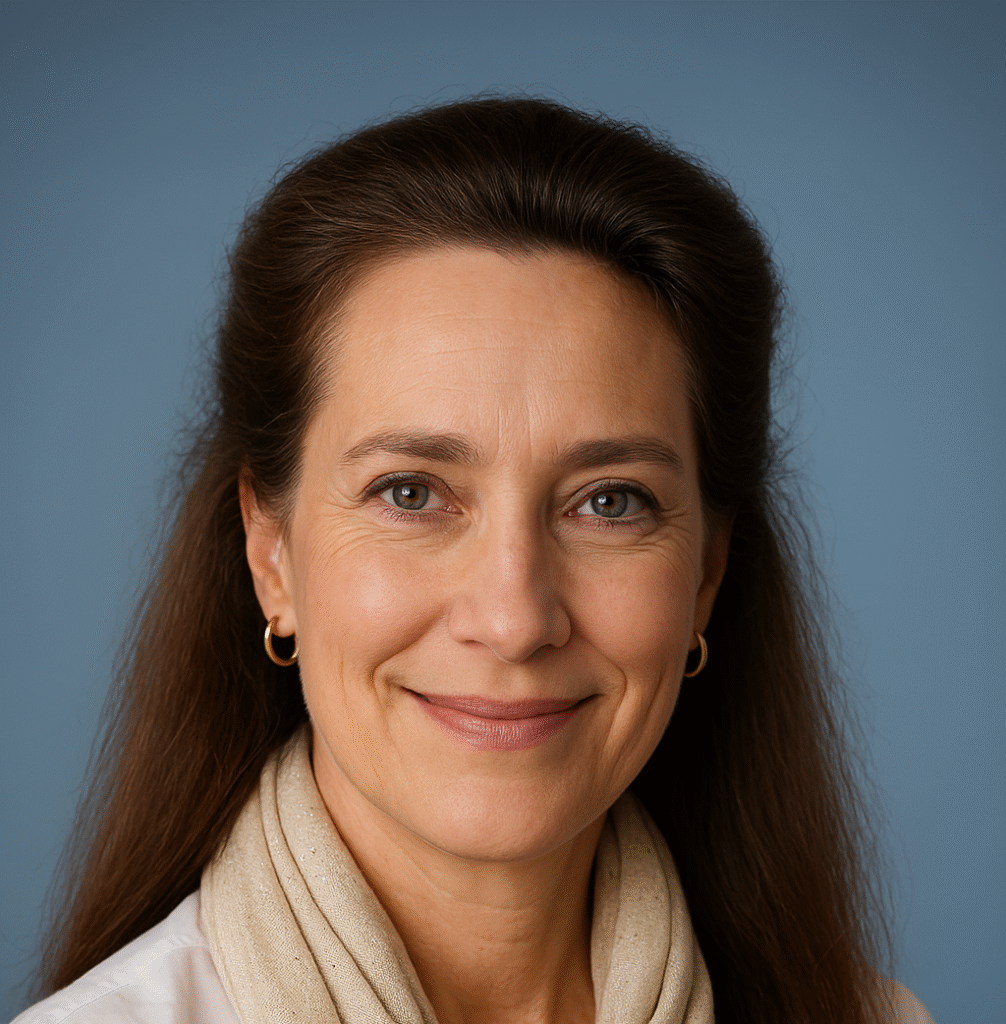
“I am an experienced medical doctor – MBChB, MRCGP, NLP master pract cert, Transformational Life Coach (dip.) Life Story Coach (cert.) Stress Counselling (cert.) Med Hypnotherapy (dip.) and EAGALA (cert.) I may have an impressive number of letters after my name, and more than three decades of professional experience, but what qualifies me to excel at what I do is my intuitive understanding of my clients’ difficulties and my extensive personal experience of managing major life changes using strategies I developed over many years.” Dr M Montagu