
What this is: A deep dive into Social Intelligence (SQ), the often-overlooked skill that determines whether your next chapter becomes a triumph or a struggle. This article explores why your ability to read people, build authentic connections, and navigate social situations matters more during transitions than your CV, bank balance, or five-year plan ever will.
What this isn’t: A quick-fix guide to becoming popular, a networking strategy for career climbers, or another article telling you to “just put yourself out there.” This isn’t about collecting contacts or mastering small talk at cocktail parties.
Read this if: You’re standing at a crossroads, divorce papers are drying, redundancy letters have arrived, your diagnosis has changed everything, your children have left home, or you’re moving countries. Read this if you’ve realised that knowing how to connect with people might be the difference between thriving and merely surviving your transition.
Five Key Takeaways
- Social IQ is your emotional GPS during chaos – whilst IQ helps you solve problems and EQ helps you manage feelings, SQ helps you navigate the human landscape when everything else has shifted beneath your feet.
- Isolation amplifies crisis – major life changes often disconnect us from our support networks precisely when we need them most, making social intelligence not just helpful, but essential for survival.
- Your next chapter requires new social skills – the relationships that sustained you in your old life may not transfer to your new one, and building fresh connections requires intentional social awareness.
- Social IQ can be learned and strengthened – unlike IQ, which remains relatively fixed, your ability to read social cues, build rapport, and create meaningful connections improves with practice and awareness.
- Communities are built, not found – waiting for the “right people” to appear keeps you stuck; using social intelligence to actively create connections transforms isolation into belonging.
Introduction: The Intelligence Nobody Taught You About
We’ve been sold a particular story about intelligence. Get good grades. Climb the ladder. Make smart decisions. Manage your emotions. But here’s what they forgot to mention: when life cracks open and everything familiar disappears, none of that matters nearly as much as your ability to read a room, sense what someone needs, build a bridge between strangers, or ask for help without apologising for your existence.
I’ve spent two decades as a GP listening to people describe their unravelling. I’ve hosted 15 years’ worth of Camino retreats for people rebuilding their lives after divorce, death, diagnosis, and displacement. I’ve written eight books about crisis and change. And here’s what I’ve learned: the people who not only survive but actually transform their transitions into something meaningful all share one quality. It isn’t resilience (though that helps). It isn’t a positive attitude (though that’s lovely). It’s Social IQ, the capacity to connect authentically with others even when you feel like a stranger in your own skin.
Meet Claire Henderson: An Expat’s Journey into Social Wilderness
Claire Henderson had researched everything. She’d downloaded apps for learning Portuguese, bookmarked expat forums, memorised the exchange rate, and colour-coded spreadsheets tracking shipping costs from Manchester to Porto. What she hadn’t prepared for was the suffocating loneliness of not knowing how to read the unspoken rules of her new world.
The removal van had barely disappeared down the cobbled street when panic struck. Not the exciting, adventurous kind. The kind that tastes like metal in your mouth and sounds like your heartbeat in your ears at 3 a.m.
Her first morning in Porto, Claire walked to the neighbourhood café. The owner, a woman perhaps her age with silver threaded through black hair, smiled and said something incomprehensible. Claire’s carefully memorised “bom dia” came out strangled. The woman’s smile didn’t change, but something flickered in her eyes, pity perhaps, or impatience, Claire couldn’t tell. That inability to read the micro-expressions, to sense whether she should persist or retreat, to know if the coolness was cultural or personal, left her feeling transparent and foolish.
She ordered by pointing. The coffee arrived in a tiny cup, not the mug she expected. She sat at a table near the window. Wrong choice, apparently. The regulars, all men in their seventies, occupied those tables. They didn’t say anything, but their glances said enough. She moved, cheeks burning, to a table near the back, in shadow.
Back in Manchester, Claire had been fluent in her own life. She knew when her colleague Sarah was having a rough day by the way she held her coffee cup. She could sense tension in a room within seconds and knew instinctively how to diffuse it or when to stay silent. She understood the rhythms of friendship, the dance of asking and offering help, the subtle signals that meant “I’m struggling” versus “I just need to vent.”
Here, she was illiterate. Socially blind.
The weeks blurred together. She’d smile at neighbours who’d nod but never stop. She’d attempt conversations that died after three exchanges. She joined an expat Facebook group and attended a meeting at a British pub, but the desperation in the room was suffocating. Everyone performing okay-ness, nobody admitting they were drowning.
Three months in, she sat in her beautiful Portuguese apartment with its terracotta tiles and perfect light, eating dinner alone again, and realised she hadn’t had a meaningful conversation with another human being in weeks. The silence wasn’t peaceful; it was oppressive, like a weight on her chest that made breathing difficult.
One Saturday, at the Mercado do Bolhão, she was examining tomatoes when a woman beside her spoke in English. “Those ones are better. Sweeter.” The woman was Portuguese, perhaps sixty, with paint under her fingernails and kind eyes.
Claire could have just thanked her and moved on. Instead, something shifted. She noticed the paint, asked about it, really asked, with genuine curiosity rather than polite performance. The woman’s face transformed. She was an artist. Watercolours. Landscapes mostly. Did Claire like art?
It was the first real conversation Claire had had since arriving. Not because the woman spoke English, but because Claire had finally remembered how to do the thing she’d always done naturally: notice people, ask questions that mattered, create space for connection rather than just filling silence.
The woman, Maria, invited her to a weekly painting group. Claire went, despite not being able to paint. She went because she’d finally remembered that social intelligence wasn’t about language fluency or cultural expertise. It was about genuine curiosity, about reading emotional cues, about offering and accepting vulnerability, about building bridges one authentic exchange at a time.
That first painting evening, Claire didn’t understand most of the Portuguese conversation swirling around her. But she understood laughter. She understood the way someone touched another’s shoulder in encouragement. She understood the communal sigh when someone created something beautiful. She began to tune into the emotional frequency of the room rather than the words.
Within six months, Porto stopped feeling like exile and started feeling like home. Not because Claire had mastered Portuguese or decoded all the cultural mysteries, but because she’d reactivated her social intelligence, that fundamental human capacity to connect, to read beneath surfaces, to build relationships that sustained her through the strangeness.
What Exactly Is Social IQ, and Why Does It Matter More During Transitions?
Social Intelligence, sometimes called Social Quotient (SQ), is your ability to navigate complex social environments, read emotional and social cues accurately, respond appropriately to others’ needs and feelings, and build authentic, meaningful relationships. Whilst IQ measures cognitive abilities and EQ focuses on emotional self-awareness and regulation, SQ is fundamentally about understanding and effectively engaging with the social world around you.
Dr Daniel Goleman, who popularised the concept of Emotional Intelligence, expanded his work to include social intelligence, arguing that our brains are designed for connection and that our ability to navigate social situations directly impacts our wellbeing, success, and even our physical health.
During major life transitions, divorce, relocation, career changes, illness, loss, retirement, Social IQ becomes critically important for several reasons:
Your social networks often fracture. The friends who surrounded you in your marriage may choose sides. Colleagues disappear when you leave a job. Your identity, so tied to your role, evaporates, and with it, the social structures that supported you. Your ability to build new connections determines whether you sink into isolation or create a new community.
The rules have changed. What worked socially in your old life may not transfer. As an expat, you’re navigating new cultural norms. As a newly single person, you’re re-entering social spaces you haven’t inhabited in decades. Your social intelligence helps you decode these new environments and adapt your behaviour accordingly.
Stress compromises your natural abilities. During crisis, we often lose access to the social skills that normally come naturally. We become self-focused, unable to read others accurately, withdrawn, or desperately needy. Conscious awareness of social intelligence helps you recognise when stress is hijacking your ability to connect and gives you tools to course-correct.
Isolation compounds suffering. Research consistently shows that social connection is one of the most powerful predictors of wellbeing during difficult times. People with strong social networks recover more quickly from illness, divorce, and loss. Your Social IQ determines your ability to build and maintain those vital connections.
How Does Building Social IQ Transform Not Just You, But Your Community?
Here’s what I’ve observed over 15 years of walking the Camino with people rebuilding their lives: when someone consciously develops their social intelligence during a transition, the impact ripples outward far beyond their individual healing.
Consider what happens when you become skilled at reading emotional cues and responding with empathy. You notice the woman at the school gate who’s struggling. You sense your neighbour’s isolation. You recognise the young colleague who needs mentoring. Your increased social awareness creates opportunities for connection that weren’t visible before.
As you practice asking better questions, really listening, creating space for authentic conversation, you give others permission to be honest about their own struggles. Your willingness to be appropriately vulnerable about your transition challenges the toxic positivity that keeps everyone performing okay-ness whilst drowning privately.
In my Purpose Pivot Protocol online course, participants consistently report that as they develop stronger social intelligence, they naturally begin creating the communities they need. A woman going through divorce starts a walking group for other single mothers. An early retiree begins a men’s shed project. An expat creates a language exchange that becomes a genuine friendship circle.
Social intelligence, when activated during transitions, doesn’t just help you cope; it equips you to become a community builder, someone who recognises and responds to social needs around them because they’ve learned to pay attention, to read beneath surfaces, to create connection rather than wait for it to appear.
This is how individual transformation becomes collective healing. Your next chapter doesn’t have to be just about your survival. It can be about creating the social fabric that supports everyone navigating difficult transitions.
Mapping Your Social Intelligence
Take 20 minutes with your journal and respond to these prompts with radical honesty:
- Before my life changed, my social intelligence showed up in these ways: (List 3-5 specific examples of how you naturally connected with others, read social situations, or built relationships)
- Since my transition began, I’ve noticed these changes in my social awareness and abilities: (What’s harder now? What feels unfamiliar? Where do you feel socially lost?)
- The person who demonstrates strong social intelligence in my current situation is: (Describe someone you’ve observed who navigates your new social landscape well. What specifically do they do?)
- One small social risk I could take this week to practice social intelligence: (What’s one micro-action that would move you toward connection, even if it feels uncomfortable?)
- If I developed stronger social intelligence during this transition, it would change: (Imagine specifically how enhanced SQ would transform your daily experience and relationships)
Weekly Social Intelligence Intention (Sunday evenings)
Set one specific social intelligence intention for the coming week:
- “I will ask three people genuine questions and really listen to their answers”
- “I will notice when someone seems withdrawn and check in with them”
- “I will introduce myself to one person in my new neighbourhood/workplace/community”
- “I will attend one social gathering and focus on making one authentic connection rather than collecting contacts”
- “I will reach out to someone who might be struggling and offer specific, practical help”
Write your intention somewhere visible. At week’s end, reflect on what happened when you brought conscious awareness to developing your social intelligence.
Further Reading: Five Books to Deepen Your Understanding
1. “Social Intelligence: The New Science of Human Relationships” by Daniel Goleman
This is the foundational text on social intelligence from the psychologist who brought emotional intelligence into mainstream consciousness. Goleman explains the neuroscience behind human connection and why our brains are wired for social engagement. I recommend this book because it validates what we intuitively know: relationships aren’t just nice to have, they’re neurologically essential, especially during times of stress and change.
2. “Daring Greatly: How the Courage to Be Vulnerable Transforms the Way We Live, Love, Parent, and Lead” by Brené Brown
Brown’s research on vulnerability and shame provides crucial insight into why social connection feels so risky during transitions and how authentic connection requires the courage to be seen when we feel most exposed. This book is essential for anyone rebuilding their social life after divorce, loss, or major change because it dismantles the myth that we must have everything together before we’re worthy of connection.
3. “The Art of Gathering: How We Meet and Why It Matters” by Priya Parker
Parker’s book transforms how we think about creating meaningful social experiences. For anyone starting a next chapter, this provides practical wisdom about how to intentionally build the communities and connections you need rather than waiting for them to appear. It’s particularly valuable for understanding how to create gatherings that foster genuine connection rather than superficial socialising.
4. “Quiet: The Power of Introverts in a World That Can’t Stop Talking” by Susan Cain
Not everyone builds social intelligence the same way. Cain’s book is essential reading for introverts navigating transitions because it validates quieter, more thoughtful approaches to social connection. It challenges the assumption that strong social intelligence requires extroversion and offers strategies for building meaningful relationships that honour your temperament.
5. “How to Know a Person: The Art of Seeing Others Deeply and Being Deeply Seen” by David Brooks
Brooks explores what he calls “illuminators,” people with the rare capacity to make others feel truly seen and understood. This book provides practical skills for deepening your social intelligence through better questions, genuine attention, and the kind of presence that creates real connection. It’s particularly powerful for anyone feeling socially lost during a transition because it offers a roadmap back to meaningful engagement.
P.S. My book, “Embracing Change, in 10 minutes a day,” offers daily practices specifically designed for people navigating major life transitions. Whilst the books above provide theory and context, mine offers practical, bite-sized exercises you can implement immediately, including specific techniques for strengthening social connections when you’re struggling.
Voices
“Joining Margaretha’s virtual storytelling circle during the lockdown quite literally saved me. I was struggling with a health diagnosis and felt completely isolated. What I learned in those circles wasn’t just about telling my story, it was about really listening to others, about noticing emotional undercurrents, about creating connection even through a screen. Margaretha teaches by example. The way she holds space, asks questions, helps people feel seen, it’s a masterclass in social intelligence. The circle gave me tools I now use everywhere: in my family, my workplace, my neighbourhood. I’m a different person socially, more aware, more intentional, more connected.” — Jennifer M., storytelling circle member
Frequently Asked Questions About Social IQ and Life Transitions
Can you really develop social intelligence as an adult, or is it something you either have or don’t?
Absolutely, you can develop social intelligence at any age. Unlike IQ, which remains relatively stable throughout life, social intelligence is remarkably plastic. It improves with conscious attention, practice, and feedback. The key is moving from unconscious social behaviour to conscious awareness. When you start noticing patterns (how do people respond when I do X? what happens when I try Y?), you’re already developing stronger SQ. Many people discover their social intelligence actually strengthens during major transitions because the disruption forces them to pay attention to social dynamics they previously navigated on autopilot.
I’m an introvert. Does strong social intelligence require being outgoing and social all the time?
Not at all. Some of the most socially intelligent people I know are introverts. Social intelligence isn’t about quantity of interactions; it’s about quality of attention and understanding. Introverts often excel at reading subtle emotional cues, listening deeply, and creating meaningful one-to-one connections precisely because they’re not distracted by performing or entertaining. The challenge for introverts during transitions isn’t developing social intelligence, it’s giving themselves permission to use it in ways that honour their energy needs rather than forcing themselves into extroverted social patterns that feel exhausting.
What if my major life change has left me feeling like I have nothing to offer socially?
This is one of the cruelest tricks transitions play on us. When our identity shifts (divorce ends our role as spouse, redundancy ends our professional identity, illness changes our capabilities), we forget that our fundamental humanity is what creates connection, not our roles or achievements. People connect with vulnerability, with authenticity, with shared struggles, not with polished perfection. Your willingness to show up honestly in your mess, to ask for help, to admit you’re finding things difficult, these are offerings. In fact, they’re often more valuable offerings than the performed competence that keeps everyone at arm’s length.
How do I know if I’m being socially intelligent or just needy during a crisis?
This is a brilliant and important question. The distinction lies in awareness and reciprocity. Social intelligence involves reading what others need and can offer, not just broadcasting your own needs. Neediness shows up as: repeatedly turning every conversation back to your crisis, inability to read when someone’s reached their capacity to help, expecting others to fix your situation, taking without considering what you might offer in return. Social intelligence shows up as: sharing appropriately for the depth of relationship, asking “is now a good time?” before launching into heavy topics, noticing and acknowledging others’ generosity, offering support even whilst struggling yourself. If you’re asking the question, you’re already more self-aware than most.
What’s the single most important thing I can do right now to strengthen my social intelligence during this transition?
Start noticing. That’s it. For one week, pay conscious attention to: What micro-expressions do you see on people’s faces? What’s the energy in rooms you enter? Who seems to be struggling? When do conversations flow and when do they stall? What happens in your body when you’re with different people? You’re not trying to fix anything or force connections. You’re just waking up your social awareness, which stress and crisis often numb. Once you’re noticing again, the appropriate responses and actions will become clearer. Social intelligence begins with attention.
Conclusion: Your Next Chapter Is Written in Collaboration
Here’s the truth about major life transitions that nobody mentions in the self-help books: you cannot successfully navigate them alone. Not because you’re weak or incapable, but because humans are fundamentally social creatures. Our nervous systems literally regulate through connection with other nervous systems. Our brains are wired for collaboration. Our deepest healing happens in relationship.
Your next chapter, whatever it holds, will be shaped not just by what you know or how you feel, but by how well you can read the people around you, build authentic connections, ask for and offer help, and create the communities that sustain you through uncertainty.
Social intelligence isn’t a soft skill or a nice-to-have. It’s survival equipment for transitions. It’s the difference between isolation and belonging, between performing okay-ness and being genuinely supported, between enduring change alone and transforming it collectively.
As the poet Adrienne Rich wrote: “An honorable human relationship, that is, one in which two people have the right to use the word ‘love,’ is a process, delicate, violent, often terrifying to both persons involved, a process of refining the truths they can tell each other.”
Your willingness to develop your social intelligence, to show up authentically, to learn to read and respond to the people around you, to create connection even when it feels risky, this is how you transform crisis into the beginning of something not just different, but genuinely meaningful.
An Invitation to Walk Your Transition Into Transformation
If this article has resonated with something in you, if you’re recognising that your next chapter needs more than positive thinking and willpower, if you’re craving not just information but actual experience of what it feels like to rebuild social connection during major change, I invite you to consider my Camino de Santiago Crossroads walking retreats in the beautiful south-west of France.
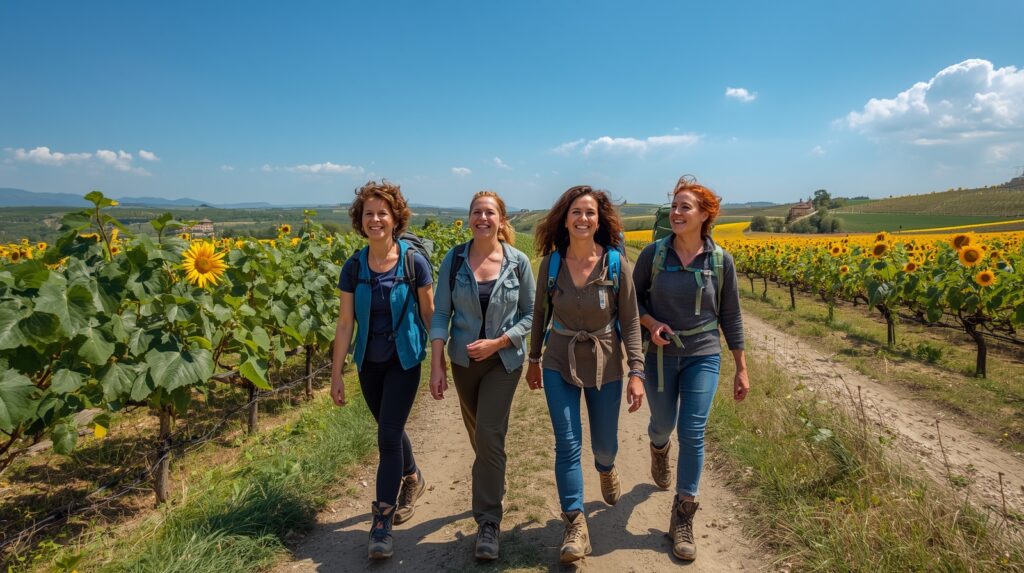








These aren’t typical walking holidays where you cover distance and tick off sights. They’re carefully designed spaces where social intelligence develops naturally through shared experience. You’ll walk ancient pilgrimage routes at a pace that allows for both solitude and spontaneous conversation. You’ll practice mindfulness and meditation exercises that reduce the stress that blocks connection. We gather each evening for storytelling circles, where my Friesian horses (who are extraordinary teachers of non-verbal communication and authentic presence) join us, and where participants rediscover their capacity to share honestly and listen deeply.
What participants consistently report is that something fundamental shifts. The combination of gentle physical movement, natural beauty, intentional practices, and authentic community creates the exact conditions for social intelligence to wake up again. You remember how to be with people without performing. You practice reading emotional cues and responding with kindness. You discover that sharing your transition story, and witnessing others’, dissolves the isolation that’s been suffocating you.
These retreats are designed specifically for people navigating crossroads: divorce, loss, career changes, health challenges, relocations, or simply the sense that your old life no longer fits. You’ll find yourself among others who understand, guided by someone who’s walked alongside hundreds of people through these territories, both literally on the Camino and metaphorically through life’s most challenging transitions.
The walking heals your body. The practices calm your nervous system. But it’s the social intelligence you rediscover, the authentic connections you build, the community you experience, that transforms your relationship with whatever transition you’re navigating.
If you’re ready to stop struggling alone and start building the social resources that will sustain you through your next chapter, I’d be honoured to walk alongside you. You can find full details about the retreats, dates, and how to join us here.
A Final Reflection
Think about someone in your life right now who seems to be navigating difficulty with grace. What is it about how they connect with others that you notice? What might you learn from observing their social intelligence? And here’s the deeper question: what would change in your transition if you gave yourself permission to reach out, to connect authentically, to use your natural social intelligence even whilst feeling lost?
What’s one small step towards connection you could take today?
Ready for a retreat? Do you dream of escaping your stressful life to raise a herd of goats or grow sunflowers in the south of France? Then you may be ready for an Esprit Meraki retreat. Get access to this “very serious” quiz to help you figure out how urgent your need for a change of scenery is when you subscribe to my monthly newsletter.

“I am an experienced medical doctor – MBChB, MRCGP, NLP master pract cert, Transformational Life Coach (dip.) Life Story Coach (cert.) Stress Counselling (cert.) Med Hypnotherapy (dip.) and EAGALA (cert.) I may have an impressive number of letters after my name, and more than three decades of professional experience, but what qualifies me to excel at what I do is my intuitive understanding of my clients’ difficulties and my extensive personal experience of managing major life changes using strategies I developed over many years.” Dr M Montagu