
I often describe myself as both a wounded healer/leader. My ability to hold space for others doesn’t come from having a perfect, unbroken life—it comes from walking through my own share of stress, loss, and life transitions. Those experiences left their marks, but they also gave me empathy, perspective, and the deep belief that healing often happens in community, not isolation.
Leading retreats is, for me, a natural extension of that journey: creating spaces where others can find rest, reflection, and renewal, just as I’ve needed to along the way.
Insights
The Wounded Healer is one of those ideas that feels both ancient and surprisingly modern. It shows up in mythology, psychology, and in real life. At its core, it’s the recognition that those who have been hurt, broken open, or brought to their knees by life are often the very people who can help others heal most effectively.
“Nobody escapes being wounded. We all are wounded people, whether physically, emotionally, mentally, or spiritually. The main question is not, ‘How can we hide our wounds, so we don’t have to be embarrassed, but How can we put our woundedness in the service of others?” Henri Noiuwen
1. A myth that still speaks to us
The story begins in Greek mythology, with Chiron, the wise centaur. Unlike the other centaurs (who were usually painted as wild and unruly), Chiron was known for his wisdom and compassion. He taught great heroes like Achilles and Hercules, guiding them not just in battle but in life. But here’s the twist: Chiron was struck by a poisoned arrow and suffered a wound that never truly healed.
Instead of making him bitter, that pain deepened his ability to heal and teach. His wound became the source of his wisdom. And that paradox—that the healer’s strength comes not in spite of the wound, but through it—is what still resonates today.
2. Jung’s insights
Fast forward a couple thousand years, and Carl Jung picked up on the same theme. He noticed that many therapists, doctors, and healers seemed to be drawn to their profession because of their own healed or unhealed pain. A childhood trauma, a deep loss, a struggle with identity—these weren’t just scars. They are doorways into empathy.
Jung’s insight was that it’s often the very things we struggle with that allow us to sit with others in their suffering—not as a detached expert, but as someone who gets it.
3. The deeper meaning
That’s really the essence of the Wounded Healer: transforming pain into medicine. It’s about alchemy—the messy process of taking what was once unbearable and somehow turning it into something that can help others.
This doesn’t mean the healer is ever fully “done” with their own healing. In fact, the archetype suggests the opposite: that healing is ongoing, and it’s in walking that path ourselves that we become able to guide others. We don’t just heal others—we heal ourselves through the act of helping.
4. Where we see it now
You don’t have to be a doctor or therapist to embody the Wounded Healer. You’ll find it in the nurse who comforts a grieving family because she’s walked through grief herself. In the teacher who helps a struggling child because he remembers being that child. In the coach, pastor, or retreat guide who has survived divorce, burnout, or loss—and now walks beside others who are facing the same storms.
It shows up in everyday life, too: in the friend who listens with compassion because they know how it feels not to be heard, or in the parent who breaks cycles of pain they themselves endured.
5. The shadow side
Of course, like every archetype, it has a shadow. The same wounds that make someone compassionate can also make them vulnerable. Without self-awareness, the Wounded Healer can fall into over-identifying with others’ pain, carrying too much, or burning out. They can also become so focused on “fixing” others that they neglect their own ongoing healing.
The healthiest expression of the archetype comes when we acknowledge: I am still healing too. My wound doesn’t disqualify me—it’s what makes me trustworthy.
So, being a Wounded Healer is really about living in that sacred paradox: the very thing that hurt us most deeply can, with time and integration, become the gift we bring to the world.
It’s about letting our own humanity—our cracks and scars—be the bridge that allows others to cross from suffering to strength.
Wounded Healer Quotes
“Nobody escapes being wounded. We are all wounded people, whether physically, emotionally, mentally, or spiritually. The main question is not, ‘How can we hide our wounds?’ so we don’t have to be embarrassed, but ‘How can we put our woundedness in the service of others?’ When our wounds cease to be a source of shame, and become a source of healing, we have become wounded healers.” Henri Nouwen
“In the depths of every wound we have survived is the strength we need to live. The wisdom our wounds can offer us is a place of refuge. Finding this is not for the faint of heart. But then, neither is life.” Rachel Naomi Remen
“A healer is someone who seeks to be the light that she wishes she had in her darkest moments.” Vironika Tugaleva
“Only the wounded healer can truly heal.” Irvin D. Yalom
“We need the compassion and the courage to change the conditions that support our suffering. Those conditions are things like ignorance, bitterness, negligence, clinging, and holding on.” – Sharon Salzberg
“Empathy has no script. There is no right way or wrong way to do it. It’s simply listening, holding space, withholding judgment, emotionally connecting, and communicating that incredibly healing message of ‘You’re not alone.’” – Brené Brown
“The analyst must go on learning endlessly, and never forget that each new case brings new problems to light and thus gives rise to unconscious assumptions that have never before been constellated. We could say, without too much exaggeration, that a good half of every treatment that probes at all deeply consists in the doctor’s examining himself, for only what he can put right in himself can he hope to put right in the patient. It is no loss, either, if he feels that the patient is hitting him, or even scoring off him: it is his own hurt that gives the measure of his power to heal. This, and nothing else, is the meaning of the Greek myth of the wounded physician. Carl Jung “Fundamental Questions of Psychotherapy,” ibid. para. 239
“Our sorrows and wounds are healed only when we touch them with compassion.” Jack Kornfield
Medical judgment can be taught – laboriously, in long periods of training – but it cannot be neatly handed over as the occasion demands it. It is the irreplaceable and untransferable contribution that the healer makes to the suffering individual who would be healed. Sherwin B. Nuland
“The world breaks everyone and afterward many are strong at the broken places.” Ernest Hemingway
“Wounding and healing are not opposites. They’re part of the same thing. It is our wounds that enable us to be compassionate with the wounds of others. It is our limitations that make us kind to the limitations of other people. It is our loneliness that helps us to find other people or to even know they’re alone with an illness. I think I have served people perfectly with parts of myself I used to be ashamed of.” Rachel Naomi Remen
Further Reading
Henri Nouwen’s book The Wounded Healer (1972)
Henri Nouwen’s The Wounded Healer explores the paradox that ministers, counselors, and caregivers are most effective when they draw from their own wounds, rather than hiding them. Instead of presenting themselves as perfect experts with all the answers, they are called to serve out of their shared humanity, vulnerability, and compassion.
Nouwen frames the “wounded healer” as someone who:
- Listens deeply to the suffering of others without needing to control or fix it.
- Acknowledges their own pain as a source of empathy and solidarity.
- Stays present in the uncertainty of life transitions, rather than offering quick solutions.
- Invites others into community, reminding them they are not alone in their struggles.
The book is both a challenge and an invitation: true healing comes not from authority or expertise, but from presence, authenticity, and the courage to lead from one’s own scars.
In short: our wounds don’t disqualify us from helping others—they prepare us for it.
FAQ about the “Wounded Healer” concept
1. Isn’t the term “Wounded Healer” just a glorification of trauma?
Not quite. It’s not about putting pain on a pedestal—it’s about recognising that pretending to be unscarred is dishonest and unhelpful. Real authority doesn’t come from invincibility; it comes from the credibility of having lived through something hard and choosing to grow instead of collapse.
2. Does every wound automatically make someone a healer?
No—and this is where people get it wrong. Simply being hurt doesn’t qualify someone to help others. It’s the integration of that wound—the reflection, meaning-making, and transformation—that creates the healer. Otherwise, we risk recycling our pain instead of redeeming it.
3. If I’m still struggling, can I really help anyone else?
Yes, but only if you’re honest about it. The power of the Wounded Healer isn’t in being “fixed”—it’s in walking with others while you, too, are still walking. The danger comes when people hide behind the role of “healer” as a mask, pretending they’re further along than they really are. That’s not healing—that’s performance.
4. Is there a shadow side to being a Wounded Healer?
Absolutely. Wounded Healers can fall into martyrdom—sacrificing themselves endlessly, confusing codependency with compassion. They can also use their wounds as a way to manipulate, claiming authority just because they’ve suffered. Pain doesn’t make you holy; what you do with your pain matters.
5. What if I don’t want to be a Wounded Healer?
That’s fair. Not everyone is called to turn their suffering outward. Some people heal best in private, and that’s valid. But here’s the tension: whether you like it or not, your wounds shape how you show up in the world. The choice isn’t whether you’ll be a Wounded Healer—it’s whether you’ll be a conscious one or an unconscious one.
Conclusion
The real gift of the Wounded Healer—and the Wounded Leader—is that they don’t lead from a pedestal. They lead from the messy middle, where life’s cracks have already let the light in. Their wisdom doesn’t come from a textbook, but from sitting with their own heartbreak, exhaustion, or loss and allowing it to shape them into someone who can walk beside others with compassion rather than judgment.
That’s the spirit I try to bring into my retreats. I don’t show up as the person with all the answers neatly packaged. I show up as someone who knows what it’s like to feel the weight of stress pressing in, to hit those moments where life feels overwhelming, and to need a space to rest and reset. Leading a retreat isn’t about being “above” anyone else—it’s about holding space because I’ve been in that space myself, and I know how transformative it can be to step away from the noise of everyday life and return to yourself.
In many ways, retreats are living expressions of the Wounded Healer archetype. They’re not about pretending the wounds don’t exist, but about giving them room to breathe and gently transform into wisdom, clarity, and strength.
If you’ve been feeling stretched thin, carrying burdens longer than you’d like, or simply yearning for a pause button, consider this your invitation. My stress relief retreats are designed to offer exactly that—a chance to walk, breathe, reflect, and reconnect in an environment that nurtures rather than demands.
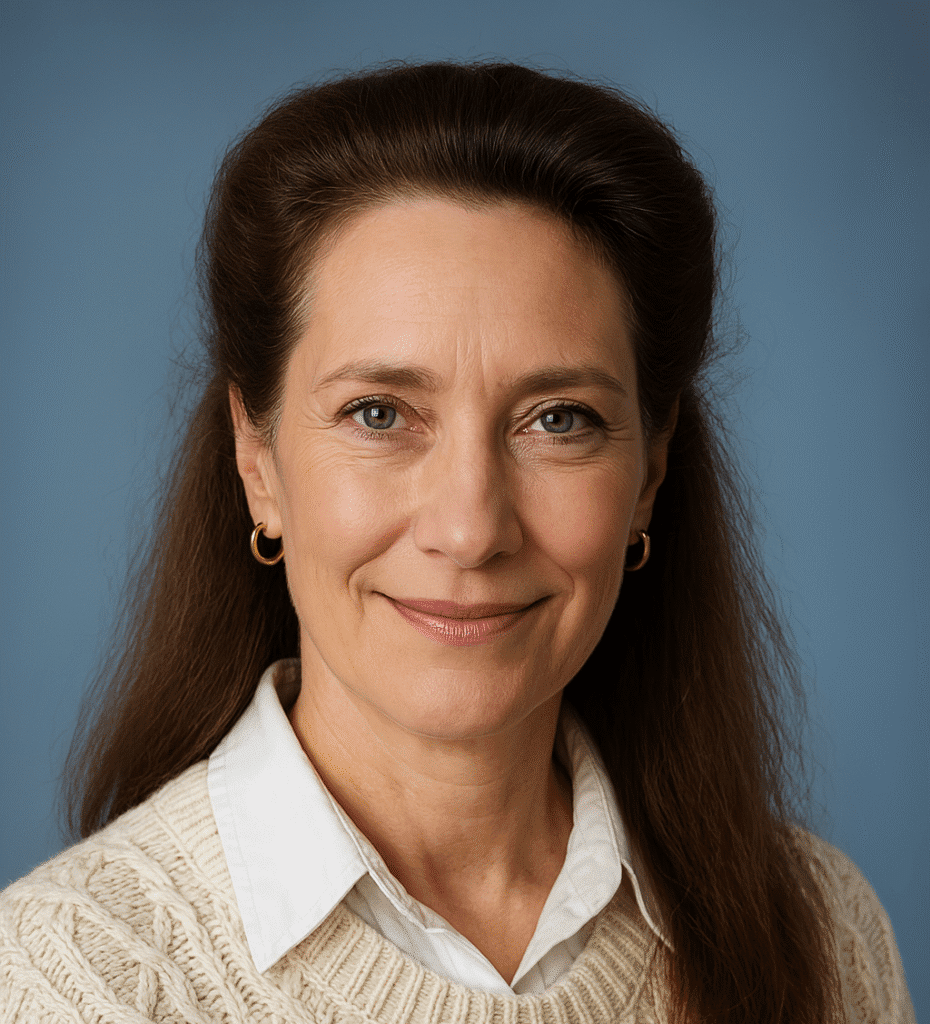
Author Bio: Dr Margaretha Montagu – described as a “game changer”, “gifted healer”, “guiding light” and “life-enriching author” – is an experienced medical doctor, a certified NLP practitioner, a medical hypnotherapist, an equine-assisted psychotherapist (EAGALAcertified) and a transformational retreat leader who guides her clients through life transitions – virtually, or with the assistance of her Friesian and Falabella horses, at their home in the southwest of France.