

Why I won’t be unleashing a “Digital Margaretha” upon the world any time soon
Every few months, someone asks me a question that makes me blink slowly, tilt my head, and wonder whether I’ve missed a memo. The latest one goes something like this: “Have you thought about creating an AI version of yourself?” You know—one that never sleeps, never forgets, and could dispense wisdom on demand while I’m off fussing over the horses and mucking out the shelters.
We’re living in an age where just about everything can be automated—our emails, our shopping, our playlists, and apparently now our inner guidance as well. So it probably shouldn’t surprise me that I’ve been asked this question. A “Digital Margaretha” who could answer any question, any time, always available, always articulate, and who would continue my life’s work long after I’ve left this particular human container.
The short answer is: no.
The slightly longer answer is also no, but the reasons why might matter more than the answer itself.
I’ve come to think that being human isn’t something we’re meant to “get right,” but something we’re meant to experience. In real time. In person. Living intentionally. The vulnerability, the uncertainty, the longing to belong, the ache to be seen—these aren’t glitches to be fixed; they are the very conditions that make growth, meaning, and connection possible.
We are not here to optimise ourselves out of embodiment. We weren’t meant to glide through life flawlessly; we were meant to feel it, learn from it. I have no desire to trade real, sometimes awkward, occasionally tear-stained human connection for scale, speed, or eternal life in the cloud. We’re meant to bump into each other, need each other, and muddle through together as gloriously imperfect beings.
I get the appeal of a digital clone. It would be available 24/7, never need sleep, never forget a quote from my own books, and never say, “Give me a moment, I need to feel into that.” Frankly, it would be far more efficient than I am—and that alone should make you suspicious.
It could speak in my voice, replicate my frameworks, and display the kind of flawless recall my very human brain abandoned somewhere around perimenopause. But an AI trained on my work wouldn’t actually be me. It would be a greatest-hits remix. A reflection. A map—not the terrain, and certainly not the muddy boots on the trail.
The heart of my work has never been about information delivery. If it were, I’d just send you a PDF and suggest a nice cup of tea. What moves people forward during painful life transitions is not a perfectly phrased insight—it’s the experience of being met. Of being listened to by another human who can sit in the discomfort without trying to fix it in under six seconds.
No algorithm can do that. It can simulate care, but it can’t care. It can sound compassionate, but it doesn’t know what heartbreak feels like at 3 a.m. when the ceiling starts asking existential questions. Some of the most important moments in my life and work were born in exactly those sleepless hours—and AI has never once stared into the dark, wondering who it is.
When you work with me, you’re working with a real human being. Flesh, breath, nervous system, and a slightly alarming collection of quirks included. I’m not offering a content pipeline. When you join a course with coaching, you’re connecting with someone who has wrestled with life, lost a few rounds, learned some things the hard way, and then figured out how to build a purposeful life anyway.
I offer live coaching not because it’s scalable, but because it’s alive. Something happens when we meet in real time that simply cannot be automated. We read facial expressions. We hear the tone of each other’s voices. We notice the silence when a realisation lands. We laugh—sometimes at precisely the wrong moment. And occasionally, we enter a shared field of presence that has no business existing and yet unmistakably does.
In a world determined to automate every possible interaction, choosing in-person work is a small act of rebellion. I believe your transition and eventual transformation deserve more than a well-trained chatbot and a motivational notification.
A safe, warm, mutually supportive community—like my storytelling circles—is one of the most valuable things we can create. No one is a “user.” No one is a data point. We’re people meeting people, hearts open, fragile and vulnerable.
AI can host endless community spaces, but without real humans—with all their inconvenient emotions, pauses, and occasional verbal detours—those spaces would feel like very polite waiting rooms. In a fragmented, hyper-individualistic world, we long for moments of shared humanity where everyone leaves a little more alive than they arrived.
Community begins by becoming your own best company. When you can regulate your emotions, name what you need, and offer yourself steadiness instead of criticism, you stop reaching for other people as a way to escape discomfort. From that grounded place, human connection becomes cleaner: you choose relationships from values, not from panic or loneliness, and you show up with more patience, boundaries, and generosity. AI can support reflection, provide prompts, and organise ideas, but it cannot replace the quiet, daily choice to be present with your own thoughts and feelings. That capacity is what turns “being alone” into belonging, and it’s the foundation that makes real community possible.
In my storytelling circles, I show up as my full, imperfectly human self. I’m there live—not as a flawless digital avatar delivering pristine sound bites, but as a person with occasional bad hair days (and the odd bad hair year), spontaneous jokes, and moments where I stop talking because I’m actually thinking.
Why is that better than “perfect”? Because so much of online life has become curated, optimised, and filtered into something unrecognisable. AI will only speed this up, offering endlessly smooth, always-on personas that never hesitate, never stumble, and never risk being real. Authentic. I want the exact opposite.
My way of working is relational. When I’m with you live, I’m influenced by you. Your questions shape the conversation. Your insights spark my curiosity. You guide me as much as I guide you. That mutuality is the point. An AI version of me would never be moved by you—but I am, regularly.
None of this means AI is “bad.” It’s a tool. A very clever one. It can free up time, spark ideas, and handle tedious tasks so we can spend more time doing what we do best: connecting, creating, and making meaning.
Creating a simulated “Margaretha” would move us away from direct connection. It would quietly suggest that a polished imitation is good enough.
I disagree. Warmly, but firmly.
As the world races toward automation, I want my work to move in the opposite direction. I want it to be living proof that human presence still matters—possibly more than ever. When you reach out, I want you to know that a living, breathing human being will reach back.
So no, “AI Margaretha” will not be launching anytime soon. There will be no beta version, no upgrade cycle, and no push notifications reminding you to “optimise your inner life.” Instead, there will continue to be this Margaretha—learning as I go, listening more than I speak (most days), stumbling occasionally, laughing often, crying when life demands it, and showing up as fully and honestly as I can for as long as this human body, nervous system, and slightly opinionated heart allow.
And one day, when I can no longer show up live, my books may linger on shelves and nightstands. My tools may be passed from hand to hand, adapted, reinterpreted, and made useful in ways I could never predict. My words may echo in moments of quiet courage or unexpected clarity. But they won’t replace presence; they’ll simply point back to it.
Because this work was never about preserving me. It was never about bottling my voice, archiving my thoughts, or creating a perfectly polished version that could run forever without needing rest, doubt, or a good cry. It has always been about human connection. About what happens when real humans slow down long enough to meet each other honestly, without filters, scripts, or shortcuts. That essence won’t change. Real people, offering in-person presence to one another—right here, right now. A little messy. A little inconvenient.
Irreplaceable.
If you find yourself nodding along and thinking, Yes, this is exactly it, you’re invited to get in touch. Explain what you’re wrestling with and we’ll see if my work—and my imperfect human brain—might be useful to you. If not, I’ll still wish you well and point you toward what might serve you better.
Warmest regards
Margaretha (MargarethaMontagu@gmail.com)
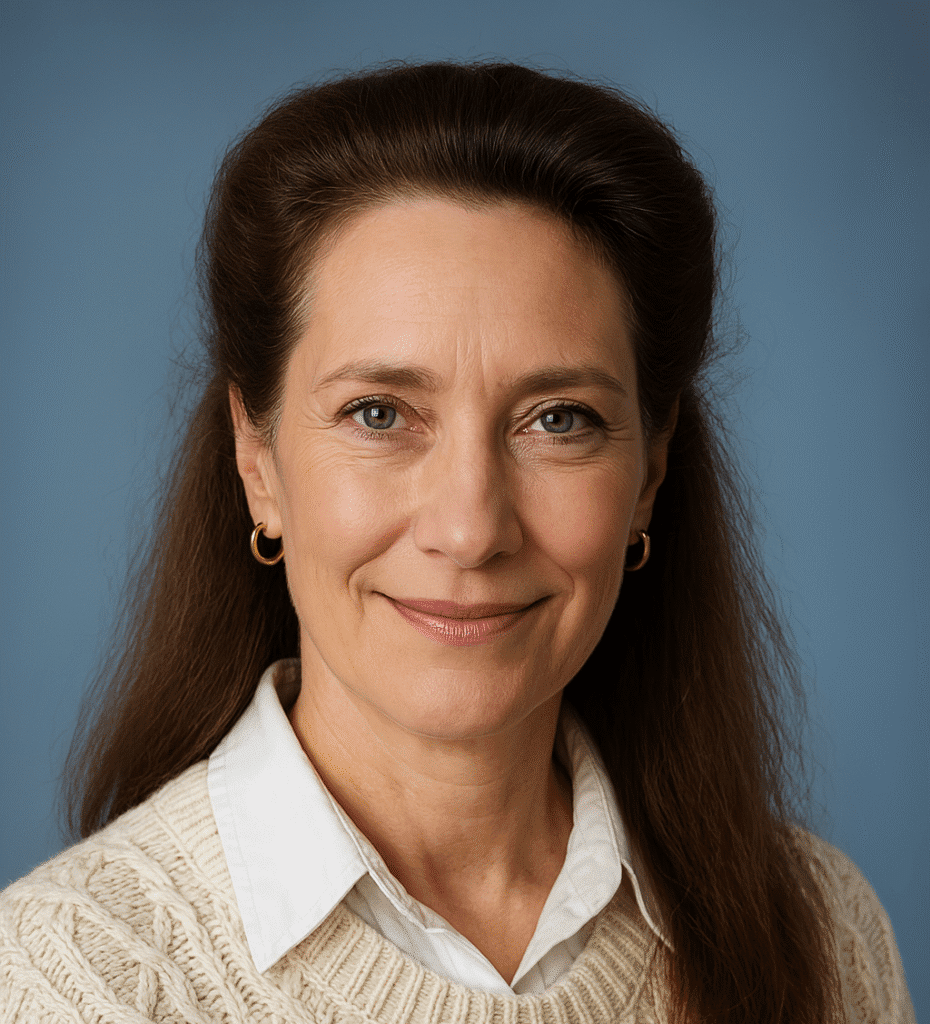
Author Bio: Dr Margaretha Montagu – described as a “game changer”, “gifted healer”, “guiding light” and “life-enriching author” – is an experienced medical doctor, a certified NLP practitioner, a medical hypnotherapist, an equine-assisted psychotherapist (EAGALAcertified) and a transformational retreat leader who guides her clients through life transitions – virtually, or with the assistance of her Friesian and Falabella horses, at their home in the southwest of France.
#humanconnection