
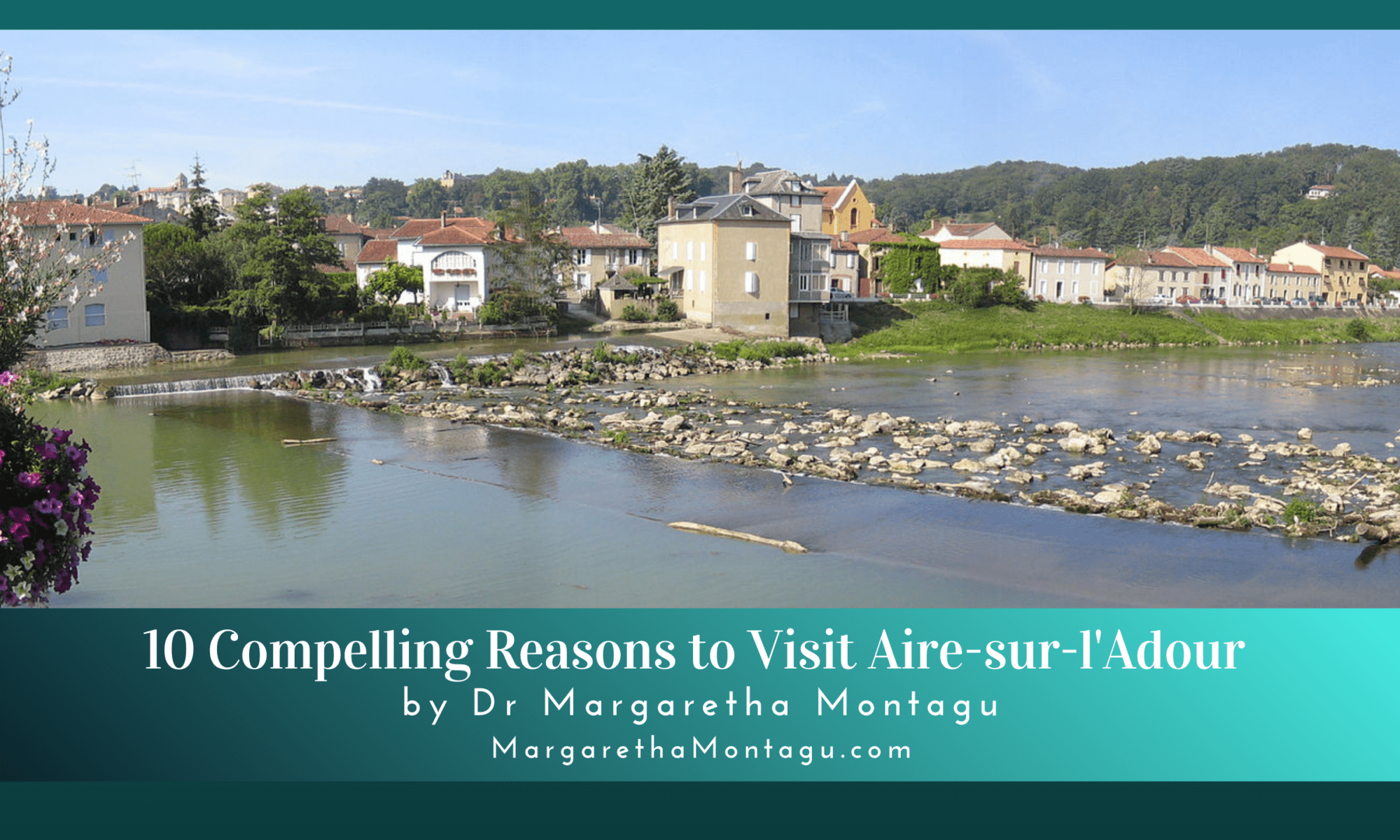
Aire-sur-Adour is a charming town that effortlessly blends medieval heritage with authentic French countryside living, making it a mostly undiscovered gem in southwest France. Known as the gateway to the Landes and situated on the historic Way of St. James, this town attracts history enthusiasts, foodies, wine lovers, and those seeking an authentic French experience away from the tourist crowds. With its UNESCO World Heritage church, beautifully preserved architecture, and access to the rolling hills of Chalosse and Tursan, Aire-sur-l’Adour offers something special for every visitor. Whether you’re wandering along the peaceful banks of the mighty Adour River, sampling world-class foie gras from local producers, exploring its historic monuments, or discovering the region’s distinctive wines, Aire-sur-Adour promises an unforgettable window into the heart of Gascony.
I created this page for my Camino de Santiago walking retreat guests who end one of their days’ walk in Aire sur Adour, in case they want to wander around or have a bite to eat before they take the bus back to Nogaro.
1. A UNESCO World Heritage Pilgrimage Site
Aire-sur-l’Adour holds a special place on the Way of St. James, one of Europe’s most important pilgrimage routes. The Church of Sainte-Quitterie, perched on the Mas hillside overlooking the town, is listed as a UNESCO World Heritage Site as part of the Routes of Santiago de Compostela in France. This remarkable 11th-century church features a stunning Gothic entrance and houses one of France’s most impressive crypts, containing a magnificent white marble sarcophagus of Saint Quitterie dating from the 4th century. The church’s three-level tower, pierced by graceful arches, dominates the skyline and serves as a beacon for pilgrims traveling the ancient route. Even if you’re not walking the Camino, visiting this sacred site offers a profound connection to centuries of spiritual history.
2. The Foie Gras Capital
Aire-sur-l’Adour sits at the heart of France’s premier foie gras producing region. The Landes department is the leading producer of this prized delicacy, and Aire-sur-l’Adour serves as a gastronomic center where you can experience it at its finest. Local producers and farms welcome visitors to discover traditional methods of duck and goose farming, and the town’s restaurants showcase foie gras in countless preparations—from classic terrine to innovative modern interpretations. You’ll find everything from magrets (duck breast) and confits to rillettes and gizzards. The covered market, Les Halles, hosts local producers every Tuesday and Saturday morning, where you can meet farmers, taste products, and purchase directly from those who raised the birds. This is an authentic farm-to-table experience that honours centuries-old Gascon traditions.
3. Tursan Wines: A Low-profile Landes Terroir
Wine lovers will discover a delightful surprise in Aire-sur-l’Adour—the town is situated in the center of the Tursan vineyard, one of France’s lesser-known but exceptional wine regions. Tursan achieved AOC (Appellation d’Origine Contrôlée) status in 2011, recognising its distinctive wines that have been produced since the 12th century. The region’s 435 hectares of vineyards produce approximately 1.5 million bottles annually, including bold red wines from Tannat and Cabernet varieties, fresh rosés with characteristic flint notes, and elegant whites from the rare Baroque grape. The red wines pair beautifully with local game and Chalosse beef, while the whites complement foie gras and regional cheeses perfectly. Small family-run châteaux welcome visitors for tastings, offering an intimate alternative to Bordeaux’s grand estates.
4. Architectural Treasures in a Compact Historic Centre
Despite its modest size, Aire-sur-l’Adour boasts an impressive collection of historic monuments that tell the story of its rich past as a Celtic, Roman, Visigoth, and episcopal city. The Cathedral of Saint John the Baptist, built between the 11th and 14th centuries, combines Romanesque and Gothic elements with a distinctive facade featuring alternating brick and stone stripes. Inside, the brightly painted dome above the altar and ornate ceiling patterns create a vibrant atmosphere. The 19th-century octagonal grain market (halle aux grains), surrounded by elegant arcades, stands as a testament to the town’s agricultural importance. The 17th-century town hall, rue du Canal with its beautiful houses, and the old Carmel convent round out a walking tour that transports you through centuries of French history—all within a compact, easily walkable area.
5. The Banks of the Adour River
The Adour River provides Aire-sur-l’Adour with its lifeblood and its most peaceful attraction. The shaded riverbanks offer a serene escape where locals and visitors alike come to stroll, picnic, and simply enjoy the gentle flow of the water. The river played a crucial role in the town’s medieval prosperity, serving as a vital transportation route for goods and pilgrims. Today, it’s a place of tranquillity and natural beauty, perfect for an afternoon walk after exploring the town’s historic centre or sampling its culinary delights. The banks are ideal for fishing, bird watching, or simply sitting and watching the water flow by—a reminder that the best travel experiences sometimes involve doing very little at all.
6. Authentic French Market Culture
Twice a week, on Tuesday and Saturday mornings from 8am to 12:30pm, the covered market at Place de l’Hôtel de Ville comes alive with approximately 50 traders offering the best of local and regional products. This isn’t a tourist market—it’s where locals shop for their weekly provisions, making it an authentic glimpse into daily French life. You’ll find bakers, butchers, fishmongers, market gardeners, fruit growers, cheese makers, wine merchants, and florists, all proud to share their products and expertise. The atmosphere is convivial, with vendors happy to offer samples and cooking advice. Shopping here connects you directly with the region’s agricultural heritage and gives you a chance to practice your French while selecting ingredients for a picnic by the Adour or planning a self-catered feast.
7. A Visigothic Royal Capital with Extraordinary History
Aire-sur-l’Adour served as a royal residence of the Visigothic Kingdom under Kings Euric (466-484) and Alaric II (484-507), making it one of the most historically significant towns in southwest France. Before the Romans arrived, the site was an oppidum called Atura inhabited by the Tarusates people. The Romans renamed it Vicus Julii after Julius Caesar, and it remained an important center through multiple civilizations. In February 506, King Alaric II convened an assembly of bishops, nobles, and jurists in Aire to establish a collection of laws for the Gallo-Romans of his kingdom. For fifteen centuries, Aire maintained its status as an episcopal city with powerful bishops who shaped not just religious life but economic and educational development. This deep layering of Celtic, Roman, Visigothic, and medieval French history is extraordinarily rare, and walking through Aire’s streets means literally treading ground where European history was forged. The town’s museums and monuments tell this remarkable story of a small place that played an outsized role in shaping early medieval Europe.
8. Festivals and Gascon Traditions
Throughout the year, Aire-sur-l’Adour celebrates its Gascon heritage with vibrant festivals that bring the community together. The Bandas Festival on the first weekend of May fills the streets with brass bands, music, and dancing—a joyous celebration of regional musical traditions. The City Festivals in the third weekend of June feature colourful flower parades that transform the town centre. In December, the Comic Strip Festival attracts artists and enthusiasts from across France. Beyond these major events, the town hosts themed night markets during the summer months, where you can enjoy local food, wine, and artisan crafts under the stars. The tradition of Course Landaise—a regional form of bullfighting that emphasises agility and artistry rather than violence—can be experienced at venues near the town, offering insight into one of Gascony’s most distinctive cultural practices.
9. Farm Visits and Culinary Workshops
One of the most rewarding ways to experience Aire-sur-l’Adour is to venture beyond the town centre to visit local farms. Many producers welcome visitors to see their operations, from duck farms where you can learn about foie gras production to Chalosse beef farms raising premium cattle on the region’s lush pastures. Some farms offer workshops where you can learn to prepare traditional Gascon dishes or understand the art of preserving duck and goose products. The region is also known for Adour kiwi fruit (carrying the prestigious Label Rouge designation) and Landes asparagus grown in sandy soils. These farm visits provide an educational and delicious window into agricultural practices that have sustained this region for generations. You’ll leave with not just memories but also jars of confit, terrines of foie gras, and bottles of wine to recreate the flavours of Gascony at home.
10. Affordable Authenticity
Perhaps Aire-sur-l’Adour’s greatest appeal is that it offers an authentic French experience without the prices or crowds of more famous destinations. Accommodation ranges from charming bed-and-breakfasts to comfortable hotels, all at rates significantly lower than what you’d pay in Bordeaux or Biarritz. Restaurants serve exceptional regional cuisine—think slow-cooked duck confit, grilled magret, and hearty cassoulets—at prices that reflect local rather than tourist economics. A bottle of excellent Tursan wine costs a fraction of comparable Bordeaux appellations. The town moves at the pace of rural France, where shop owners still close for a proper lunch and where striking up a conversation with a vendor at the market is part of the daily rhythm. This isn’t a place where you’ll feel rushed or processed through tourist attractions. Instead, you’ll experience the genuine warmth of Gascon hospitality and the pleasure of discovering a place that locals are proud to call home.
10 Places to Have Lunch in Aire-sur-l’Adour
Note that most kitchens serve lunch only from 12h00-14h00! An alternative option is to buy something from one of the patisseries (see below) and have a picnic on the banks of the river.
1. Restaurant Les Platanes This is the town’s top gastronomic address and a true gem. Chef Sébastien Gozzer, a trained pastry chef, creates refined seasonal menus highlighting regional classics with his personal touch. The elegant dining room with modern decor offers an intimate atmosphere (maximum 35 covers), while the Bistrot des Platanes provides a more casual option Tuesday to Friday lunch with excellent value. Expect dishes like ris de veau flambéed with Armagnac, perfectly grilled Blonde d’Aquitaine beef, and exceptional desserts. The wine list showcases excellent regional selections from Tursan, Madiran, and beyond. Reservations essential, especially for Sunday lunch.
2. Chez l’Ahumat A beloved institution run by the same family for three generations, Chez l’Ahumat embodies authentic Gascon hospitality. Located tucked behind the old round market, this restaurant serves hearty traditional cuisine with impeccable attention to fresh local products. Their garbure (traditional cabbage soup) is legendary, and they excel at slow-cooked dishes and terroir specialities. The menus range from €14.50 at lunch to €30, offering generous portions and genuine home cooking. The service is warm and professional, and locals fill the dining room even on Monday nights—a testament to its consistent quality. Perfect for experiencing real French family-run restaurant culture.
3. L’Antre II This is Aire-sur-l’Adour’s most original dining concept—a vibrant bar-restaurant with artistic flair that doubles as a music venue and tasting bar. The modern, colourful Caribbean-inspired interior creates an energetic atmosphere quite unlike typical French restaurants. L’Antre II offers over 70 wines and champagnes, along with as many craft beers. The lunch formula (Tuesday-Friday) features a changing daily menu of fresh, homemade dishes—think duck with bulgur and vegetables, creative tapas, and beautifully presented plates. The kitchen stays open late (until 9:30pm), making it a reliable option when others have closed. The friendly service and carefully selected beverages make it ideal for a convivial lunch that feels more like dining with friends than at a formal restaurant.
4. Le Bistrot des Platanes The casual sister to Restaurant Les Platanes, this bistrot offers the same commitment to quality in a relaxed vintage atmosphere. Open Tuesday through Friday for lunch only, it serves a menu du jour priced at just €17 (€15 for delivery) that changes regularly based on what’s fresh and seasonal. The format is simple but expertly executed—typically an entrée, plat, and dessert option prepared with the same care as the gastronomic restaurant upstairs. It’s immensely popular with locals who appreciate the excellent value and quick service, making it perfect for business lunches or when you want quality food without the formal dining experience. The bright, airy space can accommodate up to 60 covers.
5. Au Comptoir de l’Adour This lively brasserie-style restaurant near the bridge serves as the town’s social hub with an inviting Irish pub-inspired wooden interior and a sports bar vibe. The menu features homemade dishes like leek and potato soup, pork chops with dijonnaise sauce, and crispy pomme frites at reasonable prices. It’s pet-friendly and offers both indoor seating and a pleasant outdoor terrace. The atmosphere buzzes with energy during lunch hours when locals gather for the daily specials. The service is fast and efficient, and the portions are generous—ideal for travelers looking for a satisfying meal without fuss. Their burgers, steaks, and fish dishes receive consistent praise, and unlike many French restaurants, they maintain long opening hours (7am-midnight most days).
6. Allo Pizz’ un Aire d’Italie For excellent Italian food in the heart of town, this pizzeria offers much more than just pizza. Located in a renovated house with a pleasant terrace, the restaurant serves excellent pizzas with quality ingredients, homemade desserts including standout tiramisu, and generous pasta dishes. The lunch formula (pizza, salad, and dessert for around €14) represents outstanding value. The chef accommodates dietary restrictions and allergies with grace, and the service is warm and attentive. The modern, well-decorated dining room creates a comfortable atmosphere, and you can even order half-pizzas for smaller appetites. It’s perfect for families or anyone craving authentic Italian flavors without breaking the bank.
7. Les Halles (Covered Market) While not a restaurant per se, the covered market on Tuesday and Saturday mornings (8am-12:30pm) offers the ultimate lunch experience for those who love picnics or self-catering. Browse approximately 50 vendors selling fresh local products—rotisserie chickens, regional charcuterie, artisan cheeses, crusty bread, ripe produce, and prepared foods like terrines and salads. Purchase ingredients, then head to the banks of the Adour River for an impromptu picnic with views of the water. This is how locals eat, and it connects you directly with producers while offering maximum flexibility and authenticity. The market atmosphere itself is an experience worth savoring.
8. Food trucks and Pop-ups Along the Adour One or two casual options line the riverfront, offering simple but satisfying lunch options with lovely views of the water. The terraces are perfect for warm days when you want to combine lunch with the peaceful ambiance of the river. While the cuisine may not reach the heights of the town’s best restaurants, the setting compensates—there’s something special about dining beside gently flowing water while watching locals stroll past. Ideal for a leisurely lunch when you’re more interested in atmosphere than culinary sophistication.
9. Pâtisserie Daugé and Le Pâtissier Gascon For a lighter lunch or afternoon break, the town’s excellent pâtisseries offer more than just sweets. Both establishments often serve quiches, savory tarts, and sandwiches (at lunch time) alongside their pastries and confections. Grab a freshly made sandwich and a perfectly executed éclair or millefeuille, then find a bench in the town square. The quality of French artisan baking shines through in every bite, and these spots provide insight into daily French life as locals pop in for their daily bread. It’s an economical option that doesn’t compromise on quality, and you can easily assemble a satisfying meal for under €10.
10. Hotel-Restaurants for Traditional Menus du Jour Several hotel-restaurants in town offer classic French menus du jour at lunch—multi-course meals for fixed prices (typically €13-18) that change daily based on market availability, ex. Restaurant Les Arcades – this hotel-restaurant specifically advertises a menu du jour service and can be contacted at 05 58 71 85 59. While they may lack the innovation of top restaurants, they deliver reliable, well-executed traditional cooking: good terrines, perfectly roasted meats, seasonal vegetables, cheese courses, and homemade desserts. The format follows the traditional French structure and provides excellent value, especially if you’re hungry and appreciate the ritual of a proper sit-down lunch. Service tends to be efficient to accommodate business diners, and the wine selections are solid if not extensive. It’s the choice for experiencing everyday French dining culture in its most authentic form.
30-60 min Walking Tour of Aire-sur-Adour
Aire-sur-l’Adour is easy to explore on foot in about 30–60 minutes: you move from river views to civic architecture to major pilgrimage-era heritage in just a few blocks.
Itinerary (easy loop)
- Start by the Adour riverbanks / near the bridge: begin with a few minutes along the water to get a sense of Aire’s setting in the Adour valley; it’s also the most relaxing way to “arrive” before heading into the busier centre.
- Walk up into the centre via Rue Gambetta / Rue Carnot: these streets function as a natural spine between the river and the historic core, with shopfronts and everyday town life that contrast nicely with the solemnity of the cathedral precinct.
- Cathedral of Saint John the Baptist: approach slowly so you can notice the façade’s distinctive rhythm—alternating bands of brick and stone give it a striped appearance and help it stand out from the surrounding buildings. Once inside, allow time for the atmosphere to shift: the painted dome above the altar and the ornate ceiling patterns create a surprisingly vivid, almost luminous feel compared with many more austere stone churches.
- Halle aux Grains (grain market hall): from the cathedral, head toward the 19th-century market hall; its octagonal shape is easiest to appreciate by walking a partial circle around it. The arcades are worth lingering under—besides being elegant, they hint at the building’s original role as a sheltered hub for local commerce and exchange.
- Town Hall: continue to the 17th-century building (later used as the town hall), which adds a civic note to the walk—less “religious grandeur,” more a sense of local administration and the town’s long continuity.
- Old streets back toward the river (include Rue du Canal if it fits your line back): finish with a gentle meander through the smaller streets of the centre; this is where the walk feels most time-travel-like, moving past older façades and quieter corners before returning to the open space of the riverbanks.
Cathedral: what to look for
The cathedral was built between the 11th and 14th centuries, and that long timespan helps explain why Romanesque and Gothic elements appear together. Outside, the striped façade is the signature feature; inside, the painted dome and patterned ceiling decoration are the details most likely to stick in memory.
Halle aux Grains: how to experience it
The Halle aux Grains is a 19th-century, octagonal structure framed by arcades, and it’s best appreciated by treating it as a “walk-around” monument rather than a quick photo stop. Try stepping back to see the full geometry, then move in close under the arches to feel how the space would have worked as a covered marketplace.
Bonus extension (add ~30 minutes)
If you have extra time, extend to Sainte-Quitterie church, which dates from the 12th–15th centuries and adds another layer of medieval Aire to the route. Another optional stop is the former Carmel (founded in 1853, now Saint-Joseph monastery), noted for a façade decorated with statues.
Unconventional Things to Do in Aire-sur-l’Adour
You’ll need a bit more time for these:
Go on a Terra Aventura Geocaching Quest – Download the free app and embark on the “Face to Face with Quitterie” or “Witches in the Bois d’Aire” treasure hunts. These interactive outdoor geocaching trails have you solving riddles while exploring the town and riverbanks, collecting virtual badges of quirky characters called Poï’z.
Or take a Night-Time Terra Aventura Trail – Aire-sur-l’Adour is the only town in southern Nouvelle-Aquitaine with a geocaching route designed specifically to be done after dark, offering a completely different perspective of the historic centre.
Take an Art Workshop at L’Atelier de Vérône – This 120-square-meter inclusive art studio offers creative workshops adapted for all abilities, including those with disabilities France Voyage. Located at 16 ter Place du Commerce, the studio runs family-friendly Wednesday afternoon sessions where you can try techniques like bubble painting with monsters, scraped paint and stamps, or cardboard portraits in the style of Picasso. The workshops are priced affordably (€10-35 depending on complexity) and include all materials. The space also functions as an art gallery displaying both Vérône’s permanent collection and rotating exhibitions from local artists. It’s a wonderful way to create something hands-on while supporting an inclusive community arts space.
Join English Conversation Sessions at the Multimedia Library – One Saturday per month, the Médiathèque hosts informal English conversation sessions led by English teacher Ann Marcoen. It’s a quirky, low-pressure way to practice your language skills (or help French locals practice theirs) while connecting with the community. The library also hosts regular board game afternoons in collaboration with Le Nain Geaune association, vintage video game sessions with arcade terminals and classic consoles through the James Game Center association, and “Mon p’tit ciné” children’s film screenings. These free or low-cost activities offer authentic local cultural experiences you won’t find in any guidebook.
Attend Guided Night Walks Along the Adour – Pierre and Sandrine from the City of Aire lead evening guided walks along the Adour River, exploring its wildlife, flora, and heritage under the stars Tripadvisor. These “Balade nocturne au rythme de l’Adour” walks offer a completely different perspective on the riverbanks than daytime strolls, with opportunities to observe nocturnal wildlife and hear stories about the river’s role in local history and ecology. The walks are scheduled periodically throughout the warmer months and provide an atmospheric way to experience the town’s natural setting after dark. Combined with the fact that Aire-sur-l’Adour has a geocaching trail specifically designed for nighttime exploration, it’s clear this town embraces its after-dark appeal.
Visit During the Bandas Festival (First Weekend of May) – Experience this raucous celebration of brass band music where groups parade through streets, creating an infectious party atmosphere that’s quintessentially Gascon and completely unlike typical French festivals.
Conclusion
Aire-sur-l’Adour proves that some of France’s most rewarding travel experiences lie off the beaten path. This unassuming Gascon town offers what so many travelers seek but struggle to find: authenticity without pretension, exceptional food and wine at honest prices, rich history that hasn’t been sanitized for tourists, and genuine warmth from people who are sharing their home rather than performing for visitors.
Whether you arrive as a pilgrim walking the Camino de Santiago, a gourmand seeking the source of France’s finest foie gras, a wine enthusiast curious about lesser-known appellations, or simply a traveler tired of crowded attractions and inflated prices, Aire-sur-l’Adour rewards those who visit. The UNESCO-listed church anchors centuries of spiritual history, the Adour River provides a peaceful counterpoint to the town’s medieval streets, and the markets and restaurants offer daily lessons in how food connects communities to their land.
This is rural France at its most genuine—a place where the rhythm of life still follows the seasons, where shop owners know their customers by name, where the Tuesday and Saturday markets remain essential social institutions rather than tourist attractions. You won’t find tour buses or souvenir shops here, and that’s precisely the point. Instead, you’ll discover what travel is meant to provide: connection to place, appreciation for traditions that endure, and memories built not from checking off sights but from lingering over meals, conversations, and quiet moments by the river.
I’ve lost count of the number of guests who have asked for the recipes of the dishes I serve during my retreats. I’ve finally gotten around to publishing my retreat recipe collection as an e-book. If you’re interested in nutrition, especially while you’re walking the Camino de Santiago, or you just love authentic French cuisine, here is a link to my ebook The Walking Gourmet: Essential Food Strategies for the French Camino de Santiago

10 Powerful Life Lessons Learned While Walking the Camino de Santiago – a free guide filled with 10 not just “quaint anecdotes” or Instagram-worthy moments (though there are plenty of those) but real transformations from real people who walked the same insight-giving trail you might want to walk one day – Subscribe to my monthly newsletter to Download the Guide
If your soul is craving fresh air, meaningful movement, and a chance to reconnect with nature, join us on a Camino de Santiago Crossroads Retreat in the southwest of France. This isn’t just a scenic hike – it’s a powerful, natural reboot for your body, mind, and spirit. Imagine quiet paths, rolling hills, cozy evenings, and slow conversations. No fitness requirements. No forced bonding. No pressure to have a breakthrough. Just one foot in front of the other, and a journey that meets you exactly where you are.

Author Bio: Dr Margaretha Montagu – described as a “game changer”, “gifted healer”, “guiding light” and “life-enriching author” – is an experienced medical doctor, a certified NLP practitioner, a medical hypnotherapist, an equine-assisted psychotherapist (EAGALAcertified) and a transformational retreat leader who guides her clients through life transitions – virtually, or with the assistance of her Friesian and Falabella horses, at their home in the southwest of France.
Information correct at the time of publishing.