
What is Slow Travel?
As the third wave of the pandemic starts to flatten here in France, I come across more and more articles about Solo Slow Travel.
Slow travel is a mindset that encourages travellers to take their time, savouring the experience of a place rather than rushing through a packed itinerary. It emphasises connecting with local culture, engaging deeply with the environment, and embracing the journey as much as the destination. This approach often involves staying in one location for an extended period, reducing the stress of constant movement, and allowing for a more meaningful connection with people, customs, and the natural surroundings. The benefits of slow travel include fostering a deeper sense of relaxation, reducing travel fatigue, and promoting sustainability by minimising frequent transportation and supporting local economies. Additionally, it allows travellers to cultivate mindfulness, making the experience more enriching and fulfilling.
Slow travel has evolved from being a quiet, niche idea to a well-studied and well-loved approach to exploring the world. Researchers have looked at it from every angle—psychological, social, economic, and environmental—and the evidence is pretty compelling. Whether through systematic literature reviews, conceptual models, or on-the-ground studies, slow travel keeps showing up as a powerful way to boost personal well-being, support local communities, and travel more sustainably.
Why Slow Travel Matters
People who travel slowly tend to experience more self-discovery, revitalisation, and overall satisfaction than those who rush from one tourist hotspot to another. When we stay longer in one place and take the time to really connect—with locals, with the landscape, and with the rhythm of daily life—we don’t just see a destination; we experience it.
Studies even suggest that this kind of travel can sharpen our minds. Travellers who take extended trips—like long cruises or month-long stays—often report improved memory and clearer reasoning afterwards.
There’s also an economic ripple effect. Slow travellers usually spend more in local communities—about 60% more, in fact—because they tend to eat at neighbourhood cafés, stay in small guesthouses, and buy from local artisans rather than big chains.
From an environmental point of view, slow travel helps reduce our carbon footprint. By choosing sustainable transport options and staying longer in each place, we naturally counter the negative effects of overtourism.
What Drives the Desire to Travel Slowly
Why do some people choose to travel this way? Research points to a mix of personal and social factors. Intrinsic motivation—like the desire for meaningful experiences and authentic connections—plays a huge role. So does cultural curiosity and, increasingly, a concern for the environment. When travellers care deeply about sustainability, they’re more likely to embrace slow travel, which in turn helps shape positive, eco-conscious travel norms and even enhances a destination’s reputation.
Of course, researchers note that there’s still work to be done. There’s a need for clearer, unified definitions of what “slow travel” really means and more long-term comparative studies. But despite these gaps, the evidence consistently highlights how powerful slow travel can be—for our personal well-being and for sustainable destination development.
Defining the Movement
At its core, slow travel is all about taking your time. It means longer stays, slower modes of transportation, and genuine engagement with the places you visit. And it’s not just a niche movement anymore. Global travel data—like average trip lengths and traveller surveys—show a clear trend toward slower, more mindful travel, especially since the COVID-19 pandemic started.
Solo Slow Travel in the Southwest of France
I have been asking myself what Solo Slow travel would mean for people who come to the south of France on a residential retreat. As I understand it, Slow Travel is the opposite of the Monday-Amsterdam, Tuesday-Paris, and Wednesday-Lisbon trips that were so popular in the past. The idea is that less is more and that quality is better than quantity. A Slow Travel trip is meant to educate and have an emotional impact, in the present moment and for the future, while remaining sustainable for local communities and the environment.
Slow travel allows us to relax and reflect, to connect with and integrate our experiences.
It seems to me that Slow Travel to a retreat here in the southwest of France has to begin with the trip here, by making the trip part of the retreat experience by travelling slower, maybe by taking the train instead of taking the plane, by stopping on the way to investigate a famous city, like Bordeaux or Toulouse, by using travel time to educate oneself about this region and by talking to other travellers, etc.
At the moment, my Camino de Santiago Crossroads retreats are the most popular, possibly because they represent the slow travel idea so perfectly:
- walking the Camino de Santiago de Compostela always has an emotional impact, no one who walks the Camino comes away unchanged.
- Gascony, the region in France where the retreats are held is the perfect host for slow travel. To discover why, Click Here.
- during the walk, there is ample time for interaction with other pilgrims and for supporting small local businesses on the way.
- staying in one place during the whole retreat, you’ll get more of an opportunity to interact with local people in a meaningful way.
- it’s not only healthier for the environment (my take on sustainable tourism,) it’s also healthier for you.
Slow travel is less stressful, which is the whole objective of going on a retreat, so take your time to travel here and make the most of each moment you are here, even if it is just relaxing in a deckchair while watching the sun go down with a glass of local Rosé, is not only of benefit to you but also to the local community.
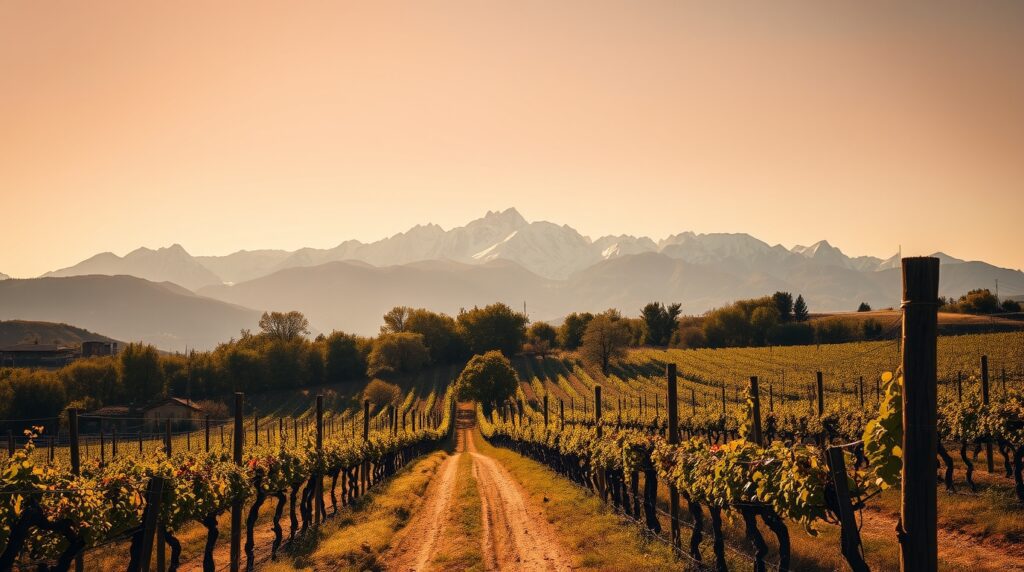
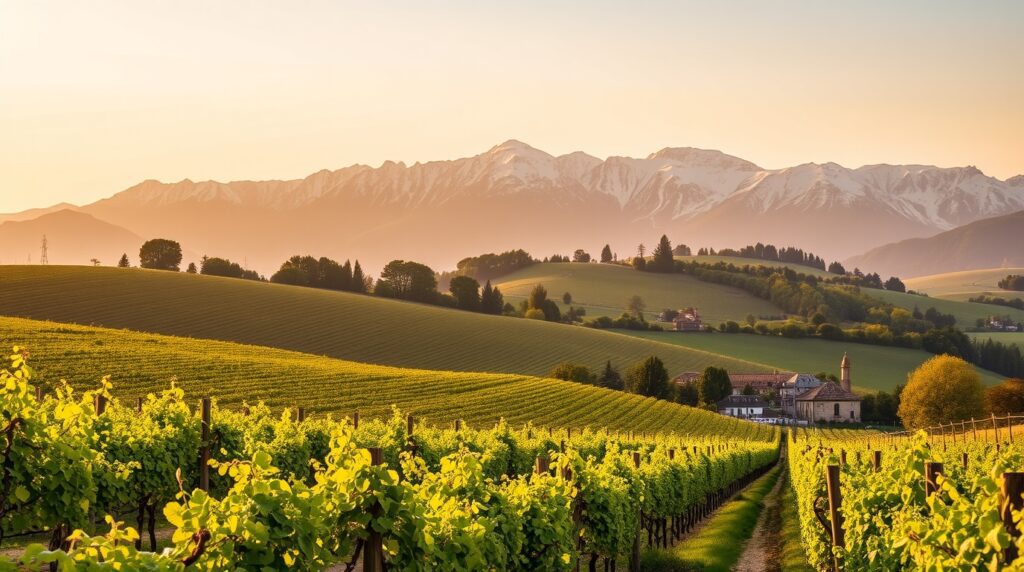
As for myself, I have always preferred Slow Travel to rushing around and seeing as many different places in as short a time as possible. I am still, after 11 years of living in this part of France, slowly travelling through my glorious region. When I drive here, I stop frequently to admire the majestic Pyrennées mountain range, explore a small farmer’s market, or check on a friend who lives in the middle of nowhere, on the way to a favourite restaurant. Here you’ll find me discussing the menu for 15 minutes or longer with the chef, asking about his family and his business, and then indulging in a lunch that takes…as long as it takes. After the meal, I linger to watch the world go by…
Solo Slow Travel – I highly recommend it.
The Bottom Line
The research is unanimous: slow travel benefits everyone involved. It nourishes travelers on a psychological and emotional level, strengthens communities economically, and supports the planet environmentally. In many ways, it’s becoming a model for what sustainable tourism should look like in the years ahead.
FAQ
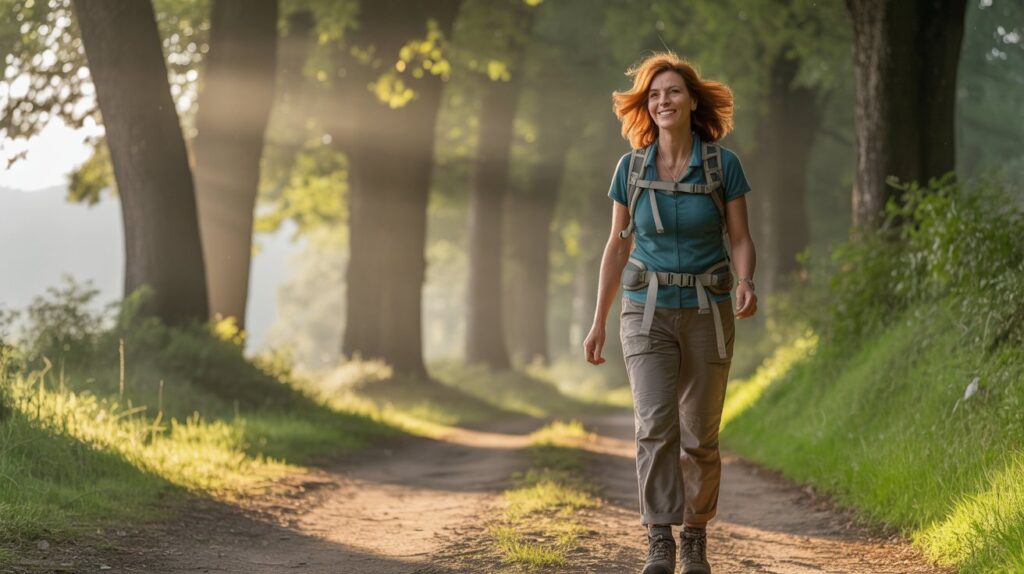
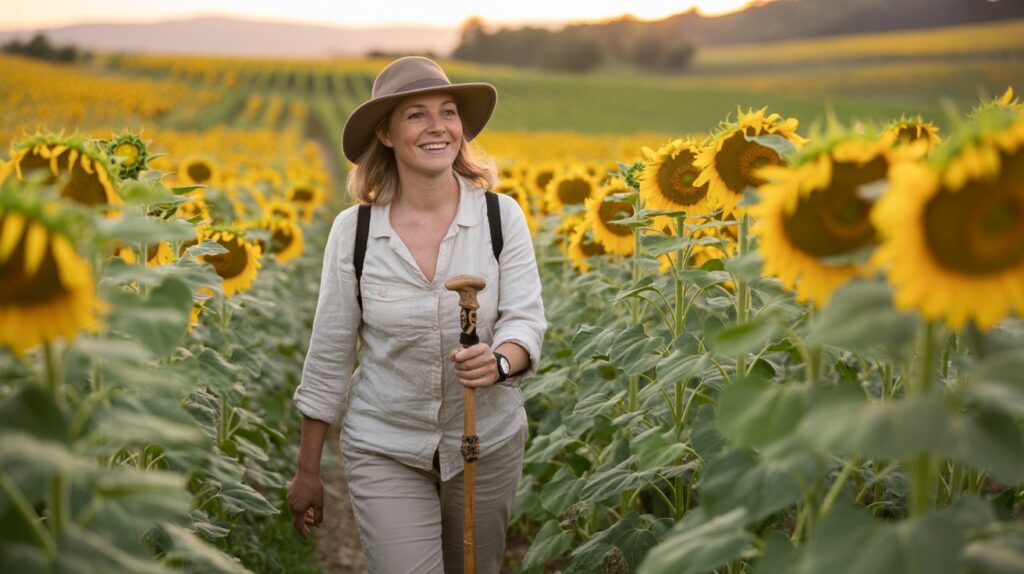
There’s something quietly magical about walking the Camino at a slower pace. It’s not just travel — it’s a gentle exhale. A way to step out of the noise of everyday life and into a rhythm that lets you actually feel where you are. Slow travel on the Camino isn’t about how many kilometres you cover or how many landmarks you tick off a list. It’s about the morning light spilling over the path, the conversations with strangers who feel like old friends, the scent of wildflowers, the weight of your backpack easing as your heart lightens. It’s about allowing the journey to unfold — and letting it change you in ways you didn’t expect.
1. What does “slow travel” mean on the Camino?
On the Camino, slow travel isn’t just about walking at a gentle pace — it’s about giving yourself the gift of time. Instead of rushing to “get somewhere,” you allow each step, each village, and each conversation to become part of your story. It’s travel that’s felt, not just seen.
2. How is this different from a regular holiday?
Most holidays are about cramming in as much as possible — landmarks, tours, restaurants, photos. A Camino walking retreat is the opposite. It invites you to unplug, breathe, and simply be present. You’re not racing to a finish line; you’re arriving to yourself, one step at a time.
3. Do I need weeks or months to travel slowly on the Camino?
Not at all. Even a few days can be deeply meaningful when you approach the journey with presence. My retreats are designed so that in just five days, you can drop into a slower rhythm, connect with nature, and walk away feeling more grounded and alive.
4. What are the benefits of walking the Camino slowly?
So many. People often talk about how the Camino:
- Clears their mind and calms their nervous system
- Helps them reconnect with themselves during life transitions
- Boosts their mental clarity and emotional resilience
- Inspires a sense of belonging — with nature, others, and something bigger
- Feels more like a soulful reset than a holiday
5. How does slow travel help the environment here?
Walking is one of the most sustainable ways to travel. By choosing to explore on foot, stay in local accommodations, and linger in villages instead of rushing through, you help keep the Camino’s natural and cultural heritage alive. Every slower step leaves a lighter footprint.
6. Is the Camino only for solo travellers?
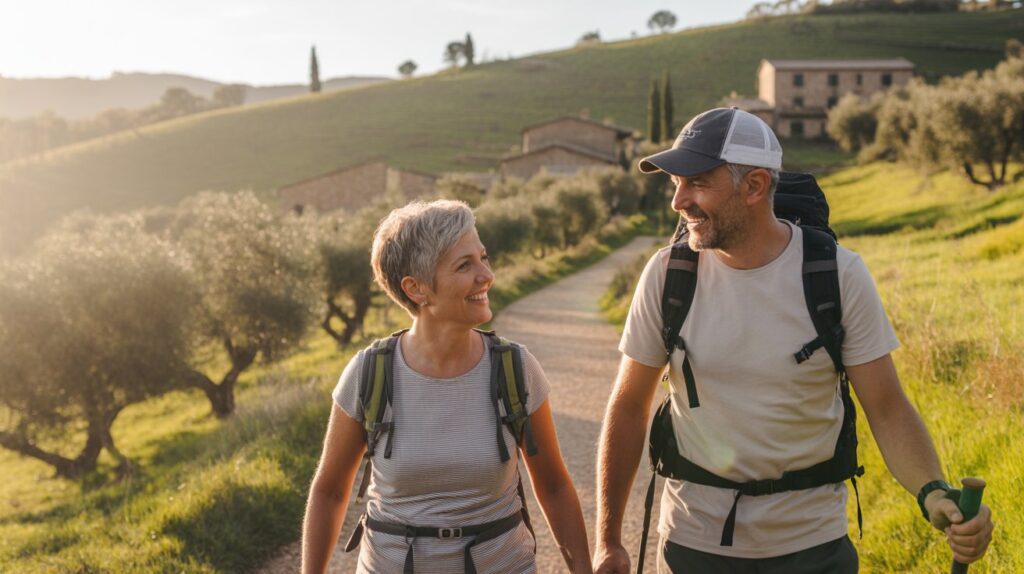
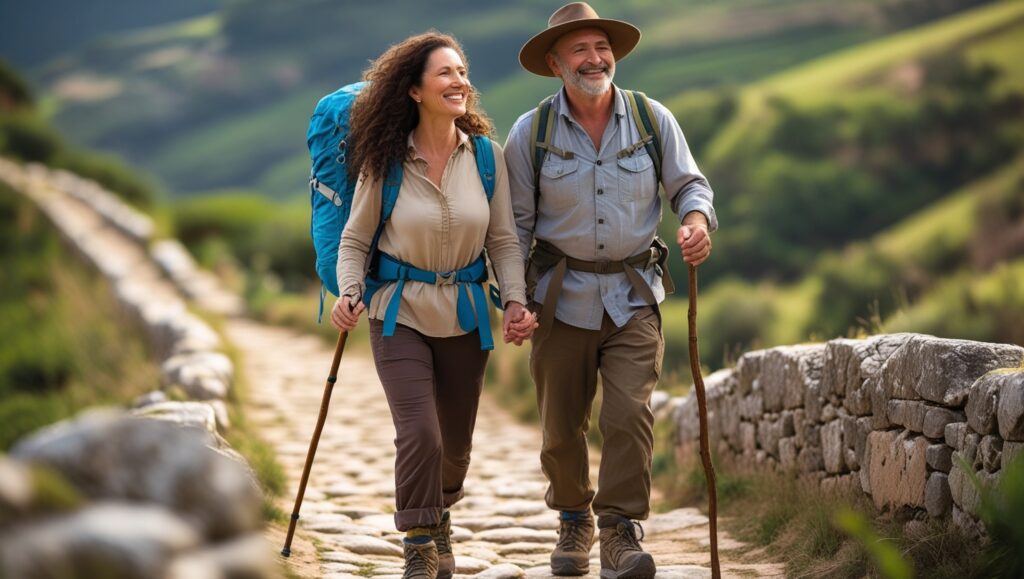
Absolutely not. Many people walk alone, yes — but plenty come with a partner, a friend, or even a small group. What makes slow travel on the Camino special is the shared humanity you encounter along the way. Whether you crave quiet solitude or gentle connection, there’s space for both.
7. What kind of transportation fits the spirit of the Camino?
Your feet are your main mode of transport. But trains, local buses, and the occasional taxi help keep things flexible. The idea isn’t to rush from point A to B — it’s to let the journey unfold at its own pace.
8. Can I still travel slowly if I only have a short holiday?
Yes — in fact, that’s what my retreats are designed for. Instead of trying to walk the entire Camino in record time, you can sink into one beautiful stretch, fully experience it, and return home feeling rested and inspired rather than exhausted.
9. Does this kind of travel really make a difference to local communities?
It does — in a big way. When you walk slowly, stay in family-run gîtes, eat at local cafés, and linger in village shops, your presence supports the people who keep this route vibrant and alive. Slow travellers contribute around 60% more to local economies than fast-moving tourists.
10. How do I begin my slow travel journey on the Camino?
Start with a simple intention: to walk, breathe, and be present. You don’t need to plan every detail or prove anything. Just bring your curiosity, your walking shoes, and an open heart. The Camino has a way of meeting you exactly where you are — and gently guiding you toward where you need to be.
If you would like to read more about Slow Travel, here is the Slow Travel Guide Book

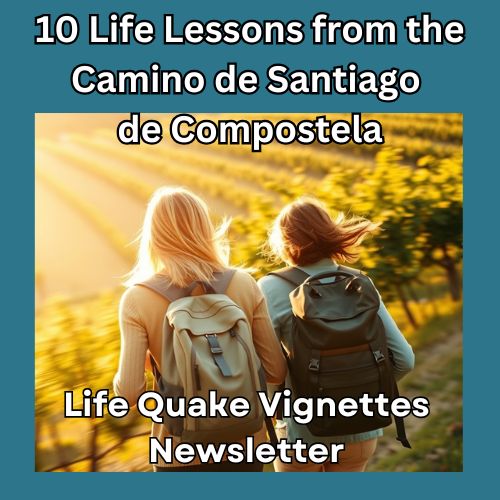
What Life Lessons Can You Learn While Walking the Camino de Santiago? – a free guide filled with 10 not just “quaint anecdotes” or Instagram-worthy moments (though there are plenty of those) but real transformations from real people who walked this insight-giving trail – Subscribe to my monthly newsletter to Download the Guide

“I am an experienced medical doctor – MBChB, MRCGP, NLP master pract cert, Transformational Life Coach (dip.) Life Story Coach (cert.) Stress Counselling (cert.) Med Hypnotherapy (dip.) and EAGALA (cert.) I may have an impressive number of letters after my name, and more than three decades of professional experience, but what qualifies me to excel at what I do is my intuitive understanding of my clients’ difficulties and my extensive personal experience of managing major life changes using strategies I developed over many years.” Dr M Montagu
- Why do I need to know what my Life Purpose is?
 Why bother figuring out your life purpose at all? Because a life without one runs on autopilot. Every decision, from which job to take to how to spend a Tuesday, starts to feel arbitrary, and that’s exhausting in a way that’s hard to pinpoint. You end up making the same choices over and over, not …
Continue reading “Why do I need to know what my Life Purpose is?”
- Walking Retreat vs Walking Holiday: What’s the Difference?
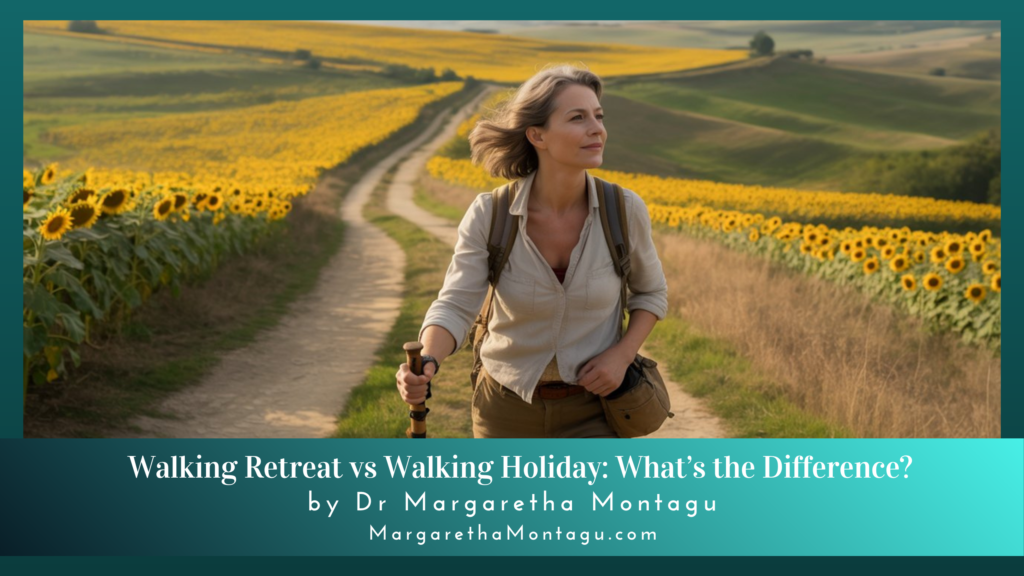 If you love walking, you may have come across the term walking retreat and wondered how on earth it differs from an organised walking holiday. After all, both involve beautiful countryside, well-worn walking shoes, fresh air and a few days away from everyday life. There may even be a backpack involved, although hopefully not one …
Continue reading “Walking Retreat vs Walking Holiday: What’s the Difference?”
- AI Can Create a Course in Seconds. So Why Are People Still Buying Mine?
 AI has revolutionised online learning in ways we could never have imagined. These days, you can ask AI to create a course on almost anything—from astrophysics to how to keep your houseplants alive—and it will hand you a neatly structured programme in seconds. Want six modules? No problem. Learning objectives, worksheets, quizzes, reflection questions and …
Continue reading “AI Can Create a Course in Seconds. So Why Are People Still Buying Mine?”
- The Day I asked my Guests for Silence and got Performance Anxiety instead
 . I assumed, in the early days, when I was still walking the Camino with my guests, that silence was simply the absence of talking — that if I stopped scheduling activities and left enough open space in the day, quiet would arrive on its own, the way it does when you finally turn off …
Continue reading “The Day I asked my Guests for Silence and got Performance Anxiety instead”
- I was Surprised to Discover that my Co-Host Doesn’t Want a Salary
 . For years, I planned reflection exercises the way I imagine a nervous conference organiser plans icebreakers — carefully, a little anxiously, with a backup in case the first one fell flat. A guided journaling prompt after brunch. A short silent walk with a question to chew on. A candle, occasionally, if I’m honest, which …
Continue reading “I was Surprised to Discover that my Co-Host Doesn’t Want a Salary”
- What Years of Farmhouse Hospitality Taught Me About What Actually Matters to Guests
 . For the first year or two of hosting Camino de Santiago walking retreats, I worried about the wrong things. I fretted over the towels. I agonised slightly over whether the guest rooms felt “smart” enough, whether the breakfast presentation looked sufficiently considered, whether I measured up to the polished retreat centres with their infinity …
 - It’s Easier to Talk, Facing Forward, Walking Side by Side
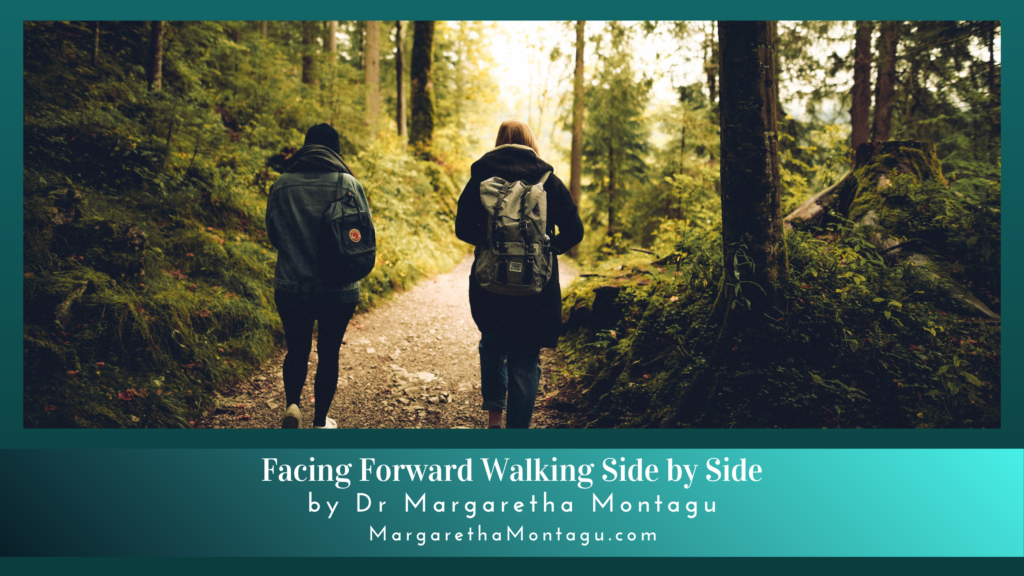 . I used to believe the most meaningful conversations happened at dinner. Good food, candlelight, everyone finally relaxed after a day’s walking — surely that was where people opened up. Sometimes, it is. But not always. Sometimes, the real conversations, the ones guests still mention to me months later, don’t happen at the table. They …
Continue reading “It’s Easier to Talk, Facing Forward, Walking Side by Side”
- Difficult Conversation Coming Up? Talk While Walking Together
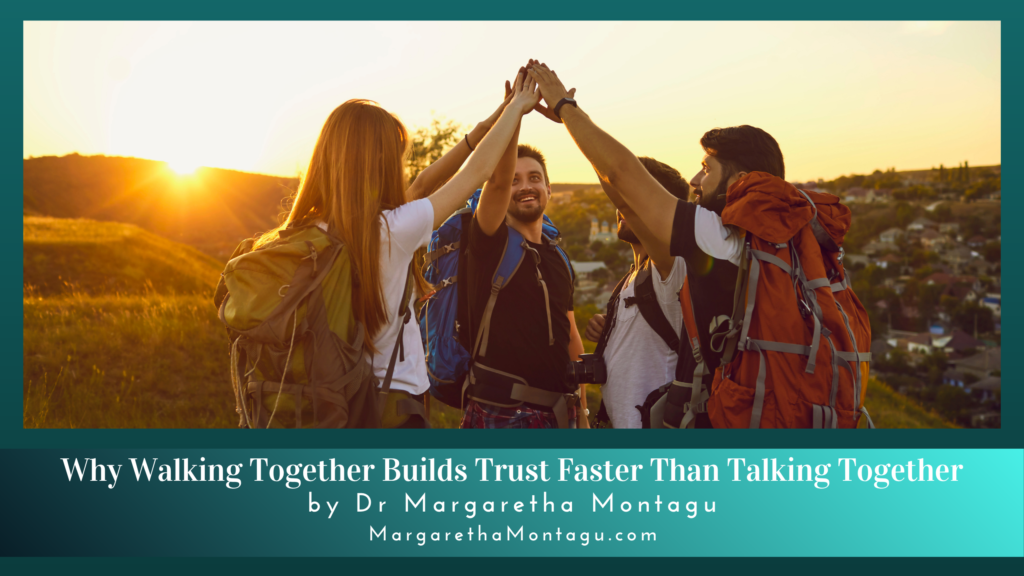 . What years of hosting Camino de Santiago walking retreats in France taught me about connection on the trail I’ve watched a lot of icebreakers fail in my time. Name games, “two truths and a lie,” the earnest go-round where everyone shares what they’re hoping to get from the retreat — I’ve tried most of …
Continue reading “Difficult Conversation Coming Up? Talk While Walking Together”
- Why Guests Come Back Again and Again: The Real Reason People Rebook a Retreat
 . I used to think I was in the walking business. . After enough Camino de Santiago walking retreats along the Voie du Puy, I’ve had to quietly revise that. I’m not in the walking business. I’m in the business of letting people be someone slightly different for a week — and the walking, as …
Continue reading “Why Guests Come Back Again and Again: The Real Reason People Rebook a Retreat”
- What Horses Can Teach Us About Effective Stress Management
 A strange thing happens when you lean your forehead against a horse’s shoulder. I didn’t fully appreciate the stress management effect until a guest, a cardiologist, of all people, told me she could feel her own heart rate drop within about ninety seconds of standing next to Valentino. She wasn’t being poetic. She was, quite …
Continue reading “What Horses Can Teach Us About Effective Stress Management”