
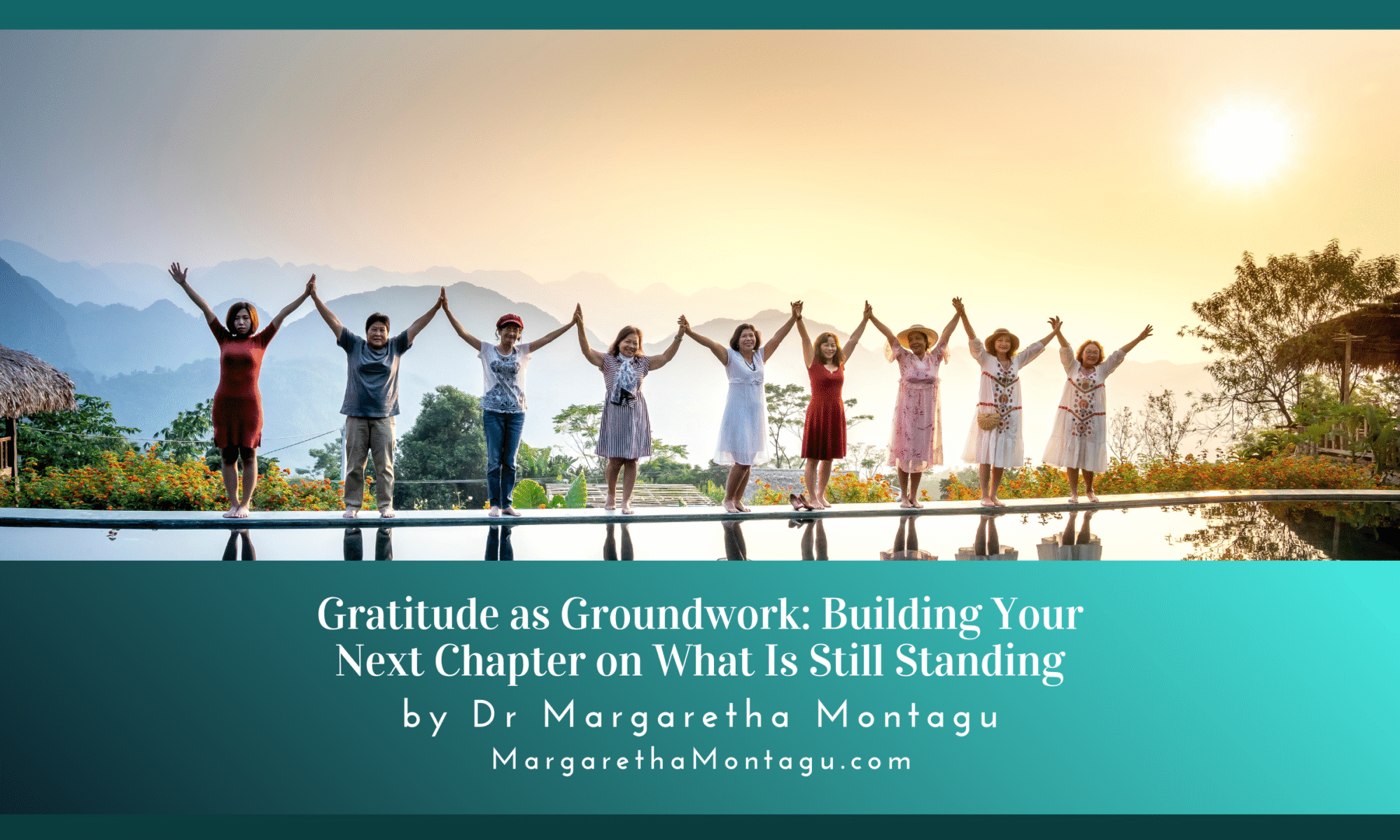
A doctor’s guide to using gratitude as a lifeline (not a bandaid) when navigating major life upheavals and unexpected crises
What this is: A practical, research-informed exploration of how cultivating gratitude can become your anchor during life’s most turbulent transitions—whether you’re navigating divorce, illness, career upheaval, or loss.
What this isn’t: Another fluffy “just be grateful” lecture that ignores your real pain, or toxic positivity disguised as wellness advice.
Read this if: You’re standing at a crossroads, feeling unmoored by change, and you’re willing to consider that noticing what remains might help you navigate what’s next.
Five Key Takeaways
- Gratitude doesn’t erase difficulty—it creates breathing room beside it. When crisis consumes your mental space, a structured gratitude practice offers cognitive relief and perspective.
- Neuroplasticity means your brain can rewire, even mid-crisis. Regular gratitude exercises literally change your neural pathways, making resilience more accessible over time.
- Gratitude is a bridge, not a destination. It connects who you were before the change to who you’re becoming, helping you carry forward what matters whilst releasing what doesn’t.
- Community amplifies gratitude’s power. Sharing what you’re grateful for—in storytelling circles, with friends, or in journaling—compounds its emotional and psychological benefits.
- Starting small is starting smart. Three things daily, written down, is enough to begin shifting your internal landscape during major transitions.
Introduction: The Unexpected Gift Hidden in Crisis
Here’s what nobody tells you about major life changes: the ground doesn’t just shift beneath your feet—it disappears entirely. One moment you’re standing on solid earth, the next you’re suspended in mid-air, watching everything you thought was permanent scatter like autumn leaves.
I’ve spent two decades as a doctor listening to people describe this freefall. The woman whose marriage ended after twenty-three years. The executive whose body betrayed him with unexpected illness. The parent whose child moved continents away. Each story is different, each person convinced they’re the only one who feels this untethered.
But here’s the curious thing I’ve observed both in clinical practice and through fifteen years of hosting stress management retreats along the Camino de Santiago: the people who find their footing fastest aren’t the ones who ignore their pain or rush through it. They’re the ones who somehow manage to notice what’s still standing amidst the rubble.
That noticing? That’s gratitude. And it might be the most radical, transformative practice available to anyone navigating the terrifying territory of a major life transition.
The Woman Who Found Solid Ground in Quicksand: Elena’s Story
Elena Rothschild’s hands shook as she set down her morning coffee, the china cup rattling against the saucer in a way that made her inexplicably furious. The sound seemed to echo through her London flat—a space that felt cavernous now, though nothing about its physical dimensions had changed.
Six months earlier, her husband had moved out. Three months after that, her mother died. Last week, the restructure at work had eliminated her position. At fifty-two, Elena felt like she’d been stuffed into a box, shaken violently, and dumped out somewhere unrecognisable.
The morning light slanting through her kitchen window caught dust motes spinning in the air. She watched them drift, suspended, going nowhere. Exactly like me, she thought bitterly.
Her therapist had suggested keeping a gratitude journal. Elena had laughed—actually laughed—in the session. “Grateful? For what, exactly? My failed marriage? My dead mother? Unemployment?” The words had tasted like copper in her mouth.
But desperation makes you try strange things. That first morning, Elena sat with her notebook and pen, staring at the blank page as though it were mocking her. The silence of her flat pressed against her eardrums. She could hear the refrigerator humming, a taxi passing on the street below, her own breathing.
Fine, she thought. I’m grateful for… bloody hell.
She wrote: “I’m grateful I can still afford this flat for another three months.”
It felt hollow. Clinical. Like ticking a box. But the next morning, muscle memory brought her back to the page. “I’m grateful my hands still work to write this.” Still mechanical, but something whispered at the edges of her awareness—something she couldn’t quite name.
By the fourth day, she noticed the magnolia tree outside her window was budding. “I’m grateful I can see the magnolia from here,” she wrote. And as her pen moved across paper, she really looked at the tree—its dark branches, the tight-fisted buds holding pink promises. When had she last actually seen it?
Week two brought a shift. Elena’s neighbour, Mrs. Chen, knocked with leftover soup. The warmth of the container in Elena’s hands, the steam rising with its ginger-laced fragrance, the fact that someone had thought of her—she wrote it all down. The words came easier now, and with them, something that felt dangerously close to tears.
By week four, Elena’s morning ritual had expanded. She’d make her coffee, watching the cream spiral through the dark liquid like a tiny galaxy. She’d sit by the window where the light was best, and she’d write. Some days the entries were simple: “Grateful for hot water.” Other days they unfurled into paragraphs about the kindness of strangers, the resilience of her own body, the way her mother’s favourite cardigan still smelled faintly of her perfume.
The grief hadn’t vanished. The uncertainty about her future still kept her awake at night. But something had shifted—like adjusting the lens on a camera. The painful things were still in frame, but so were other things. The magnolia had bloomed, a riot of pink against grey London sky. Mrs. Chen had become a friend. Elena had started volunteering at a local charity, where her project management skills felt suddenly relevant again.
Three months into her gratitude practice, Elena sat in a job interview. When asked about her recent career gap, she found herself speaking honestly about loss and transition. But she also spoke about what she’d learned: resilience, perspective, the importance of community. She spoke with a groundedness she hadn’t possessed six months earlier.
She got the job. But more importantly, she’d found something else—a kind of internal anchor that held steady even when external circumstances churned. It wasn’t that gratitude had solved her problems. It had done something more subtle and more powerful: it had reminded her that even in crisis, she was still capable of noticing beauty, receiving kindness, and finding meaning.
The magnolia would bloom again next spring. And so, Elena realised, would she.
Why Does Gratitude Work When Everything Else Doesn’t?
When you’re in the midst of a major life upheaval, your brain enters what we might call “threat mode.” As someone who has spent twenty years treating stress-related conditions—from my early days in general practice through to my current work as a Life Transition Coach—I’ve witnessed this neurological response countless times. Your amygdala, that almond-shaped cluster of neurons responsible for processing emotions and threats, goes into overdrive. It’s scanning constantly for danger, for loss, for what else might go wrong.
This is adaptive in genuine emergencies, but exhausting during prolonged transitions. Your nervous system doesn’t distinguish well between a physical threat and an emotional one. Divorce, redundancy, illness, bereavement—your body responds to all of them as crises requiring hypervigilance.
Here’s where gratitude becomes genuinely revolutionary rather than merely pleasant. Research in neuroscience reveals that practising gratitude activates the brain’s reward pathways, particularly in the prefrontal cortex and anterior cingulate cortex. These areas are associated with moral cognition, value judgement, and emotional regulation. When you consciously focus on what you appreciate, you’re literally recruiting different neural networks—ones associated with wellbeing and connection rather than threat and loss.
As an NLP Master Practitioner and Medical Hypnotherapist, I work extensively with the concept of neuroplasticity—the brain’s ability to form new neural connections throughout life. A regular gratitude practice doesn’t just make you feel better temporarily; it restructures your neural pathways over time. Your brain becomes more efficient at noticing positive elements in your environment, creating a subtle but significant shift in baseline mood and resilience.
But there’s something else, something I’ve observed during my fifteen years hosting retreats where guests walk the Camino de Santiago. Gratitude connects you to something larger than your current crisis. When you acknowledge the kindness of a stranger, the beauty of morning light, the comfort of a warm meal, you’re reminded that the world extends beyond your pain. You’re still part of the human community, still capable of receiving and giving, still connected to the rhythms of life that continue regardless of your personal upheaval.
This matters profoundly during major transitions. One of the most destabilising aspects of life change is the sense of disconnection—from your former identity, from your community, from your sense of purpose. Gratitude rebuilds those bridges, one small acknowledgement at a time.
How Can This Practice Transform Not Just You, But Also Your Environment?
Here’s something remarkable about gratitude during life transitions: its effects ripple outward in ways you might never anticipate.
When you begin noticing what you appreciate, you naturally start expressing that appreciation. You thank people more readily. You acknowledge kindness. You see the efforts others make on your behalf. This creates what psychologists call a “positive feedback loop.” People feel valued, and they’re more likely to continue offering support. Your relationships deepen precisely when you need them most.
But the transformation extends further. As you navigate your transition with more groundedness and perspective, you become a different kind of presence in your community. Instead of being solely defined by your crisis, you model something else—resilience, adaptability, the capacity to hold both grief and gratitude simultaneously. This matters enormously, especially if you have children, ageing parents, or people who look to you for guidance.
I’ve written eight books about navigating major life challenges—divorce, loss, unexpected illness, coping with crises—and one theme emerges consistently: the people who transform their pain into wisdom become beacons for others. Not because they’ve transcended suffering, but because they’ve learned to move through it with grace and perspective. Gratitude is often the practice that makes this transformation possible.
Your next chapter doesn’t begin when the crisis ends. It begins the moment you start intentionally choosing where to direct your attention, what to nurture, what kind of person you want to become through this experience. Gratitude is that intentional choice, made daily, sometimes hourly, until it becomes as natural as breathing.
Mining Your Present Moment for Hidden Gold
Gratitude Journaling Prompt
Set a timer for fifteen minutes. Complete this sentence in as many ways as you can: “Despite everything that’s changed, I’m grateful that…”
Don’t censor yourself. Write quickly, letting your pen move across the page without judgement. Some responses will feel trivial (“I’m grateful for good coffee”). Others might surprise you with their emotional weight (“I’m grateful I’m finally being honest about what I need”).
The practice isn’t about finding silver linings or minimising your pain. It’s about training your attention to see both what’s broken and what remains whole. Both truths can exist simultaneously.
Gratitude Exercise: The Five Senses Check-In
When crisis overwhelms you, this exercise brings you back to your body and your immediate environment:
Right now, in this moment:
- What’s one thing you can see that you appreciate? (Perhaps light through a window, a colour that pleases you, a photograph of someone you love)
- What’s one sound you can hear that brings comfort? (Rain, music, silence itself, someone’s laughter)
- What’s one thing you can touch that feels good? (Soft fabric, warm tea cup, a pet’s fur, smooth wood)
- What’s one scent you can smell that you’re grateful for? (Fresh air, coffee, flowers, clean laundry)
- What taste are you grateful to have tasted recently? (A favourite meal, chocolate, fresh water)
Write these down. This exercise anchors you in sensory reality and reminds you that even in crisis, your body can still experience comfort and pleasure.
Further Reading: Five Books to Deepen Your Practice
1. “The Gratitude Diaries” by Janice Kaplan Kaplan spent a year living gratefully and documenting the effects on her relationships, career, health, and happiness. What I appreciate about this book is its honest acknowledgement that gratitude isn’t always easy or natural—it’s a practice that requires intention, especially during difficult seasons. Her research is thorough, but her voice remains accessible and warm.
2. “Thanks! How the New Science of Gratitude Can Make You Happier” by Robert Emmons As the world’s leading scientific expert on gratitude, Emmons brings rigorous research to what could otherwise be dismissed as a soft topic. His work demonstrates the measurable psychological and physical benefits of gratitude practices. This is the book for anyone who needs evidence-based reasons to commit to the practice.
3. “The Book of Awakening” by Mark Nepo While not exclusively about gratitude, Nepo’s daily meditations consistently return to themes of appreciation, presence, and finding meaning in ordinary moments. His writing is poetic without being precious, and he writes from his own experience of navigating life-threatening illness. It’s a companion for the journey rather than a prescriptive manual.
4. “Option B: Facing Adversity, Building Resilience, and Finding Joy” by Sheryl Sandberg and Adam Grant After her husband’s sudden death, Sandberg partnered with psychologist Adam Grant to explore how people can build resilience after life-shattering experiences. The book includes substantial discussion of how gratitude practices helped Sandberg find her footing during devastating grief. It’s honest about pain whilst offering practical strategies for moving forward.
5. “Grateful: The Transformative Power of Giving Thanks” by Diana Butler Bass Bass takes a historical and cultural look at gratitude across religions, philosophies, and societies. She examines how gratitude functions not just as personal practice but as social and political act. It’s particularly valuable for understanding how gratitude connects individual wellbeing to community flourishing.
P.S. I wrote my book ‘Embracing Change – in 10 minutes a day book‘ specifically for people standing at major life crossroads. It offers daily practices, reflections, and exercises designed to help you navigate transition with intention and grace. Gratitude forms a central thread throughout, woven together with other evidence-based approaches from my years in medical practice and coaching.
A Voice from the Circle
“Joining Dr Montagu’s virtual storytelling circle was one of the most unexpected gifts of my divorce. I thought I was just signing up for a weekly Zoom call, but what I found was a community of people who understood what it meant to be unravelling and rebuilding simultaneously. Sharing my story—and listening to others share theirs—helped me see my situation from new angles. The gratitude practices Margaretha guided us through didn’t minimise our pain, but they did give us tools to hold both grief and hope at the same time. Six months later, I have a regular gratitude practice that genuinely sustains me. More importantly, I have friends who’ve walked through fire with me and come out the other side. That’s a kind of wealth I never expected to find in my darkest season.” — Sarah T., London
If you’re navigating major change and feeling isolated in the experience, my Purpose Pivot Protocol online course offers structured guidance through life transitions. It combines the gratitude practices I’ve refined over decades with practical frameworks for reimagining your next chapter. You’ll also gain access to a community of fellow travellers who understand the terrain.
Frequently Asked Questions
What if I’m too angry or depressed to feel grateful for anything?
This is perhaps the most common and honest objection I hear. Start smaller than you think necessary. You don’t need to feel grateful for your situation—you’re simply noticing specific, concrete things that aren’t terrible. “I’m grateful my legs worked to carry me to the kitchen” is enough. “I’m grateful for the warmth of this blanket” counts. Gratitude isn’t about denying your anger or depression; it’s about acknowledging that other things also exist alongside those difficult emotions. Your anger is valid. Your depression is real. And you also had lunch today. All can be true simultaneously.
How is this different from toxic positivity or “just think positive” nonsense?
Crucial difference: gratitude practice acknowledges reality as it is, then chooses where to direct attention within that reality. Toxic positivity denies or minimises genuine suffering. It says “everything happens for a reason” or “just look on the bright side.” Gratitude says “this is genuinely terrible, and I’m also noticing this one small thing that isn’t terrible.” It’s not a replacement for processing grief, seeking therapy, or taking practical action. It’s a complementary practice that creates cognitive space beside your pain rather than suppressing it.
How long before I actually feel different?
Research suggests that consistent daily practice for three to four weeks begins showing measurable effects on mood and outlook. However, some people report subtle shifts within the first week—not dramatic transformations, but small moments of perspective or relief. Think of it like physical exercise: you won’t see muscle growth after one gym session, but you might feel slightly more energised. Consistency matters more than intensity. Ten minutes daily for a month will serve you better than occasional hour-long sessions.
What if writing isn’t my thing? Are there other ways to practice gratitude?
Absolutely. Some people prefer verbal practices—sharing three things they’re grateful for with a partner or friend each evening. Others create photo gratitude journals, taking one picture daily of something they appreciate. Walking meditations where you mentally note things you’re grateful for engage both body and mind. Voice recording works well for those who process verbally. The key is regularity and specificity, not the medium. Experiment until you find a format that feels sustainable rather than burdensome.
Can gratitude practice actually help with serious issues like divorce, illness, or bereavement, or is this just for minor stress?
Having worked with thousands of people navigating precisely these situations—through my medical practice, my retreat work, and my coaching—I can say unequivocally that gratitude practice is often most powerful during severe transitions. It doesn’t cure illness or repair marriages, but it provides psychological ballast when everything feels chaotic. Multiple studies show that gratitude practices reduce symptoms of depression and anxiety, improve sleep, and enhance overall wellbeing even among people facing serious health challenges. It’s not a substitute for medical treatment, therapy, or practical support, but it’s a valuable complement that costs nothing and has no negative side effects.
Conclusion: The Ground Beneath Your Feet
There’s a moment on the Camino de Santiago—I’ve witnessed it hundreds of times with retreat guests—when someone who’s been struggling suddenly looks up from the path and really sees where they are. The limestone trail winding through ancient forests. The way afternoon light gilds everything gold. The other pilgrims sharing the journey.
Nothing external has changed. The blisters still hurt. The pack still weighs heavy. But something internal has shifted. They’ve remembered they’re not just enduring something; they’re also in something, experiencing something, connected to something larger than their immediate discomfort.
That’s what gratitude does during major life transitions. It doesn’t erase the difficulty, but it reminds you that you’re still here, still capable of noticing beauty and kindness, still part of the great human story of loss and resilience and unexpected grace.
As Viktor Frankl wrote: “Everything can be taken from a man but one thing: the last of the human freedoms—to choose one’s attitude in any given set of circumstances, to choose one’s own way.”
Your circumstances may be unchosen. But your response—what you notice, what you nurture, what you allow to shape you—that remains beautifully, powerfully yours.
A Different Kind of Pilgrimage: Walk Your Way to Clarity
For twenty years, I’ve witnessed something extraordinary happen when people experiencing major life transitions walk the Camino de Santiago. There’s something about the combination of physical movement, stunning natural beauty, intentional community, and daily spiritual practice that creates space for profound transformation.
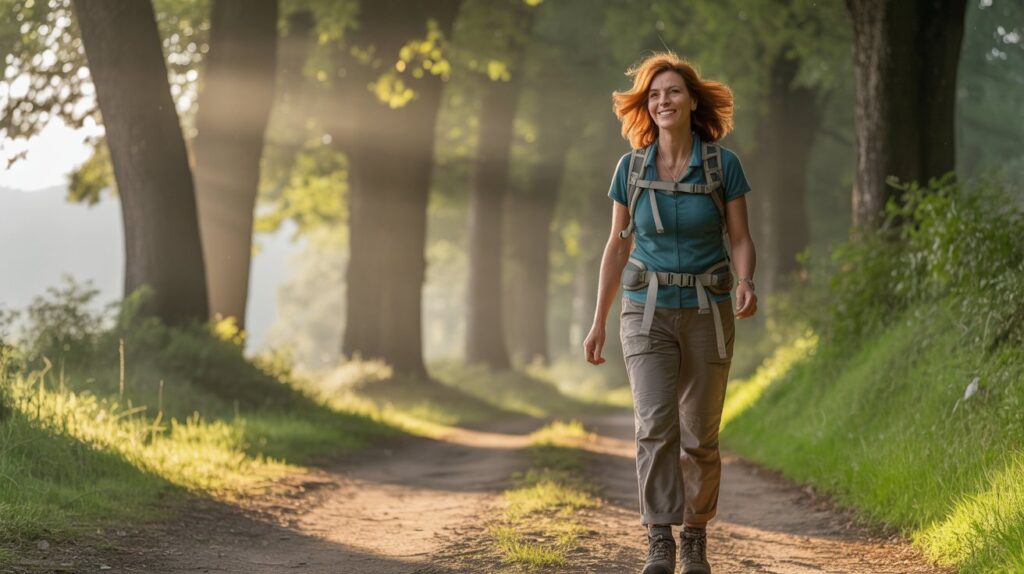

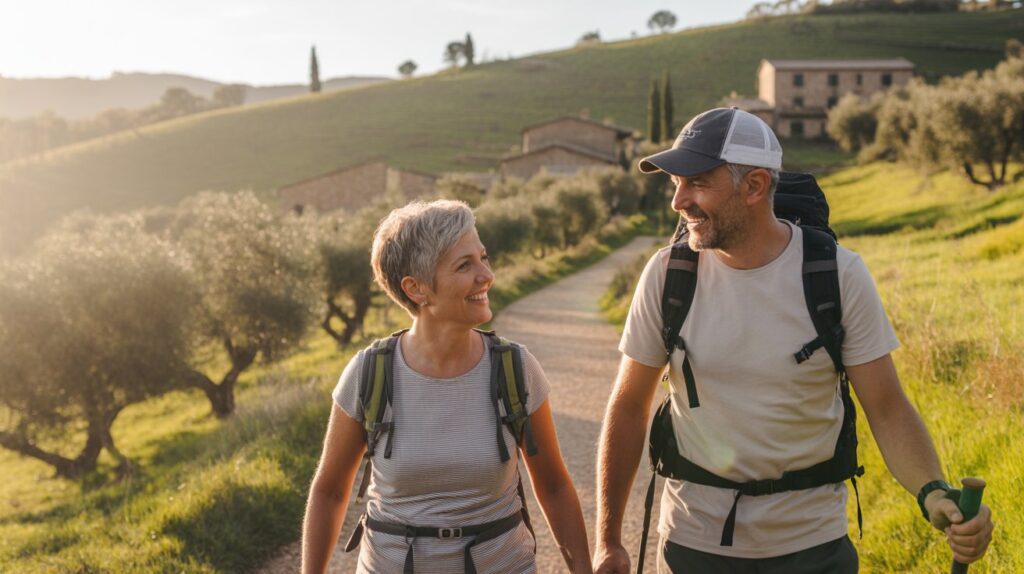
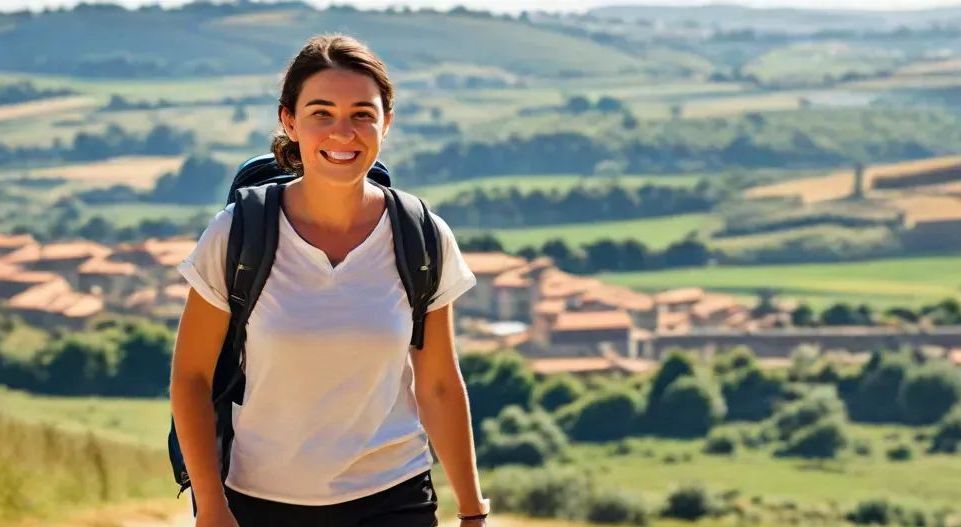
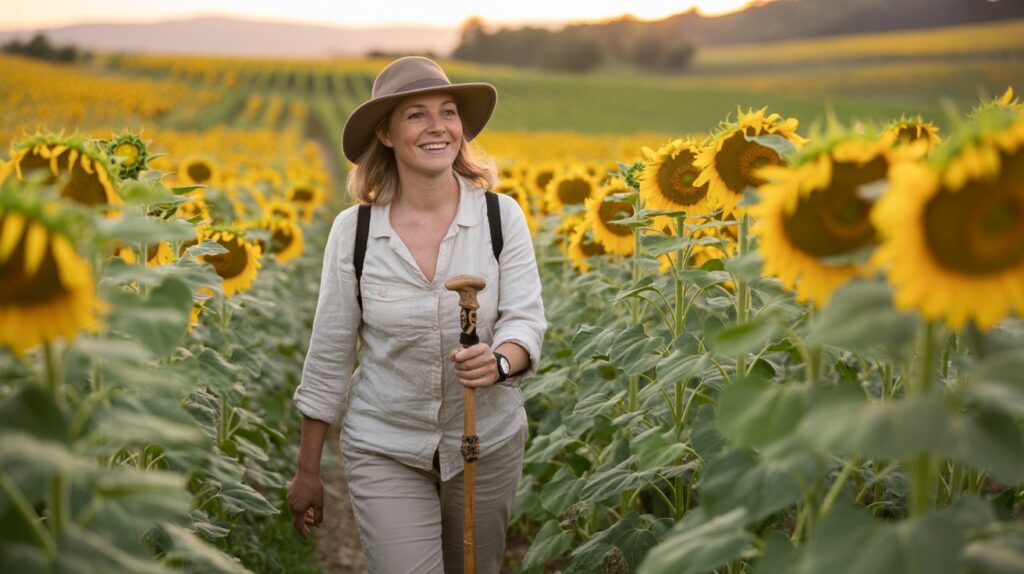

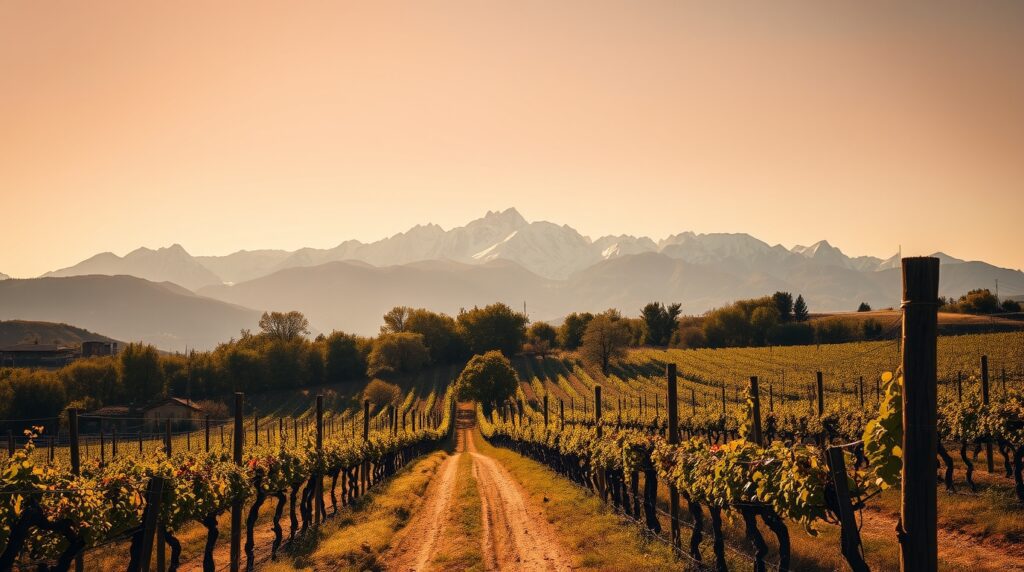
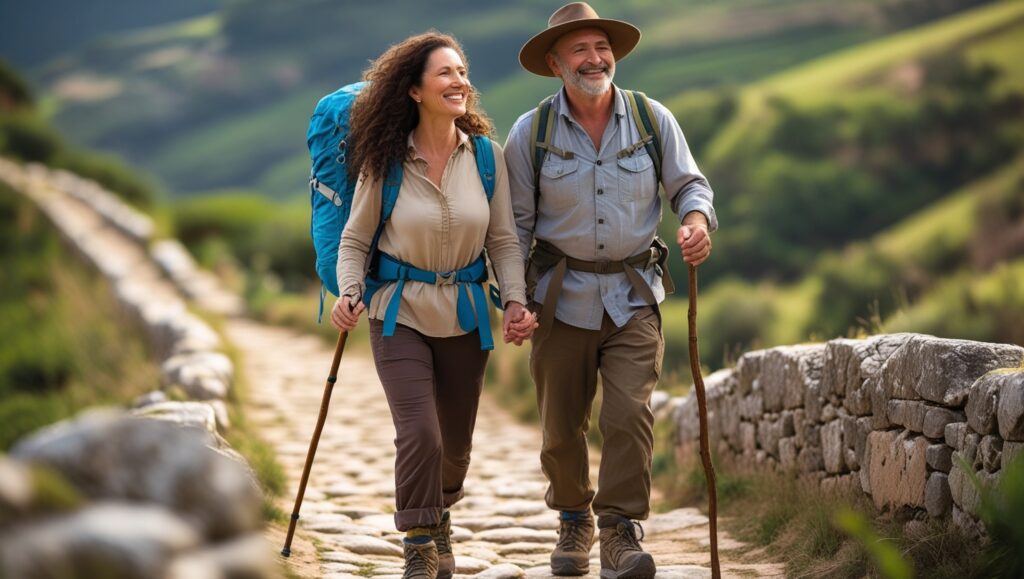
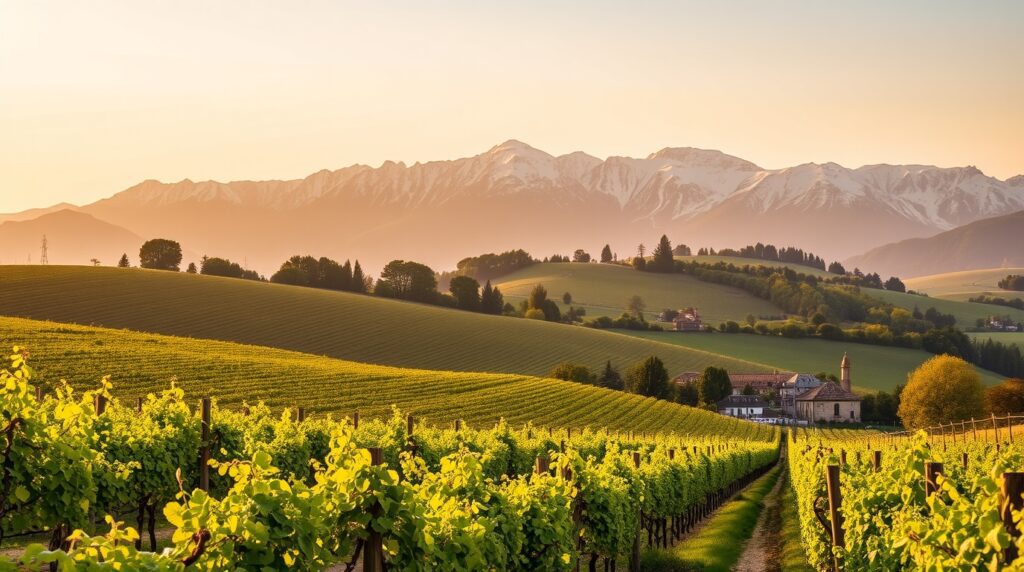
My Camino de Santiago Crossroads hiking retreats in the breathtaking south-west of France are specifically designed for people standing at crossroads. We walk gentle sections of this ancient pilgrimage route, moving at a pace that allows for reflection and conversation. Each day includes guided mindfulness and meditation exercises drawn from my training as a Medical Hypnotherapist. But perhaps most transformative are our storytelling circles with my Friesian horses—these magnificent, intuitive creatures have a remarkable way of helping people access and share their truths.
The retreats are deliberately small and intimate, with typically two to four participants. Thirty testimonials from previous guests speak to the deep work that happens when you combine physical pilgrimage, nature, community, and intentional practice. You’ll return home not with answers necessarily, but with clarity, perspective, and tools you’ll use for years to come. If you’re navigating divorce, loss, career transition, illness, or any major life change, this might be exactly the breathing space you need to find your footing for whatever comes next.
Reflection question: What’s one small thing that remains good in your life right now, even amidst everything that’s changed?
Recent Research
- A 2023 systematic review and meta-analysis of 64 clinical trials revealed that gratitude interventions increase feelings of gratitude and life satisfaction (up to 7% higher), improve mental health, and decrease symptoms of anxiety and depression—even when participants were facing significant life challenges such as illness or other stressful transitions – Diniz G, Korkes L, Tristão LS, Pelegrini R, Bellodi PL, Bernardo WM. The effects of gratitude interventions: a systematic review and meta-analysis. Einstein (Sao Paulo). 2023 Aug 11;21:eRW0371.
- Another review of studies since 2010 found strong cross-sectional and longitudinal correlations between gratitude practices and life satisfaction, as well as evidence for causal links via gratitude interventions. While the strength of these effects sometimes varies depending on the population and specific context, the overall pattern is robust – Kerry N, Chhabra R, Clifton JDW. Being Thankful for What You Have: A Systematic Review of Evidence for the Effect of Gratitude on Life Satisfaction. Psychol Res Behav Manag. 2023 Nov 28;16:4799-4816.
- Research shows that gratitude is associated with more positive moods, optimism, resilience, greater appreciation, prosocial behaviour, and less psychological pain in the wake of major life events – H. Choi, Y. Cha, M.E. McCullough,N.A. Coles, & S. Oishi, A meta-analysis of the effectiveness of gratitude interventions on well-being across cultures, Proc. Natl. Acad. Sci. U.S.A. 122 (28) e2425193122

“I am an experienced medical doctor – MBChB, MRCGP, NLP master pract cert, Transformational Life Coach (dip.) Life Story Coach (cert.) Stress Counselling (cert.) Med Hypnotherapy (dip.) and EAGALA (cert.) I may have an impressive number of letters after my name, and more than three decades of professional experience, but what qualifies me to excel at what I do is my intuitive understanding of my clients’ difficulties and my extensive personal experience of managing major life changes using strategies I developed over many years.” Dr M Montagu