
My courage always rises at every attempt to intimidate me.” —Jane Austen.
What Are Your Strengths?
I have just launched a new online course called “The Life Purpose Pursuit Protocol ” – the content is largely based on what my horses have taught me. It’s a DIY, available-on-demand, in-your-own-time, where-you-are 2-hour long course designed to help you clearly identify your current life purpose.
Most find-your-life-purpose experts recommend finding out what are your strengths, as an essential step, towards identifying your life purpose. Since I test-drive all my retreats myself, before I launch them, I could not skip this step.
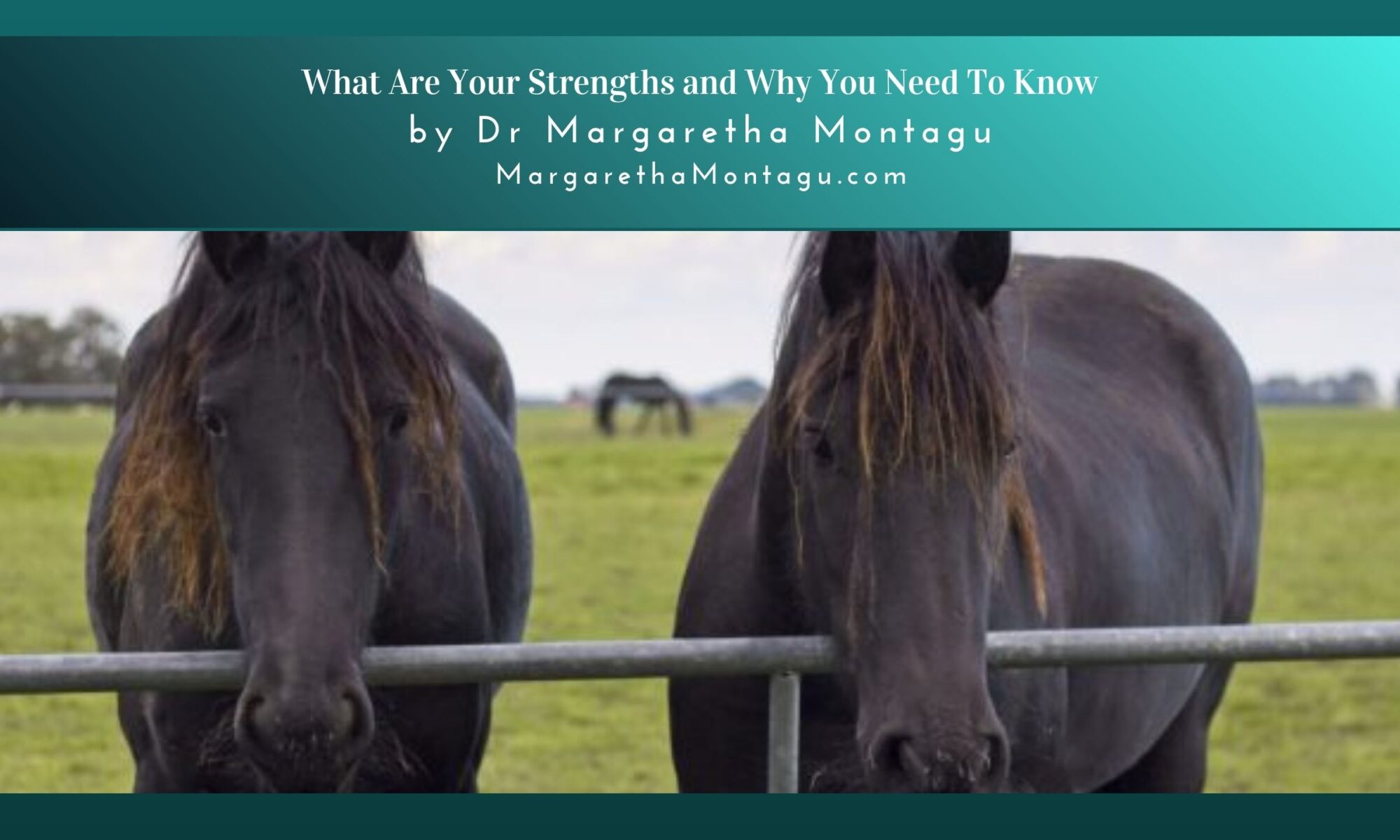
The horses are still subdued, none of their usual spring exuberance on display, nothing since we lost Belle de la Babinière, Aurore’s mother and Tess’ half-sister, in January.
I am doing my best to be strong, for all of us. Belle was my soulmare, the light of my life for more than 20 years, my strength and shield against the storms that so frequently came our way.
To be honest, I feel a bit lost. Vulnerable. Insecure. Overwhelmed. Emotionally exhausted.
I was struggling to name even a single one of my strengths.
Until this Easter weekend.
On Instagram, Pinterest and LinkedIn, I have just posted these 16 words:
Sometimes you don’t realise your own strengths until someone tries to take advantage of your weaknesses.
When I read these words, I froze on the spot. I had a light bulb moment, because this Easter weekend, outside forces were trying to take advantage of my weaknesses to threaten the wellbeing of my remaining two mares.
Nothing like a threat from the outside to remind us of our inner strengths.
If you have difficulty identifying your strengths, just ask yourself this question: What will you do if something or someone threatens those you love?
More questions to ask yourself that will help you identify your strengths:
- What have I achieved so far? Reflect on moments in your life when you have felt proud of your accomplishments. Think about the skills, talents, abilities and attributes that you used to help you succeed.
- What do my friends, family and colleagues think? Ask people who know you well what they think are your strengths. Think about times when others have praised you or you received recognition for your contribution.
- What skills, qualifications, knowledge and experience do I have? These may include communication skills, problem-solving abilities, leadership, organisational or technical expertise.
- Are there any assessments I can take to help me identify my strengths? There are various assessments available, such as personality assessments, skills assessments, and strengths assessments, that can provide insights into your strengths. Examples include the Myers-Briggs Type Indicator (MBTI), StrengthsFinder, and VIA Character Strengths.
- Do I have any strengths that I have not discovered yet? You may well have, so experiment, try new activities, learn something new, challenges yourself, take calculated risks, and move out of your comfort zone.
Remember that strengths can evolve over time. You may no longer be much good at what you excelled in 10 years ago (I can name several skills that I no longer use or need) and you may need to develop new strengths to cope with the challenges that come your way in future. Embrace your strengths, past, present and future, as they can be valuable assets in both your personal and professional life.
Why Do You Need To Know?
Ever been in a job interview when someone leans forward with that practiced smile and asks, “So, what are your strengths?” Your mind goes blank. Or worse, you launch into some rehearsed nonsense about being a “team player with excellent time management skills” while your soul dies a little inside. Here’s the uncomfortable truth: most successful people haven’t got a clue what their actual strengths are. They’re too busy using them. This article explores why knowing your genuine strengths isn’t just helpful—it’s transformational. And why getting it wrong might be costing you more than you think.
Five Key Takeaways
- Your strengths are invisible to you – The things you do brilliantly feel effortless, so you assume everyone can do them
- Fake strengths are exhausting – Playing to perceived strengths rather than real ones is like running in shoes two sizes too small
- Self-knowledge is a competitive advantage – Executives who know their authentic strengths make better decisions, faster
- Strengths aren’t fixed – They evolve with you, which is why regular reflection matters
- Discovery requires stillness – You can’t hear your own truth in the noise of constant doing
Introduction
There’s a peculiar blindness that afflicts the capable. The more naturally gifted you are at something, the less remarkable it seems. You assume everyone can do it. Meanwhile, you’re probably working overtime to improve at things you’ll only ever be mediocre at, because those feel important, difficult, worthy of effort.
I’ve spent two decades hosting people, and I’ve watched this paradox play out hundreds of times. Brilliant entrepreneurs who can read a room like a book but think their real strength is spreadsheets. CEOs with extraordinary strategic vision who believe their value lies in their ability to micromanage details. It’s like watching someone try to hammer nails with a precision screwdriver—technically possible, but utterly backwards.
The question “what are your strengths?” isn’t about crafting the perfect LinkedIn profile. It’s about understanding the specific way you’re wired to contribute to the world. And here’s what nobody tells you: you can’t figure this out from inside your own head. You need space, reflection, and often, a good story to wake you up to what you’ve been missing.
Let me tell you about Tom Parker.
The Man Who Built His Life on Someone Else’s Strengths
Tom Parker had the corner office, the executive title, and the stress-induced insomnia to prove it. When I met him on my Camino retreat three years ago, he arrived in the French countryside looking like a man who’d been holding his breath for a decade.
“I need a break,” he’d said when he booked. What he actually needed was permission to stop pretending.
On our first evening, sitting in the old stone farmhouse with golden light pouring through the windows and the scent of lavender drifting in from the fields, I asked each person in the storytelling circle to share why they’d come. When Tom’s turn arrived, he adjusted his posture—that boardroom straightening—and said, “I’m here to reset. Get some clarity on strategic direction.”
His voice was steady, professional. His hands were clenched so tight his knuckles had gone white.
The next morning, I drop my guests off on the Camino. The earth was still damp from overnight rain, releasing that ancient petrichor smell that makes you feel connected to every human who’s ever walked this route. Tom strode ahead initially, attacking the walk like it was a quarterly target, but by the second hour, something shifted. His pace softened. His shoulders dropped.
At a rest point overlooking a valley, he sat heavily on a sun-warmed stone wall and asked Linda, “Can I tell you something?” he asked. “I hate strategy meetings. I’ve built my entire career on being ‘the strategy guy,’ and I bloody well hate them.”
The confession hung in the air, vulnerable and true.
Over the following days, as we talked, as we sat in evening circles sharing stories around the wooden table, Tom’s real story emerged. As a junior analyst twenty years ago, he’d delivered one impressive strategic presentation. His boss had been delighted. “This is your strength,” she’d declared. “You’re our strategy expert.” And Tom, ambitious and eager to please, had built an entire identity around it.
But here’s what he’d never told anyone: that first presentation had been created in a panic-fueled all-nighter. He’d hated every minute of it. What he’d actually enjoyed was what came after—the conversation with his team, helping them understand what it meant, translating complex ideas into stories they could connect with, making people feel excited rather than overwhelmed.
“I’m good at strategy,” he said one evening, running his finger around the rim of his wine glass, the sound a soft hum in the quiet room, “but I’m brilliant at helping people understand things. At making them feel capable rather than confused. I’ve spent twenty years doing the thing I’m merely good at, and ignoring the thing I’m exceptional at.”
In our storytelling circles, Tom began to experiment. He’d listen to someone share their experience, then reflect it back in a way that illuminated patterns they hadn’t seen. He could take a tangled mess of thoughts and find the thread that made it all make sense. He didn’t analyse—he translated. He didn’t strategise—he clarified.
One evening, after he’d helped a fellow traveller understand a difficult work situation through the lens of a Japanese folktale, the room went quiet. “That,” said another guest, “is real wisdom.”
Tom’s eyes filled with tears. “I’ve never felt more myself than I do here,” he whispered.
On the final day, weas we were having brunch, the warmth of the morning sun on our faces. Tom stopped suddenly. “I know what I need to do,” he said. “Not quit my job—that’s running away. But restructure my role. I need to stop being the person who creates strategy and become the person who helps everyone understand why it matters. That’s where I come alive.”
Six months later, Tom emailed me. He’d restructured his role, brought in someone who genuinely loved strategic planning, and moved himself into a position focused on internal communication and culture. “For the first time in my career,” he wrote, “I finish the day energised rather than depleted. I had no idea work could feel like this.”
Tom’s story isn’t unusual. It’s the story of almost every accomplished person I’ve met. We’re all walking around doing impressive things that drain us, while our real gifts sit unused in the corner, gathering dust.
Why Knowing Your Strengths Actually Matters
The question “what are your strengths?” feels like corporate-speak, the sort of thing HR departments put on professional development forms. But beneath the jargon lies something profound: the alignment between who you are and what you do.
The Energy Equation
Your genuine strengths are energising. Not easy, necessarily, but enlivening. When you’re operating from your true strengths, you finish a hard day’s work tired but satisfied, not depleted and resentful. False strengths—the things you’ve learned to do well but that don’t come naturally—drain you. They require constant willpower, like maintaining a muscle flex all day.
Most executives I meet are running on empty because they’re spending their days in the wrong strengths. They’ve built careers on what they can do rather than what they’re genuinely brilliant at.
The Authenticity Advantage
People can sense when you’re operating from your core. There’s a quality of presence, of ease, that emerges when someone is doing what they’re genuinely good at. It’s magnetic. It builds trust. And in leadership, trust is everything.
When you’re faking your strengths, you’re essentially asking people to follow a performance rather than a person. It’s exhausting for everyone involved.
The Decision-Making Clarity
Knowing your real strengths transforms decision-making. Should you take that promotion? Expand in that direction? Hire that person? The answer becomes clearer when you understand what you genuinely bring to the table. You can architect your life and work around your authentic capabilities rather than constantly trying to become someone you’re not.
The Gift of Letting Go
Perhaps most importantly, knowing your strengths gives you permission to stop pretending you’re good at everything. You can delegate, collaborate, and admit limitation without shame. This isn’t weakness—it’s wisdom.
Why It’s So Difficult to See Your Own Strengths
The cruel irony is that your genuine strengths are almost invisible to you. They feel so natural, so effortless, that you assume everyone can do them. “Doesn’t everyone see patterns in complex data?” “Can’t most people defuse tense situations with humour?” “Surely anyone can remember faces and names?”
No, they can’t. But you can’t see that because, to you, it doesn’t feel special.
We notice the things we struggle with. The presentation that took hours to prepare gets our attention. The difficult conversation we rehearsed feels significant. The spreadsheet we finally mastered seems like an achievement. Meanwhile, the things we do brilliantly—the impromptu talk that captivated the room, the crisis we navigated instinctively, the connection we made without thinking—barely register.
This is why self-awareness requires external input. We need other people to mirror back to us what they see. We need space and stillness to notice what energises versus depletes us. We need reflection practices that help us step outside our own perspective.
This is exactly what happens on the Camino. Day after day of walking, of sitting in storytelling circles, of being present without agenda—it creates the conditions for self-recognition. People start to see themselves clearly, often for the first time in years.
Further Reading: Three Unconventional Books
1. “The Big Leap” by Gay Hendricks
Not your typical strengths book, Hendricks explores why we sabotage ourselves just as we’re about to succeed. His concept of the “Zone of Genius” versus the “Zone of Excellence” is transformational—you can be excellent at many things, but your genius lies in one specific area. Most of us never get there because we’re too busy being merely excellent. It’s provocative, practical, and will make you question everything about how you’ve structured your work life.
2. “The Crossroads of Should and Must” by Elle Luna
This slim, beautifully illustrated book asks a devastating question: Are you living in your “should” or your “must”? Luna explores the difference between what we think we’re supposed to be good at and what we’re genuinely called to do. It’s more philosophical than practical, but sometimes you need philosophy before you can take practical action. The chapter on recognising your “must” by noticing what you return to repeatedly, even when it makes no logical sense, is worth the price alone.
3. “Finite and Infinite Games” by James P. Carse
This philosophical treatise isn’t explicitly about strengths, but it’s profoundly relevant. Carse distinguishes between finite games (played to win) and infinite games (played to keep playing). When you’re operating from false strengths, you’re playing a finite game—trying to prove something. When you’re in your genuine strengths, you enter an infinite game—you’re playing for the joy of playing. It’s dense, demanding reading, but it reframes the entire question of success and capability.
A Word from St James’ Way
“I came to Margaretha’s Camino retreat thinking I needed to figure out my next career move. What I actually discovered was that I’d been asking the wrong question for twenty years. The daily walks, the mindfulness practices, the storytelling circles—they created space for me to hear my own truth. By the third day, I broke down crying because I realised I’d been living someone else’s version of success. The woman I became on that path is the woman I’d forgotten I could be. I’m not exaggerating when I say it changed my life.” — Sally J., Tech Entrepreneur, London
Five Razor-Sharp FAQs
Q: What if my strengths aren’t commercially valuable?
The question itself reveals the problem. You’re already judging your strengths through the lens of market value rather than personal truth. Every genuine strength has value—the question is whether you’re willing to structure your life around it. Often, what seems uncommercial is actually just uncommon, and uncommon capabilities command premium value.
Q: Can’t I just develop new strengths through hard work?
You can become competent at almost anything through effort. But competence isn’t the same as strength. Real strengths energise you. Developed competencies often drain you. The question isn’t “Can I do it?” but “Do I come alive doing it?”
Q: What if I discover my strengths too late in my career?
It’s never too late, and this thinking reveals a scarcity mindset. You’re not behind. You’re exactly where you need to be. Tom Parker was 52 when he restructured his role. Some of the most fulfilled people I know made their biggest transitions after 60. Age is irrelevant. Honesty is everything.
Q: How do I know if I’m operating from real or false strengths?
Ask yourself: At the end of a day doing this work, am I tired but satisfied, or depleted and resentful? Do I look forward to it or dread it? If I didn’t need money, would I still choose to do this? Your body knows the answer even when your mind is confused.
Q: What if discovering my real strengths means admitting I’ve wasted years?
This is grief talking, and it’s valid. But you haven’t wasted anything—you’ve learned exactly what doesn’t work, which is valuable information. The only waste would be continuing on a path you now know is wrong. Courage isn’t never being afraid. It’s doing the scary thing anyway.
Conclusion: The Strength to Be Yourself
The question “what are your strengths?” isn’t really about strengths at all. It’s about permission. Permission to stop performing. Permission to acknowledge that the thing that feels easy to you is genuinely valuable. Permission to structure your life around what brings you alive rather than what looks impressive.
You already know your strengths. That’s the frustrating truth. They’re the things you do without thinking, the capabilities people thank you for that you barely notice, the moments when you’re so absorbed you lose track of time. You know them. You’re just scared to bet your life on them.
But here’s what I’ve learned from years of walking the Camino with people just like you: the moment you stop pretending and start living from your genuine strengths, everything shifts. Not easily. Not without fear. But definitively.
You don’t need more qualifications, more validation, more proof. You need the courage to trust what you already know. And sometimes, you need to step away from the noise long enough to hear it clearly.
That’s when the real journey begins.
Walk Your Own Path: A Personal Invitation
Imagine this: You’re walking through the soft morning light of south-west France, the Camino path stretching ahead, ancient and patient. The weight of your everyday life—the meetings, the expectations, the constant performance—begins to slip away with each step. For seven days, you’re not an executive or entrepreneur. You’re simply yourself, rediscovering what that actually means.
My Camino de Santiago walking retreats in southwest France border aren’t luxury holidays or team-building exercises. They’re something rarer: dedicated space for the kind of deep reflection that changes everything. Each day you walk through stunning countryside—manageable distances that create contemplation rather than exhaustion. The landscape itself becomes your teacher: rolling hills, medieval villages, vineyards heavy with grapes, the play of light on stone walls that have stood for centuries.
We do meditation practices specifically designed for stress management—gentle, accessible techniques you can carry home with you. The daily walking becomes a moving meditation, creating the mental spaciousness where insight emerges naturally. And in the evenings, we gather for storytelling circles around worn wooden tables, sharing our experiences, listening deeply, discovering ourselves in each other’s stories.
This isn’t about finding answers. It’s about creating conditions where your own wisdom can surface. The kind of wisdom that whispers your real strengths, your genuine calling, the next true step.
Space is intentionally limited to preserve the intimate, transformational quality of the experience. If something in this article stirred recognition—that sense of “I’ve been pretending too”—perhaps it’s time to listen to that voice.
Learn more and reserve your room
“We need women who are so strong they can be gentle, so educated they can be humble, so fierce they can be compassionate, so passionate they can be rational, and so disciplined they can be free.” —Kavita Ramdas.
Stress destroys Lives. To find out what you can do to safeguard your sanity by taking my insight-giving quiz, subscribe to my mailing list.
The Purpose Pursuit Challenge – if you want to discover your life purpose, this course will provide you with the clarity, motivation and direction you need to manifest your next chapter – in both your personal and professional life. Get immediate access
The Purpose Pivot Challenge – drawing inspiration from the Camino de Santiago, this transformative course guides you through a proven framework to recalibrate your authentic purpose and create a meaningful and fulfilling next act. Get immediate access

Author Bio: Dr Margaretha Montagu – described as a “game changer”, “gifted healer”, “guiding light” and “life-enriching author” – is an experienced medical doctor, a certified NLP practitioner, a medical hypnotherapist, an equine-assisted psychotherapist (EAGALAcertified) and a transformational retreat leader who guides her clients through life transitions – virtually, or with the assistance of her Friesian and Falabella horses, at their home in the southwest of France.