
December 12, 2025 – 13 days to Christmas
Theme: Making Friends and Maintaining Friendships
Today’s Story: Lost in Time
Camille stood in the arched stone doorway of Jean-Luc’s wine cellar, convulsively clutching a dust-covered journal from 1847 like it was a sacred Christmas relic, trying—futilely—to appear composed. Behind her, a thick cloud of dirty smoke still billowed from the barn, where she had very nearly flambéed twenty thousand euros’ worth of oak barrels. In her defence, she had only wanted to “help” prepare the cellar for the holiday tastings. In the barn’s defence, it apparently preferred water to the highly flammable cleaning solvent she’d enthusiastically tossed over everything like a deranged elf.
It might be cold in the foothills of the Pyrenees this year, but her accidental arson attempt had certainly warmed things up.
“I think,” Jean-Luc said carefully, stumbling from the barn with a fire extinguisher, “that you should stick to working in the library, Professor. At least for today, ” and quietly to himself, “preferably forever.”
“So sorry, Jean-Luc, I was trying to be useful—”
“I know, but it cost me my eyebrows,” he said, as he guided her gently but firmly away from anything potentially flammable, potentially explosive or easily breakable. “Professor—”
“Former professor. Retired. Not much use now, I’m afraid,” she sighed.
“Former professor, current researcher, and currently banned from touching anything in the chai without supervision.” He steered her toward the rambling farmhouse—eighteenth-century stone, wrapped in dormant grapevines. Smoke curled from the chimney in slow, lazy spirals, carrying the unmistakable scent of burning oak and a hint of chestnuts roasting over an open fire. As they approached, Camille could hear the soft creak of the old wooden shutters shifting in the cold breeze and the distant hum of a radio playing an old French Christmas chanson, slightly crackling but impossibly charming.”There are three centuries of family documents in the library, Professor. I need you to organise them. I’m paying you to organise them. S’il vous plaît. Before you discover even more creative ways to destroy my livelihood.”
Camille trudged inside, feeling approximately ninety years old despite being only sixty-three. Three months into retirement, and she’d become spectacularly incompetent at everything except cataloguing the stories of people who were long dead.
It had started so well. Jean-Luc—one of her former students, now running his family’s boutique vineyard near Bordeaux—had hired her to research the estate’s history. A kind gesture. Possibly charity disguised as work, but Camille was too desperate to refuse.
She spent the first week happily and meticulously organising documents. Seventeenth-century land deeds, eighteenth-century harvest records, and nineteenth-century letters discussing phylloxera and family drama. She was in her element. But as the chaotic Christmas approached, she felt the need to contribute in a more practical, companionable way.
Take 1: She attempted to “assist” with racking wine from barrel to barrel. Knocked over a siphon. Fifty litres of 2023 Merlot flooded the cellar floor. Jean-Luc’s assistant, Baptiste, had actually burst into tears. Seriously overreacting, she thought, quand meme.
Take 2: Offered to help with bottling. Unintentionally reprogrammed the bottling machine. The three hundred bottles labelled as 2020 Cabernet Sauvignon were actually 2022 rosé. Baptiste stopped making eye contact.
Take 3: The barrel incident. Baptiste threatened to resign if she came anywhere near the chai again. The man was clearly unstable, prone to throwing temper tantrums at the slightest provocation.
So here she was, two days before Christmas, banished to the farmhouse library surrounded by documents and finally having to onboard the crushing realisation that knowing everything about medieval vine cultivation made her exactly zero per cent useful in the modern winemaking world.
Jean-Luc appeared with coffee, clearly on a mission.
“I need you to do something,” he said.
“If it involves wine, equipment, or anything that can catch fire—”
“Research. Your speciality.” He placed a folder on the desk. “Le Courrier de la Gironde wants a piece on historical Christmas traditions in Bordeaux vineyards. Five hundred words, wine-related, due in three days. They’re paying. You’re writing it.”
“Jean-Luc, I’m a historian, not a journalist—”
“You’re a storyteller who happens to have a PhD. Same thing, different audience. Also, Baptiste bet me fifty euros you’d say no, and I refuse to give him the satisfaction.”
So, with renewed vigour, Camille dove back into the archives, desperate to prove she still had marketable skills. The Christmas angle was tricky—most historical vineyard records focused on practical matters, not festivities.
Suddenly she saw it, half-hidden beneath a stack of dusty ledgers, brittle with age: a journal from 1803, penned by Jean-Luc’s great-great-great-something grandmother, Marguerite Duchamp. The moment Camille opened it, her pulse picked up. The handwriting swirled across the pages in lavish, looping flourishes, the French deliciously archaic, the revelations inside startlingly intimate… as if Marguerite herself had leaned across two centuries to whisper secrets straight into Camille’s ear.
24 décembre 1803: Once again, I have prepared the vin de Noël, exactly as Maman taught me all those decades ago. In another life, in fact. Cloves, cinnamon, orange peel, and honey from our hives. The workers gather at sunset. We will drink it together—all of us—because Christmas makes equals of us all. Papa would disapprove of this democratie, but Papa is dead.
Spellbound, Camille kept reading. Marguerite had maintained this tradition for forty years—spiced Christmas wine, shared with everyone who worked the vineyard, a deliberate breaking of social hierarchy that apparently scandalised her neighbours and delighted her loyal workers.
Marguerite had carefully written down the recipe, adding improvements over the years: a gentle red wine (Merlot, preferably young), specific spices in specific quantities, precise temperatures and timings, and a blessing Marguerite had created for the occasion that mixed Catholic prayer with what sounded suspiciously like pagan harvest incantations.
“Jean-Luc!” Camille burst into the chai where he was doing something technical with a hydrometer. “You need to see this! Right now!”
She explained about Marguerite, the Christmas wine, the tradition that had apparently died with her in 1843.
Jean-Luc read the journal entries, his face softening. “I never knew about this. Grand-mère never mentioned it.”
“Probably got lost. Families forget traditions, especially controversial ones. That’s why archives matter.” Camille felt something unfamiliar stir in her chest: purpose. “I could write about this for the article. The lost tradition, your ancestor’s decidedly democratic feast—”
“Encore mieux,” Jean-Luc interrupted, “you could help me revive it.”
“What?” She looked at him uncomprehendingly.
“Christmas Eve. Tomorrow. We make Marguerite’s vin de Noël. Share it with everyone—the family, our workers, neighbours, that annoying couple from the tourism board who keep asking for ‘authentic wine-related experiences.’ You sort it. Source the ingredients, and recreate the tradition. Make it come alive again. Give it back to us.”
“Jean-Luc, I nearly burned down your barn—”
“This doesn’t involve machinery or fire-starting possibilities. Enfin, it shouldn’t. Just wine, spices, and historical accuracy. Your actual skillset.” He grinned. “Unless you’re too afraid to try? I could ask Baptiste?”
“I AM terrified. Of being useless, of becoming invisible in retirement, being irrelevant, the fact that I apparently can’t operate simple tools—”
“Bien sûr, c’est plutôt normale. So do this thing you’re actually qualified for. Show yourself you still have value beyond a title that doesn’t exist anymore.”
On Christmas Eve morning, Camille was in Jean-Luc’s farmhouse kitchen, and it soon smelled like a medieval apothecary had exploded in there.
The recipe required:
- 10 litres young Merlot (Jean-Luc’s 2023, still developing)
- Cinnamon sticks (8, Ceylon variety, because Camille had opinions)
- Whole cloves (precisely 24, Marguerite’s journal was specific)
- Orange peel (dried, from Seville oranges, which required a panicked phone call to a spice merchant in Bordeaux)
- Honey (local, from hives tended by Jean-Luc’s neighbour)
- “A measure of Armagnac for spirit and warmth” (Marguerite’s words; Camille scientifically interpreted this as “a fair bit”)
Baptiste watched skeptically as Camille heated wine in an enormous pot, adding spices with the precision of someone who’d spent forty years citing sources.
“Professor, the temperature—”
“I know what I’m doing,” Camille said, which was actually partly true.
She added cinnamon. The kitchen was filled with warmth. Cloves next—pungent, sharp. Orange peel. Zany and full of zest. The wine turned aromatic, complex, and started smelling like Christmas.
“Honey,” she said. Baptiste handed it over. Holding her breath, she stirred it in slowly, watching it dissolve. “Armagnac.”
“How much?”
“Marguerite says ‘enough to honour the harvest.’ Quite a bit, I think,” she said as she emptied a bottle of millesime Armagnac into her concoction. And then another one, it was Christmas, after all.
She poured. The wine darkened, enriched. She tasted it hesitantly, expecting disaster.
It was mindblowing. Literally.
Not just good—perfect. Spiced but not overwhelming, sweet but balanced, warming in a way that had nothing to do with alcohol and everything to do with the particular alchemy of ingredients that belonged together.
Baptiste tasted it. His eyes widened. “Professor, this is—”
“Historically accurate?”
“This is going to make Jean-Luc VERY popular with the tourism board.”
Much later, at sunset, the vineyard courtyard glowed with candles and fairy lights. Thirty people had gathered—workers, neighbours, local officials, the annoying tourism couple (who were actually quite nice), Baptiste, Jean-Luc’s grandmother, who’d driven two hours from Bordeaux.
Camille stood at a wooden table holding Marguerite’s journal and a ladle, feeling like an imposter about to be exposed.
Jean-Luc appeared beside her. “Ready?”
“To make a fool of myself? Absolutely.”
“To share something unique you discovered and brought back to life. Venez gouter les amis, c’est le moment!”
She ladled wine into cups—mismatched, ceramic, borrowed from everyone’s kitchens. Everyone was impatient to take their first sip.
Camille cleared her throat. “This recipe is from 1803. Marguerite Duchamp, who then owned this vineyard, made this wine every Christmas Eve and shared it with everyone who worked in her vineyard. She wrote—” Camille opened the journal and read slowly: “At Christmas, we are all equal in the vineyard and before God. May this wine warm us, may this gathering bind us, may we remember that the harvest belongs to all who tend it.“
She raised her cup. “To Marguerite. To traditions worth reviving. To the fact that I successfully made something without destroying Jean-Luc’s property or traumatising Baptiste.”
“Santé!” everyone chorused.
They drank. They gasped. They looked up in awe.
Jean-Luc’s grandmother grabbed Camille’s arm. “You’re the professor?”
“Former professor—”
“Bah, ‘former.’ You brought my great-grandmother back to life. That’s not ‘former’ anything. That’s fully present. Here and now.” She squeezed Camille’s hand. “Jean-Luc says you’ve been regretting your retirement.”
“Not regretting exactly—”
“And nearly set his barn on fire. Because you thought you were only useful when you were working at the university. But look—” She gestured at the courtyard, people laughing, drinking, Baptiste explaining to the tourism couple how Camille had sourced sixteenth-century orange peel like a detective. “You are useful here. In knowing things, teaching things, and bringing dead things back to life. That’s not retirement. That’s your next chapter.”
Later, Jean-Luc found Camille sitting in the kitchen.
“The article?” he asked.
“Submitted. Five hundred words on Marguerite Duchamp and her unique vin chaud. The editor called it ‘unexpectedly compelling.’ I think she meant ‘surprisingly not boring.'”
“You’re a genius at historical research. It’s your thing.” He sat beside her. “Professor—”
“Camille. I’m not a professor anymore.”
“You’ll always be Professor to me. Titles aren’t just what institutions give us. They’re what we earn through expertise. You earned yours. Retirement didn’t take it away—it just freed you to use your skills differently.”
Above them, stars were appearing. They sat in comfortable silence, drinking the last of Marguerite’s wine, while Christmas settled over the vineyard like a blessing. Camille thought about Marguerite, about creating controversial new traditions and her own ability to bring dead things back to life through careful research and questionable amounts of Armagnac.

Author’s note: True story – from my own family’s winemaking history. Names and location changed, obviously.
The Make Friends and Maintain Friendships Masterplan
Friendships aren’t always perfect, and misunderstandings can create distance. But the holiday season is a time for healing. Forgiveness doesn’t mean forgetting or condoning—it means freeing yourself from resentment and opening the door for connection.
Think about a friend you’ve had a disagreement with. Could this season be an opportunity to mend the relationship? Even a small step toward reconciliation can bring peace to your heart.
| When retirement or a career transition makes you feel useless, reach out to someone who values your expertise in a new context—and actually accept projects that scare you. Let them challenge you to apply your skills differently. Stop trying to be useful in ways that don’t suit you, and start being useful in ways only you can be. Worst case scenario: You discover some things you’re genuinely bad at (winemaking equipment, apparently), survive some embarrassing disasters, and have good stories about the time you almost burned down a barn. Best case: Your former student becomes your collaborator who shows you that expertise doesn’t retire—it just finds new applications. You discover that bringing dead things back to life through research is exactly as valuable as you always thought, maybe more so, because now you’re doing it for love and curiosity instead of tenure requirements. You accidentally create traditions, write compelling articles, become the person the tourism board calls for “authentic experiences,” and realise that your value was never in your title—it was in your knowledge, your passion, your ability to read eighteenth-century French and translate it into spiced wine that makes people feel connected to something larger than themselves. You learn that retirement isn’t about becoming useless—it’s about finally being free to be useful in exactly the ways you were meant to be, without committee meetings or grading papers, just you and the archives and people who actually want what you know, which turns out to be everything you needed. |
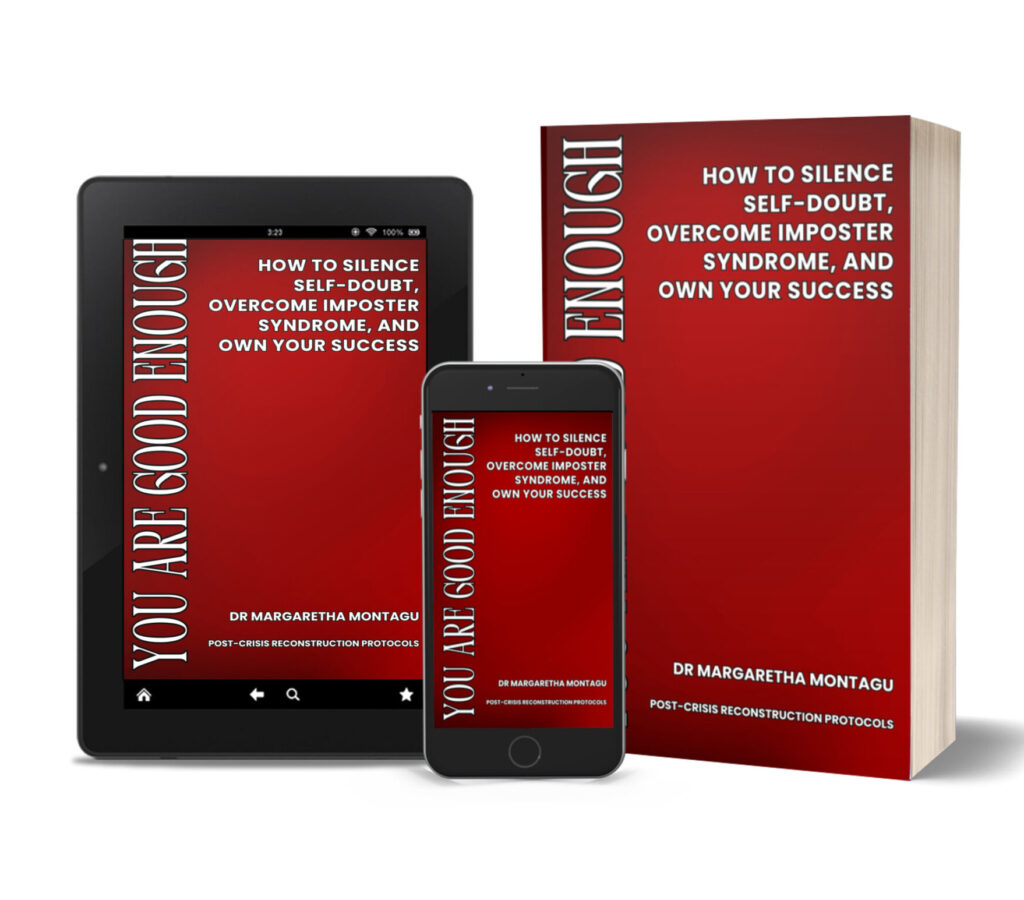
Stop second-guessing yourself. Start owning your success. This book gives you the step-by-step roadmap to break free from imposter syndrome, build unshakable confidence, and finally believe you deserve every bit of your success. You ARE Good Enough!
Subscribe to my Newsletter
I’m still collecting subscriptions to my news letter with these post, so if you haven’t subscribed already and would you like to find out what type of friend you are, how well you know your friends or if you and a new friend really are compatible, subscribe my filling in your email address in the box below and I’ll send you a set of light-hearted quizzes, quotes and questions to help you do just that. Just fill in the form below and you’ll get immediate access to them all. You can unsubscribe from this list effortlessly and at any time. Included:
–How well do you know your Friends? Quiz
– What is Your Friendship Style? and Are your Friendship Styles compatible? Quiz
– 20 of the Most Inspiring Friends and Friendship Quotes and
– 20 lighthearted Questions you can ask to get to know a new Friend
Discover how to build meaningful, lasting friendships and create a support system that truly has your back—delivered straight to your inbox!
I put the essence of who I am, and everything I have experienced that makes me who I am, with great enthusiasm, into my retreats, courses and books. – Dr Margaretha Montagu (MBChB, MRCGP, NLP master pract (cert,) Transformational Life Coach (dip,) Life Story Coach (cert) Counselling (cert,) Med Hypnotherapy (dip) and EAGALA (cert)

#christmascountdown #friends #friendsforever #friendsforlife #friendship #friendshipquotes

What Life Lessons Can You Learn While Walking the Camino de Santiago? – a free guide filled with 10 not just “quaint anecdotes” or Instagram-worthy moments (though there are plenty of those) but real transformations from real people who walked this insight-giving trail – Subscribe to my monthly newsletter to Download the Guide
Delightful story. I put so much of myself into my career that I felt a bit ´disappeared’ when it ended. I was ready for the change but missed feeling indispensable. It was much more of a transition than I had expected.
I know exactly what you mean; it came as quite a shock to me too. Only thing that kept me going through the turmoil was listing 5 things I was grateful for twice a day. Still does, actually. I see it as a self-care ritual.
And again, such an inspiring story, certainly to retiring people, looking for a new meaning of their retired life.
Thanks so much, Riet!