The Best Retreat Hosts Aren’t the Busiest Ones

The Best Retreat Hosts Aren't the Busiest Ones

.

One of the most unexpected lessons I learned as a retreat guest was that the best hosts aren’t the ones who do the most. They’re the ones who make you feel most at home.

When I first started attending retreats, I had a rather romantic notion of what a retreat host ought to be.

I imagined someone who was endlessly energetic, always organising the next activity, checking that everyone was happy, answering questions before they were asked and somehow managing to be present in three places at once. The sort of person who could produce herbal tea, profound wisdom and a freshly baked croissant with equal ease.

In other words, a superhero.

As it turns out, the retreat hosts I remember most weren’t like that at all.

They weren’t constantly talking. They didn’t feel the need to fill every silence with another insight or every spare moment with another carefully planned activity. They weren’t trying to impress anyone.

They simply had a way of making people feel wonderfully welcome.

It’s surprisingly difficult to explain what that feels like.

It’s in the way they greet you at the door, as though they’ve genuinely been looking forward to your arrival rather than simply expecting yet another guest. It’s the unhurried conversation over a cup of tea while you recover from your journey. It’s the reassuring sense that there is nowhere you need to be and nothing you need to achieve for the next few days.

They weren’t performing hospitality.

They were simply being hospitable.

There’s a world of difference.

We’ve all experienced the opposite, haven’t we? The frantic host who is so busy making everything perfect that they never quite have time to enjoy the people they’ve invited. Meals become military operations. Every tiny hiccup feels like a crisis. You almost feel guilty asking where the teaspoons live because they already seem to have enough on their plate.

I suspect many of us have been that person ourselves at least once.

I certainly have.

There was a time when I thought being a good host meant constantly being available. If guests were reading quietly, perhaps I should ask whether they needed anything. If there was a lull in conversation, perhaps I should suggest another activity. If someone wandered off on their own, perhaps I ought to check they were all right.

My intentions were kind.

My timing wasn’t always perfect.

One of the greatest gifts retreating has given me is the realisation that people don’t usually come away in search of more stimulation.

Most of them are desperate to escape it.

Many arrive after months—or years—of being continuously surrounded by people wanting something from them. Their diaries have become impossible games of Tetris. Their phones seem incapable of remaining silent for more than thirty seconds. They’ve become so accustomed to reacting that they’ve almost forgotten what it feels like simply to respond.

The last thing they need is a host who accidentally adds to the busyness. What they need is someone who quietly gives them permission to slow down.

I noticed that the retreat hosts I admired most all had one quality in common.

They never seemed to be in a hurry.

That doesn’t mean they weren’t working hard. Anyone who has ever hosted a retreat knows there are meals to prepare, shopping to do, questions to answer and approximately one thousand tiny details that nobody ever notices unless they go wrong.

The work is real.

But the atmosphere doesn’t have to feel like work.

The best hosts somehow managed to protect their guests from seeing the frantic paddling beneath the surface. Like swans gliding serenely across a lake, they created an impression of ease that invited everyone else to relax too.

I found that deeply reassuring.

Because calm, it turns out, is wonderfully contagious.

When someone welcomes you without rushing, speaks without hurrying to the next point and sits down with you instead of constantly springing up to do one more thing, your own nervous system quietly takes note.

Perhaps I don’t have to rush either.

Perhaps nothing terrible will happen if I finish this cup of tea before moving on to the next thing.

Perhaps I can finally exhale.

That may not sound particularly profound, but I think it is.

We live in a culture that celebrates busyness almost as a virtue. We admire people who multitask, optimise and squeeze one more thing into an already overflowing day. Somewhere along the way we’ve started confusing being busy with being valuable.

Retreats offer a gentle alternative.

They remind us that presence is far more generous than performance.

As I’ve hosted more retreats, I’ve found myself becoming less interested in trying to create a perfect experience and much more interested in creating a restful one.

Of course, I want everything to run smoothly. I care about comfortable rooms, delicious food and thoughtful details. But I’ve learned that guests rarely remember whether dinner was served exactly on time or whether every cushion was perfectly plumped.

They remember how they felt.

They remember laughing over breakfast.

They remember sitting in the garden with a glass of wine as the evening light softened over the vineyards.

They remember feeling safe enough to let go.

And, perhaps most importantly, they remember a host who didn’t make the retreat about themselves.

That, I think, is the true art of hospitality.

Not being the most interesting person in the room.

Not dazzling people with endless knowledge or keeping them constantly entertained.

Simply creating a space where other people can hear themselves think again.

Looking back, I realise that the retreat hosts who influenced me most probably had no idea they were doing so. They weren’t teaching through carefully crafted lectures or inspirational speeches. They were teaching by example. They showed me that kindness doesn’t have to be loud, that confidence doesn’t need to dominate a room, and that making people feel at ease is a far greater gift than making them feel impressed.

It’s a lesson I’ve carried home from every retreat I’ve attended, and one I try to bring to every retreat I host.

After all, nobody comes to the French countryside hoping to watch someone else rush around.

They come in the hope that, somewhere between the vineyards, the birdsong and a leisurely cup of coffee, they might remember what an unhurried life feels like.

If that sounds rather appealing, I’d be delighted to welcome you to one of my retreats.

I can’t promise perfection. I can promise a warm welcome, plenty of time to breathe and absolutely no medals for keeping busy.
Do you dream of escaping your stressful life to raise a herd of goats or grow sunflowers in the south of France? Then you may be ready for an Esprit Meraki retreat. Get access to this “very serious” quiz to help you figure out how urgent your need for a change of scenery is, when you subscribe to my monthly newsletter.
If your soul is craving fresh air, meaningful movement, and a chance to reconnect with nature, join me on a 5-day/4-night CrossRoads Camino de Santiago Walking Retreat – a powerful, natural reboot for your body, mind, and spirit. No fitness requirements. No forced bonding. No pressure to have a breakthrough. Just one foot in front of the other, and finding your way to a brighter future.

“I am an experienced medical doctor – MBChB, MRCGP, NLP master pract cert, Transformational Life Coach (dip.) Life Story Coach (cert.) Stress Counselling (cert.) Med Hypnotherapy (dip.) and EAGALA (cert.) I may have an impressive number of letters after my name, and more than three decades of professional experience, but what qualifies me to excel at what I do is my intuitive understanding of my clients’ difficulties and my extensive personal experience of managing major life changes using strategies I developed over many years.” Dr M Montagu

The Journey Home After Your Retreat Is An Important Part of the Retreat

The Journey Home Is Part of the Retreat

Lessons I Learned as a Retreat Guest

When I first started going on retreats, I assumed the retreat ended when everyone hugged goodbye, exchanged email addresses they fully intended to use, and wheeled their suitcases towards the cars.

The official programme was over. The final brunch had been eaten. The kettle had boiled one last time. Surely that was the end of the story.

It turns out it wasn’t.

In fact, some of the most valuable parts of nearly every retreat I’ve attended happened after I’d left.

Not while I was meditating. Not during a workshop. Not even on one of those wonderfully slow walks where your thoughts seem to wander at exactly the same leisurely pace as your feet.

They arrived on the journey home.

There’s something rather magical about that just-after time. You’re no longer immersed in the retreat, but you haven’t quite re-entered ordinary life either. Whether you’re looking out of a train window, driving through unfamiliar countryside or waiting for a delayed flight with a slightly overpriced cup of coffee, your mind keeps wandering.

Perhaps it’s because there are no more activities to attend. No conversations to join. Nothing left to do except travel.

Your thinking catches up.

I remember one particular journey home when I found myself staring out of the train window as fields drifted past. Somewhere between two stations, a problem I’d been wrestling with for months quietly untangled itself. There was no dramatic lightbulb moment. No heavenly choir. Just a calm, almost matter-of-fact certainty.

“Oh… that’s what I need to do.”

It was so obvious that I couldn’t understand why I’d never realised it before.

Of course, I hadn’t realised it before because I’d been too busy.

Our lives are astonishingly noisy. Even when we aren’t surrounded by people, we’re surrounded by notifications, decisions, deadlines, shopping lists, emails, news headlines and the persistent feeling that we really ought to be doing something useful.

A retreat interrupts that noise.

Not by filling your head with new ideas, but by giving your existing thoughts enough space to settle into their proper places.

Like snow in a shaken snow globe, clarity takes a little while to appear.

Which may explain why it so often arrives after the retreat has officially finished.

I’ve noticed something else as well.

Whenever I’ve returned home from a truly restorative retreat, I haven’t felt an overwhelming urge to change my life overnight.

I haven’t come back determined to sell all my possessions, move to a cottage in the woods or begin each day with an hour of yoga before sunrise. (Although I admit the cottage occasionally sounds tempting.)

Instead, the changes have been surprisingly ordinary.

I started eating breakfast without scrolling through my phone.

I went for walks without feeling obliged to count my steps.

I found myself saying “not today” to things that would previously have received an automatic “yes”.

I spent more evenings reading and fewer wondering where the evening had gone.

None of these decisions looked particularly impressive from the outside.

Collectively, they quietly changed the rhythm of my life.

I think we sometimes expect transformation to arrive with champagne and fireworks.

More often, it slips in through the back door carrying a cup of tea.

That, perhaps, is why I no longer think of a retreat as a self-contained event.

A retreat is more like dropping a pebble into a still pond. Dr Margaretha Montagu

The retreat itself is only the moment the pebble touches the water.

The real story is told by the ripples.

Some reach the shore within hours. Others take days or weeks. Occasionally, months later, you’ll catch yourself responding differently to a situation and realise that the seed was planted during those few days away.

You didn’t notice it germinating.

It simply did.

Attending retreats has also changed the way I think about hosting them.

I used to focus almost entirely on what happened while people were here. The walks, the conversations, the meals, the quiet moments, the little touches of hospitality.

Those things still matter enormously, of course.

But now I also think about the journey home.

I wonder what my guests will be thinking as they drive away from the farmhouse. Whether they’ll stop for lunch somewhere and find themselves smiling for no particular reason. Whether the silence in the car feels comfortable rather than empty. Whether they’ll notice, perhaps for the first time in months, that they aren’t in quite such a hurry.

I hope they don’t leave with pages of frantic notes or a daunting list of things they “must” change. Most people already have enough lists. I’d much rather they leave with one or two quiet realisations that feel manageable enough to carry home.

Perhaps they’ll decide to protect one evening a week from meetings.

Perhaps they’ll finally take that walk they’ve been promising themselves.

Perhaps they’ll begin keeping a journal again.

Or perhaps nothing visible will happen for a while.

That’s perfectly all right too.

Seeds are wonderfully unimpressed by our deadlines. They germinate when conditions are right, not when we tap our watch.

Looking back, I realise that some of the retreats which seemed almost uneventful at the time turned out to be the ones that shaped me most extensively. Their gifts revealed themselves gradually, often in the middle of an entirely ordinary Tuesday. I’d catch myself reacting with more patience, worrying a little less or making a decision that felt unexpectedly true to who I was becoming. The retreat hadn’t given me a new life in five days. It had simply nudged me gently in a different direction, and over time those small changes added up to a very different destination.

Perhaps that’s the greatest lesson I’ve learned from being a retreat guest. We tend to judge experiences by how they make us feel in the moment, yet their real value often lies in what they quietly continue to do afterwards. A good retreat doesn’t ask you to become a different person before you leave. It simply gives you enough rest, enough perspective and enough trust in yourself that you begin to make different choices once you’re home. And those choices, repeated over weeks and months, are where the real transformation lives.

If you’re longing for a retreat that doesn’t end when you zip up your suitcase, I’d love to welcome you to one of mine.

After all, the journey home IS still part of the retreat. I simply hope that when you arrive back at your own front door, you bring home a little less hurry, a little more clarity and perhaps the comforting suspicion that life doesn’t always have to be lived at full speed.

Do you dream of escaping your stressful life to raise a herd of goats or grow sunflowers in the south of France? Then you may be ready for an Esprit Meraki retreat. Get access to this “very serious” quiz to help you figure out how urgent your need for a change of scenery is, when you subscribe to my monthly newsletter.

If your soul is craving fresh air, meaningful movement, and a chance to reconnect with nature, join me on a 5-day/4-night CrossRoads Camino de Santiago Walking Retreat – a powerful, natural reboot for your body, mind, and spirit. No fitness requirements. No forced bonding. No pressure to have a breakthrough. Just one foot in front of the other, and finding your way to a brighter future.

Author Bio: Dr Margaretha Montagu – described as a “game changer”, “gifted healer”, “guiding light” and “life-enriching author” – is an experienced medical doctor, a certified NLP practitioner, a medical hypnotherapist, an equine-assisted psychotherapist (EAGALAcertified) and a transformational retreat leader who guides her clients through life transitions – virtually, or with the assistance of her Friesian and Falabella horses, at their home in the southwest of France.

Anticipating the Start of a Retreat: Worries Rarely Spoken Aloud

Anticipating the Start of a Retreat

.

Lessons I Learned as a Retreat Guest

When I think back to the retreats I’ve attended over the years, I remember the beautiful walks, the interesting conversations or the moments of quiet that somehow made the world feel a little less complicated.

But what I remember most vividly is how I felt before I arrived.

I remember opening an email that immediately made me feel at ease. It answered questions I hadn’t yet thought to ask. It reassured me without being patronising. It gave me the comforting sense that someone had already thought about my journey before I’d packed my suitcase.

I also remember the opposite.

The uncertainty of wondering whether I’d brought the right clothes. Whether I got the meeting point right. Whether I’ll get lost. Whether I’d somehow be the odd one out.

It’s remarkable how much emotional luggage we carry alongside the physical kind.

Few of us arrive at a retreat in a neutral state. We arrive after weeks—or months—of juggling responsibilities, making difficult decisions, looking after other people and trying to keep too many plates spinning. Even planning something that’s supposed to be restorative can become another item on an already overcrowded to-do list.

Then there are the quieter worries that rarely get spoken aloud.

Will I fit in?

Am I fit enough?

What if I don’t get on with the other guests?

Will it be worth the money?

Those questions are perfectly ordinary. In fact, I’d be surprised if they didn’t cross most people’s minds at least once.

Attending a retreat means stepping into the unknown. Even if it’s something you’ve looked forward to for months, there is still a small leap of faith involved. You’re leaving behind familiar routines and placing yourself in the hands of someone you’ve probably never met.

That trust deserves to be honoured long before the retreat itself begins.

It’s one of the reasons I now think of a retreat as starting the moment someone presses the “Book Now” button.

From that point onwards, every interaction matters. Every email, every message, every answer to a seemingly insignificant question becomes part of the experience.

Over the years, I’ve learned that a measured amount of information can be surprisingly comforting. Not pages and pages of instructions, but the sort of practical details that quietly remove unnecessary worry.

Where exactly do I park?

What happens if my train is delayed?

Do I really need walking poles?

Will there be time to read my book?

None of these questions is really about logistics.

They’re about reassurance.

They ask, in different ways, Will I be looked after?

Hospitality begins long before someone crosses your doorstep.

For me, it begins with making people feel expected rather than processed. Welcomed rather than managed.

That’s why I enjoy sending detailed information before guests arrive—not because I want to overwhelm them with instructions, but because I’d like them to stop thinking about practicalities altogether. The fewer decisions they have to make when they get here, the sooner their shoulders relax.

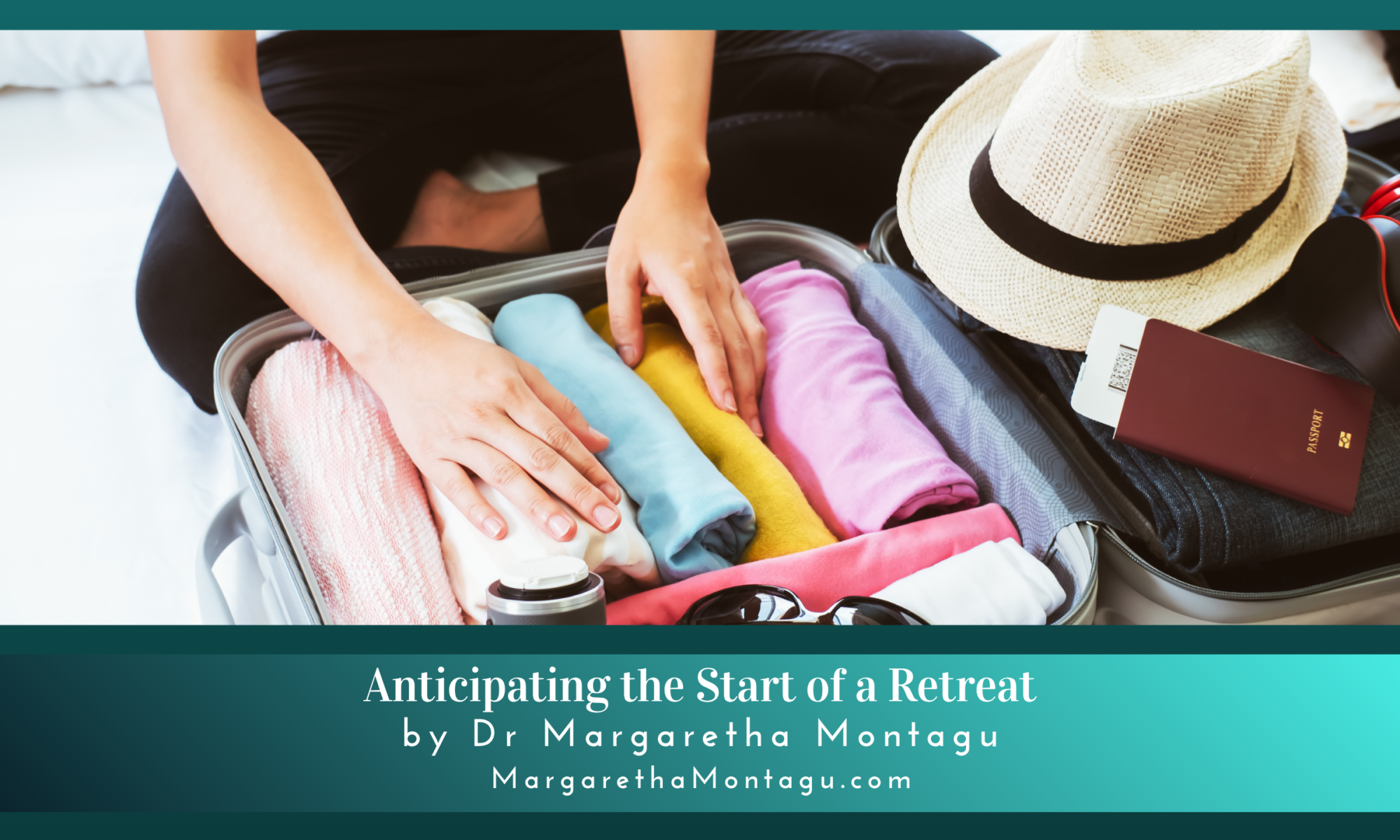
Perhaps that’s why I’ve become rather fond of what I think of as the “in-between” days. The days after someone books but before they set off are full of quiet anticipation. A retreat has a curious way of slipping into your thoughts long before your suitcase appears on the bed. You find yourself wondering which walking shoes to bring, choosing a book you’ve been saving for just the right occasion, imagining long brunches under blue skies or peaceful mornings with nothing more urgent than birdsong. Little by little, almost without noticing, your mind begins to loosen its desperate grip on everyday life. The retreat has already started its gentle work.

And that, I think, is one of the loveliest discoveries I’ve made as both a retreat guest and a retreat host. We often imagine that transformation begins with a grand moment—the first meditation, the first walk, the first meaningful conversation. More often, it begins quietly. It begins when someone feels expected rather than merely accommodated. When they know they’ll be welcomed by name. When they sense that, for a few precious days, they won’t have to organise, perform, solve problems or hold everything together. Sometimes the first gift a retreat offers isn’t insight at all. It’s reassurance. And once you’ve experienced that feeling yourself, it’s impossible not to want to offer it to others.

Anticipating the start of the retreat is an essential part of the retreat.

Receiving a friendly message a week beforehand, imagining the countryside, wondering which book to pack, looking forward to uninterrupted walks along the Camino de Santiago or quiet mornings with birdsong instead of traffic—these moments are not separate from the retreat. They are the opening chapter.

By the time guests arrive at my little farmhouse in Gascony, I hope they already feel they’ve begun to leave everyday life behind.

Sometimes, that journey starts with nothing more complicated than an email that says, “I’m looking forward to welcoming you here!”

Do you dream of escaping your stressful life to raise a herd of goats or grow sunflowers in the south of France? Then you may be ready for an Esprit Meraki retreat. Get access to this “very serious” quiz to help you figure out how urgent your need for a change of scenery is, when you subscribe to my monthly newsletter.

If your soul is craving fresh air, meaningful movement, and a chance to reconnect with nature, join me on a 5-day/4-night CrossRoads Camino de Santiago Walking Retreat – a powerful, natural reboot for your body, mind, and spirit. No fitness requirements. No forced bonding. No pressure to have a breakthrough. Just one foot in front of the other, and finding your way to a brighter future.

Author Bio: Dr Margaretha Montagu – described as a “game changer”, “gifted healer”, “guiding light” and “life-enriching author” – is an experienced medical doctor, a certified NLP practitioner, a medical hypnotherapist, an equine-assisted psychotherapist (EAGALAcertified) and a transformational retreat leader who guides her clients through life transitions – virtually, or with the assistance of her Friesian and Falabella horses, at their home in the southwest of France.

All content of this website is copyrighted. You cannot copy the content of this page