
What burning myself out more than once taught me about unchecked exhaustion.
At the summit of my medical career, I remember being quietly proud of how little sleep I could exist on. Six patients an hour. Home visits squeezed into lunch. A pager that could and did go off at any time. I didn’t think of it as burning out. I thought of it as being extremely good at my job.
That’s the part I want to start with, because it’s the part nobody warns you about. Burnout doesn’t arrive like a car crash. It arrives like a slow leak in a tyre you keep meaning to check. You don’t notice that the ride is getting rougher. And if you do, you just tell yourself the road is worse than it used to be.
I found out I’d burned out the way most of my patients told me they found out: my body brought it to my attention. Not dramatically. No collapse in a corridor, no ambulance, nothing you could share on Instagram. Just one Friday morning, I found myself sitting in my car outside the surgery, engine off, and couldn’t make myself open the door. I sat there for eleven minutes. I know because I watched the clock, telling myself I’d go in “in a minute,” the way you tell a child one more minute of television before bedtime.
What frightened me wasn’t the eleven minutes. It was that nothing had actually gone wrong that week. No crisis, no bad outcome, no complaint. I simply ran out, quietly, the way a battery does, with no dramatic warning light, just an engine that suddenly won’t start.
I got out of the car and went in. Of course I did. I saw twenty-two patients that day, and I don’t remember a single one of them. I told colleagues I was “just tired.” I told myself the same thing for another four years, until my body finally said “no more.”
What I didn’t understand at the time—and what took me two decades, hundreds of consultations and a great many remarkably patient patients to fully appreciate—is that exhaustion rarely arrives waving a red flag. It doesn’t burst through the door shouting, “You’ve reached your limit!”
It begins with subtle shifts. You stop being someone who’s tired and become someone who’s “just like that.” Brisk. Efficient. A little less patient than you used to be. A little less interested in things that once made you smile. You tell yourself you’ve become more practical, more realistic, busier. And because everyone around you seems equally busy, nobody questions it—including you. I wore “fine” the way some people wear a uniform: every single day, in every season, until I’d almost forgotten I had other clothes.
“Burnout exists because we’ve made rest a reward rather than a right.”
― Juliet C Obodo
I’d love to tell you that the car park moment changed everything. It didn’t. Life rarely offers neat little turning points wrapped up with orchestral music in the background. What it did do was plant a question that refused to leave me alone: if I couldn’t recognise burnout in myself, despite being a doctor, how many of my patients were walking around just as oblivious?
From that day on, I listened differently. Not for the dramatic clues—the tearful consultation, the sick note for stress, or the person who finally admitted they couldn’t cope. Those were the easy ones. I started paying attention to the quieter signs. The mother who no longer mentioned the painting classes she once loved. The accountant who described every weekend as “recovering.” The executive who couldn’t remember the last time he’d laughed. When asked how they are, that little four-letter word: “Fine.” Delivered a fraction too quickly, with a smile that never quite reached their eyes.
I’ve learned that burnout doesn’t usually steal into your life with a bang. It’s more like a dimmer switch than a light switch. The brightness fades so gradually that your eyes adjust, and before you know it, you’re used to living in darkness.
That’s really what this blog post series is about. Not the collapse, because most people never collapse in any way you’d recognise from the outside. It’s about the warning signs: the eleven minutes of immobility in that car park. The ones nobody sees, that you explain away, that you suppress because you need to go inside after and carry on. I burned out more than once before I learned to recognise those minutes for what they were, insisting that I was “coping just fine.”
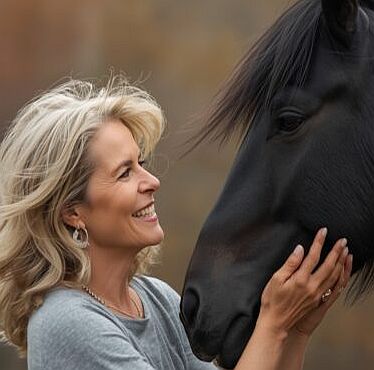
3-day/2-night Private “Press Pause” Retreat –this bespoke, one-on-one retreat on the Camino de Santiago in the sun-blessed southwest of France enables you to press pause, connect with a small herd of Friesian and Falabella horses, recalibrate your inner compass, and return to your life rested, rooted and realigned with who you are now.
If any part of this sounds familiar, the ever-increasing exhaustion of being “fine” for too long, it’s precisely for you I created my Rested, Rooted and ReAligned Retreat. At my 200-year-old farmhouse in the rolling hills of Gascony, you’ll leave behind the constant doing and rediscover what it feels like simply to be. You’ll walk a peaceful section of the Camino de Santiago at your own pace, spend quiet time with my small herd of horses, whose uncanny ability to reflect what’s really going on inside us has humbled me more times than I can count, and enjoy the rare luxury of not having to hold everything together for everyone else.
No pressure. No “acting-as-if.” No need to be “fine.”
Curious whether it’s for you? Click here to find out more.
Do you dream of escaping your stressful life to raise a herd of goats or grow sunflowers in the south of France? Then you may be ready for an Esprit Meraki retreat. Get access to this “very serious” quiz to help you figure out how urgent your need for a change of scenery is, when you subscribe to my monthly newsletter.
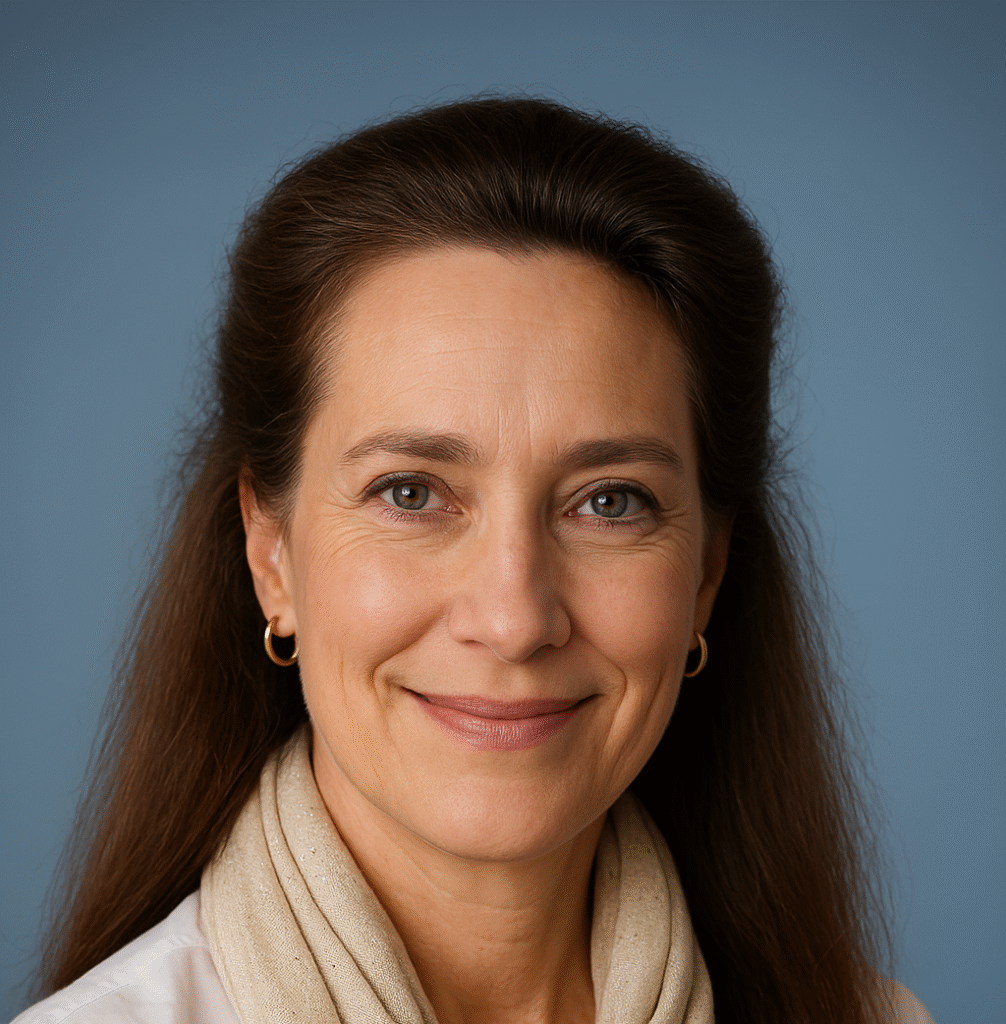
“I am an experienced medical doctor – MBChB, MRCGP, NLP master pract cert, Transformational Life Coach (dip.) Life Story Coach (cert.) Stress Counselling (cert.) Med Hypnotherapy (dip.) and EAGALA (cert.) I may have an impressive number of letters after my name, and more than three decades of professional experience, but what qualifies me to excel at what I do is my intuitive understanding of my clients’ difficulties and my extensive personal experience of managing major life changes using strategies I developed over many years.” Dr M Montagu